


AI allows businesses to create content faster, automate repetitive tasks, and respond to customers more efficiently. But every AI-generated blog post, email, advertisement, or social media update still represents your brand. Without responsible oversight, faster production can also increase the risk of inaccurate information, inconsistent messaging, and customer mistrust.
AI and business ethics are about ensuring that technology is used responsibly. That means being transparent about when AI is involved, reviewing its outputs for accuracy and bias, protecting customer data, and making sure every piece of content aligns with your company’s values and standards.
This guide explores why ethical AI matters, the risks businesses should watch for, and the practical steps you can take to scale content responsibly without compromising your brand.
The Intersection of AI and Business Ethics
AI and business ethics aren’t two separate conversations you can schedule for different meetings. It’s the same conversation. As AI becomes part of everyday marketing workflows, ethical decisions move beyond company values and into daily operations. Teams must decide how AI is used, what requires human review, and who remains accountable for published content.
Why Business Ethics Matter in AI Adoption
Most companies don’t intentionally ignore ethics. The challenge is that ethical considerations often arrive after AI tools have already been integrated into everyday operations. Teams focus on improving productivity first, then address governance only after a problem surfaces.
By then, the damage may already be public.
For marketing and content teams, the stakes are especially high. AI-generated content can be published at a much faster pace than human-created content, allowing errors, misinformation, or brand inconsistencies to spread just as quickly if there aren’t proper review processes in place.
Three areas where organizations commonly encounter ethical challenges include:
- Bias: AI models learn from historical data. If that data contains gaps or reflects past biases, the system can unintentionally reproduce them in hiring decisions, customer segmentation, recommendations, or marketing content.
- Transparency: Customers increasingly expect businesses to be open about how AI is being used. In many industries, transparency is becoming more than a best practice; it is also becoming a regulatory expectation.
- Accountability: AI can generate content and recommendations, but it cannot take responsibility for their consequences. When an AI-generated mistake harms customers or damages a company’s reputation, accountability still rests with the people and organizations that deployed the technology.
Real-World Example of Ethical Missteps
Amazon ran an AI-powered recruitment tool from roughly 2014 to 2017 before quietly shutting it down. The system had been trained on a decade of historical hiring data that reflected a male-dominated industry. Over time, the model started penalizing resumes that included words like “women’s” and downgrading graduates of all-women’s colleges. Amazon’s engineers tried to fix it, but the bias ran too deep. They eventually scrapped the tool entirely rather than risk putting it back into use.
Understanding AI Governance: Setting the Rules for Responsible AI
AI governance provides the guardrails that keep AI systems aligned with your organization’s standards, values, and objectives. Governance turns responsible AI from a good intention into a repeatable process. Instead of relying on individual judgment, organizations establish consistent policies for how AI is used, reviewed, documented, and monitored.
What is AI Governance?
AI governance refers to the documented policies, review processes, and accountability structures that guide how an organization develops and monitors AI systems. It establishes clear expectations for how AI should be used, who is responsible for reviewing its outputs, and how potential risks are identified and addressed.
For marketing teams, it comes down to two critical questions:
- Does AI-generated content meet our quality and brand standards?
- Who is responsible for approving AI-assisted work before publication?
Without a governance framework, these questions are answered by chance rather than by design.
Building an AI Governance Framework
An effective AI governance framework doesn’t have to be overly complex or buried in a lengthy policy manual. What matters most is that it is documented, accessible, and consistently followed across the organization.
At a minimum, every framework should include three core components:
- Policies: what’s allowed, what isn’t, and what happens when something goes sideways (data privacy, bias, accuracy standards)
- Procedures: the actual steps your team follows before AI content goes anywhere near a publish button
- Oversight: a person or a small group whose job includes watching for problems and staying current on standards
Successful AI governance also depends on stakeholder alignment. Leadership should treat responsible AI as a business-wide priority rather than solely an IT initiative. Business leaders establish the organization’s ethical standards, strategists translate those expectations into practical policies, and marketing and content teams apply them through everyday decisions that align with their brand. This includes reviewing aspects from AI-generated content to escalating up to potential concerns before they reach customers.
AI Content Quality Control Tips for Marketing Leaders
An effective AI content quality control makes sure that AI produces outputs that are accurate, on-brand, and free from errors that can damage credibility. While AI enables faster content production, speed should never come at the expense of quality, accuracy, or trust.
The Risks of Low-Quality or Unethical AI Content
Brand reputation is often the first casualty of poor-quality AI content. A misleading statistic, an insensitive social media post, or an off-brand message can spread quickly. While you can still issue corrections afterwards, it rarely receives the same level of attention. Audiences often can’t distinguish between an AI error and a brand error. They simply remember what your company published.
There’s also a growing regulatory dimension. New compliance requirements are showing up faster than most marketing teams are tracking them. Legislation such as the EU AI Act, along with ongoing enforcement of the GDPR and similar privacy regulations, is raising the standard for responsible AI use. Organizations that lack effective quality controls may face legal exposure, compliance challenges, content takedowns, and costly remediation efforts.
Implementing AI Content Quality Controls
Building effective AI content quality control tips doesn’t require eliminating AI from your workflow. It requires putting the right safeguards around it. The following practices help marketing teams scale AI-generated content while maintaining quality and accountability.
- Human-in-the-loop review. Every high-impact piece of content should receive human review before publication. Experienced editors can identify factual inaccuracies, tone inconsistencies, missing context, and potentially sensitive language that AI may overlook.
- Editorial guidelines built for AI. Traditional brand style guides often weren’t created with AI-assisted writing in mind. Supplement them with AI-specific guidelines that define acceptable tone, preferred terminology, prohibited topics, citation expectations, and standards for verifying factual claims. Clear documentation helps both AI tools and human reviewers produce more consistent results.
- Fact-checking and plagiarism detection. Tools like Copyscape and Google’s Fact Check Tools can be integrated into your content workflow to catch inaccuracies and duplicate content before anything goes live.
Quality control is most effective when it’s built into the content workflow rather than treated as a final checkpoint.
AI Quality Assurance: Best Practices for Reliable Output
AI quality assurance is the ongoing process of ensuring that AI-generated content remains accurate, consistent, and aligned with your organization’s standards. While quality control focuses on individual pieces of content before publication, quality assurance evaluates the overall performance of your AI-assisted content process over time. It helps organizations identify recurring issues, measure consistency, and improve workflows as AI tools and regulations evolve.
Testing and Monitoring AI Content
Run every piece of AI content through a checklist before publication. At a minimum, reviewers should assess:
- Brand voice and tone consistency
- Factual accuracy and source verification
- Bias and potentially discriminatory language
- Originality and plagiarism
- Legal, regulatory, and copyright compliance
Post-publication monitoring matters just as much. AI models can shift in subtle ways over time, especially as they’re updated or as your brand messaging changes. Scheduling regular audits, like reviewing samples of published content against your guidelines, helps catch drift before it becomes a pattern.
Tools and Technologies for AI Quality Assurance
Several platforms support AI quality assurance at scale.
- Writer and Acrolinx enforce brand voice and style consistency.
- IBM Watson OpenScale and Microsoft Fairlearn help identify bias in AI outputs.
- Copyscape flags duplicate content, and Google Fact Check Tools automate claim validation.
The more important point is integration. QA tools sitting outside your actual workflow don’t get used consistently. The ones that work are the ones baked into your CMS, your approval process, or wherever your team already lives, not bolted on as an afterthought.
Scaling Content Output Without Sacrificing Brand Integrity
Scaling AI-assisted content doesn’t have to mean sacrificing quality or trust. The biggest risks usually come from inconsistent processes, not from AI itself. When weak review practices are repeated at scale, small mistakes can quickly become widespread.
- Keep Humans in the Loop: AI can accelerate drafting, research, and content creation, but people should remain responsible for strategy, fact-checking, and final approval. Clear editorial standards ensure quality stays consistent as content production grows.
- Train Your Team: Responsible AI starts with informed users. Make sure everyone understands your AI guidelines, the limitations of AI-generated content, and when to escalate concerns for human review.
- Be Transparent: Be open about how AI supports your content creation process. An AI ethics statement or clear disclosure demonstrates accountability and helps build long-term trust with customers and stakeholders.
Case Studies: Brands Getting AI and Ethics Right
Real examples show where AI and business ethics principles hold up, and where they don’t.
Salesforce
Salesforce built bias detection directly into its Einstein AI suite and established a dedicated Office of Ethical and Humane Use of Technology. Customers can see how automated decisions are made.
The result: stronger regulatory standing and measurably higher customer trust. Proactive transparency turned out to be a competitive differentiator instead of just a compliance requirement.
Amazon
Amazon’s AI recruiting tool is one of the most documented failures in this field. Trained on a decade of historical hiring data, the system learned to favor male candidates and penalized resumes with indicators of female applicants. Amazon shut it down in 2017 after internal reviews confirmed that the bias had been running for years.
The lesson: deploying a model without ongoing audits and human oversight creates problems that are much more difficult to solve than they would have been to prevent.
Air Canada
Air Canada ran into a different kind of AI ethics issue in 2024. Its customer-facing chatbot told a passenger that bereavement fare discounts were available, but they weren’t. When the passenger sought a refund post-travel, Air Canada pointed to a disclaimer stating the bot wasn’t responsible for its own output. A civil tribunal sided with the passenger, and Air Canada paid.
The case is now widely cited because it answered a question many brands are still avoiding: if your AI tells a customer something, then you’re responsible for it.
The Consistent Takeaway
When something goes wrong with AI output, the brand suffers from it. The teams that avoid public fallout aren’t the ones with the most advanced tools, but the ones with consistent human review, scheduled audits, and someone clearly responsible when things go sideways.
Frequently Asked Questions: AI and Business Ethics
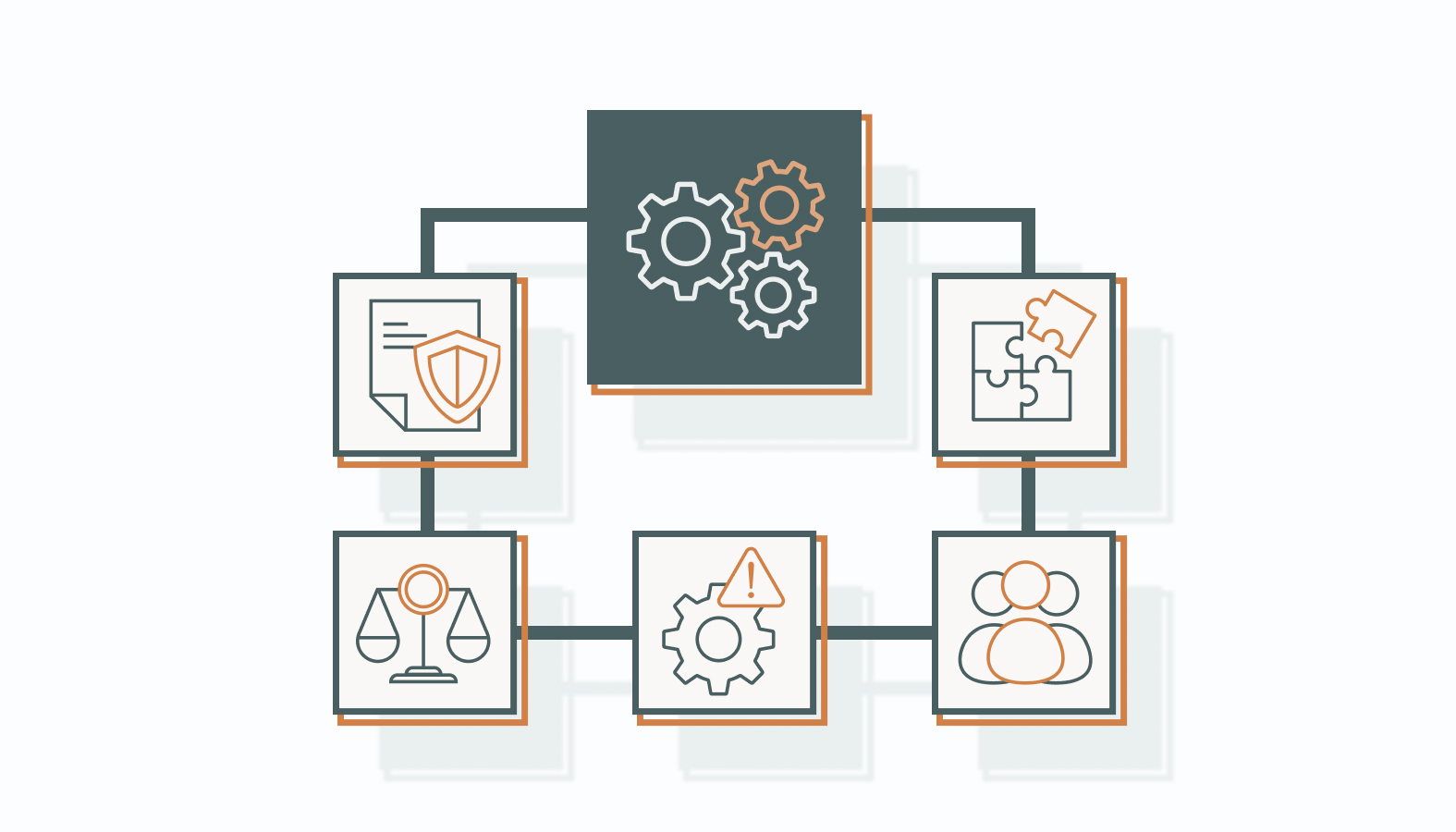
1) What is AI governance and why does it matter for marketing?
AI governance is the collection of policies, review processes, and accountability structures that shape how your organization shapes AI. It matters for marketing in a way that it is what keeps AI-produced content on-brand, legally compliant, and aligned with the standards your audience expects, especially as the volume of that content grows.
2) How can brands ensure AI-generated content meets ethical standards?
Start with documented editorial guidelines written for AI-generated content. Add a human review step for high-impact assets. Use fact-checking and plagiarism detection tools, and train your team on both the limitations of AI and your brand’s standards for acceptable output.
3) What are the risks of not having an AI quality assurance process?
Without AI quality assurance, the odds of publishing something biased, inaccurate, or off-brand go up significantly, and so do the consequences. We’re talking about audience trust, press coverage, regulatory fines, and a team spending hours cleaning up what a better process would have caught before it went live.
4) How can smaller teams implement effective AI oversight?
Whether you’re a small or a large team, you can implement an effective AI oversight, as it doesn’t require a huge budget or bulk of teams. A clear QA checklist, one person assigned to approve AI content before it goes live, and a monthly review of published samples will catch most problems early. Free or low-cost tools for grammar, bias flagging, and plagiarism checks cover the basics well enough to get started.
5) What resources are available for staying up-to-date on AI and ethics?
The Partnership on AI and the Responsible AI Institute both publish practical guidance. For ongoing reading, MIT Technology Review’s The Algorithm is worth following. The World Economic Forum and Coursera also have courses that translate AI ethics principles into marketing-relevant frameworks.
Leading with Ethics in the Age of AI
Speed isn’t the advantage people think it is if the content coming out the other end is creating problems. The brands that will hold up over time are the ones treating governance, quality control, and transparency as ongoing habits instead of one-time projects.
That gets more true, not less, as regulations tighten and audiences grow more skeptical of what’s AI-generated. The brands with documented processes, clear ownership, and teams that know what to do when something looks off can scale content without the brand damage that catches up to everyone else eventually. None of it is complicated. It just has to be intentional.
If you’re ready to build an AI content strategy that’s both scalable and responsible, Win with Agency’s team can help you get there. Schedule a candid conversation with one of our experts » and we’ll take a closer look at how your current AI stacks up, identify where the gaps are, and map out what a smarter, more ethical content operation could look like for your brand.