


Content marketing works, but without direction, it turns into a high-effort experiment. Teams chase keywords, react to competitors, and celebrate traffic spikes that don’t translate into revenue. Data-driven content marketing addresses this issue by showing what audiences truly want, where competitors leave gaps, and which content can create a lasting impact.
It uses search signals, CRM insights, competitive gaps, and performance trends to determine where to compete and where investment will produce the highest return.
Topics align with pipeline goals. Formats match buyer readiness. Distribution supports conversion. Over time, content shifts from a cost center to a measurable growth driver.
Let’s look at how to build a strategy and workflow that delivers predictable results.
What is Data-Driven Content Marketing?
Data-driven content marketing is a decision framework that defines what gets created, why it matters, how it’s distributed, and how it improves over time before a single draft is written.
We don’t publish because a competitor did, someone had a strong opinion, or there’s an empty calendar slot. We publish based on evidence that shows real audience demand, viable opportunities, and a clear path to business impact.
This model aligns three core forces:
- Audience truth: what people actually search, question, and compare
- Business priorities: pipeline, revenue, retention, authority
- Content execution: topics, positioning, formats, distribution, optimization
When these forces align, content stops being reactive and starts driving direction.
Data-Driven Ecosystem
A data-driven ecosystem is the set of tools, processes, and feedback loops that turn raw information into defensible content decisions. You don’t need an enterprise stack, but the right components must work together.
- Audience & demand data reveals what people want and how urgently they want it, drawn from search behavior, community conversations, sales insights, and on-site engagement patterns.
- Performance data shows what’s working, from traffic quality and engagement to assisted conversions, paid efficiency, and pipeline influence.
- Competitive and market intelligence shows coverage gaps, share of voice, authority signals, and positioning opportunities.
- Operational and workflow data ensure execution is sustainable, highlighting production challenges, content decay, cannibalization, and reuse potential.
Integrating Various Data Sources (Where Most Teams Struggle)
Most companies don’t lack data, but it’s alignment that they lack. Insights sit across disconnected tools, misaligned teams, and dashboards no one fully trusts.
Integration requires a shared decision layer that clearly answers:
- What are we trying to achieve?
- What signals guide decisions?
- How do we measure success?
- What changes based on what we learn?
In practice, this means connecting search intent, web analytics, CRM, and marketing automation, product and retention signals, and qualitative inputs like sales notes and support conversations.
When these sources reinforce each other as search demand mirrors sales objections and high-performing pages correlate with lead quality, content prioritization shifts from opinion-driven debates to disciplined growth decisions.
The Role of Data in Modern Content Strategies
Data should guide and shape content before creation. A strong strategy clarifies who the content is for, what intent it serves, where you can win, which conversion path fits, and how it will be optimized post-launch.
In practice, this action involves mapping content to buying stages, building focused topic clusters, refreshing high-potential assets, addressing real sales objections, and testing distribution with clear hypotheses.
Data isn’t for reporting after the fact. It’s how you choose smarter battles and scale what works.
The Power of Data in Content Marketing
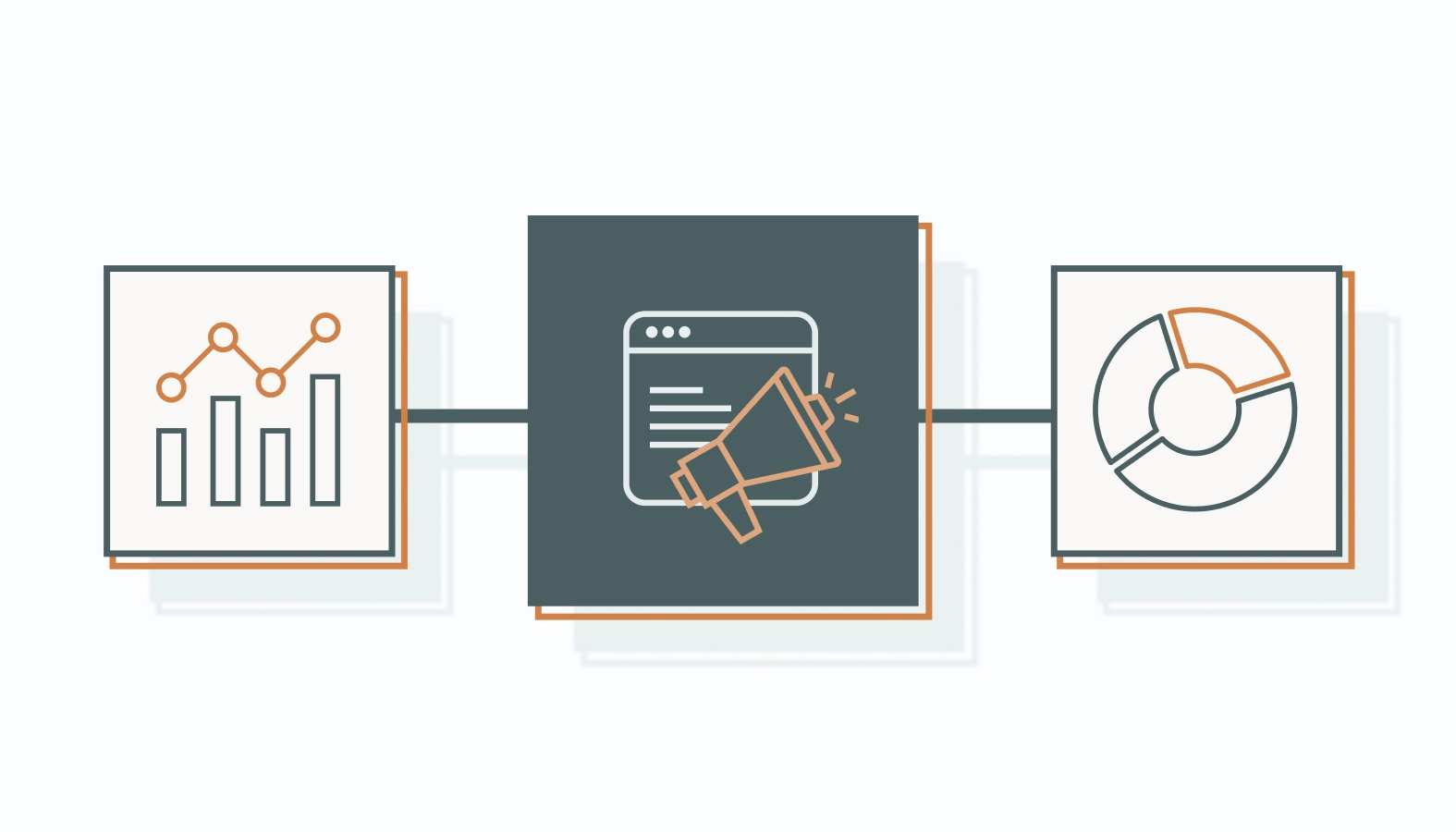
Data turns content from assumptions into a repeatable engine. Traditional strategies rely on intuition: “the audience probably cares” or “the CEO wants this topic,” which rarely scales.
Data-driven marketing flips the model with evidence that guides what we create, how we position it, where we distribute it, and what we optimize next.
The result is decisions grounded in evidence and designed to produce measurable impact.
How to Use Data Insights to Improve Strategy
The most valuable data tells you what to do next and why it will likely work. Insights like intent mismatches, audience splits, topic gaps, or conversion friction reveal where effort is wasted and where strategy can compound.
For example, a B2B SaaS company might see growing traffic but a flat pipeline. Data could reveal that most visitors are top-of-funnel, mid-funnel topics are underrepresented, and sales objections aren’t addressed.
The strategy shifts:
- Retain useful top-funnel content
- Build mid-funnel assets like guides and ROI calculators
- Optimize internal links
- Align offers to intent
The result may be slower traffic growth, but higher-quality leads, shorter sales cycles, and a pipeline that compounds over time.
Advantages of Using Data in Content Marketing
Commitment to data-driven content marketing delivers benefits beyond reporting:
1) Improved targeting: Focus on the segments that engage, convert, and retain, instead of broad content for everyone.
2) Higher ROI: Identify unneeded topics, poorly distributed content, and decaying assets while redirecting effort to what drives results.
3) Faster iteration and learning: Evidence-based decisions speed up testing, optimization, and improvement.
4) Better marketing-sales alignment: Provides a shared language to connect content with pipeline, objections, and revenue impact.
5) Resilient strategy: Monitoring leading indicators keeps the strategy flexible amid algorithm and market changes.
6) Enhanced creativity: Data informs messaging, angles, and proof points, making content resonate more effectively.
These advantages turn content from a hope-driven effort into a predictable growth engine.
Building a High-Performance Data Strategy
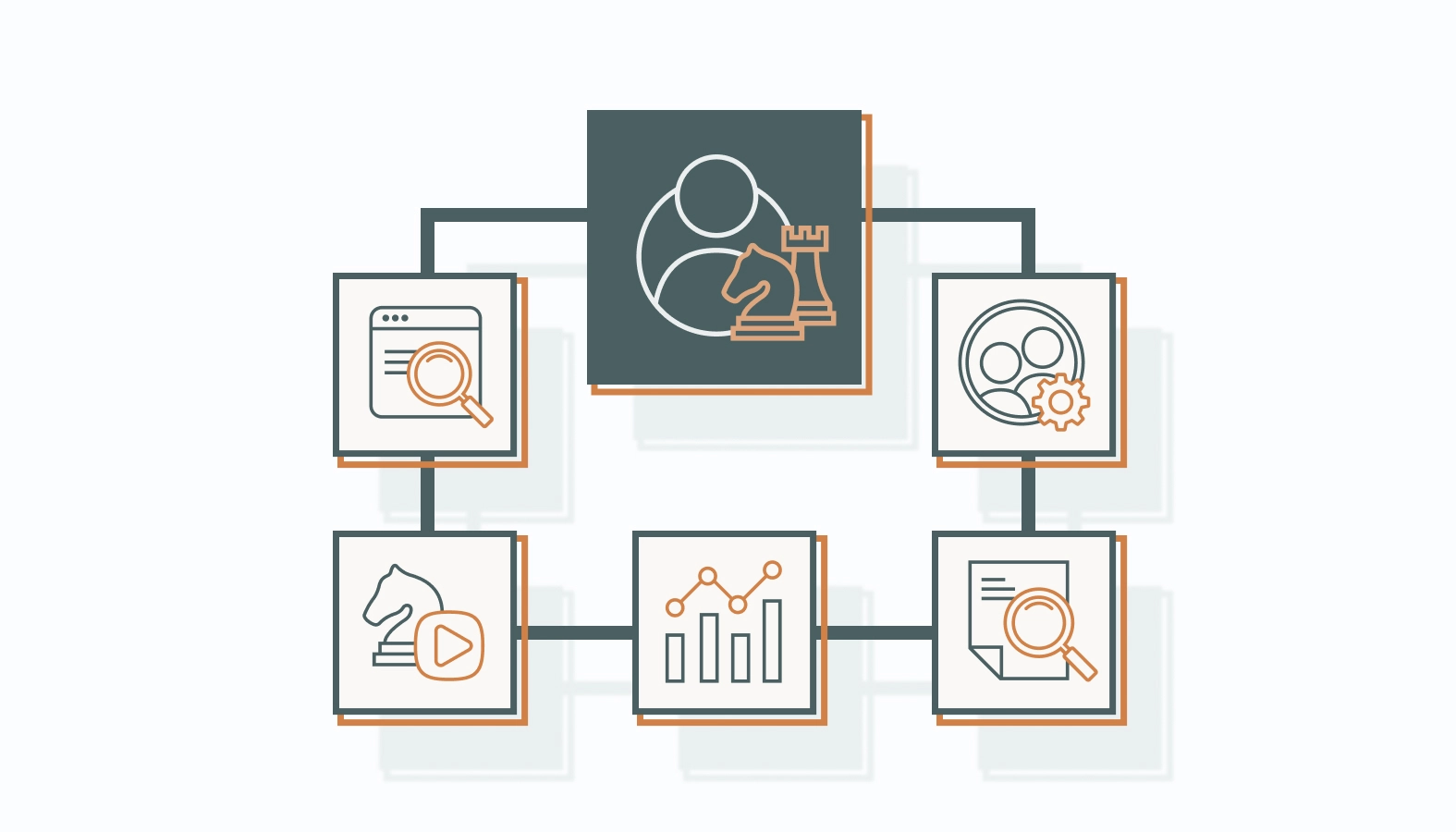
A high-performance strategy is a repeatable system that tells you what to do when traffic rises but pipeline stalls, rankings drop, competitors gain ground, or leadership questions ROI.
Success comes not from collecting more data, but using existing data to make smarter decisions and continuously adapt as the market, product, and audience evolve.
It combines intent clarity, competitive insight, attribution discipline, content lifecycle management, and technical SEO hygiene to ensure content performs, compounds, and remains visible.
Mapping Audience Intent
Audience intent explains why people search. Two users may type the same keyword but have completely different goals: learning a concept, comparing vendors, or justifying a budget. Without mapping intent, content may be relevant but strategically ineffective.
What you can do:
- Categorize intent: learn, solve, compare, validate, decide
- Layer by context: industry, company size, role
- Capture signals: search queries, SERPs, on-site behavior, sales/support data, qualitative research, community listening
If you can’t clearly define what success looks like for the reader, intent isn’t mapped yet.
Analyzing Competitive Gaps
Competitive gap analysis goes beyond what competitors post to reveal where they capture attention and where opportunities are missed.
Identify gaps in coverage, quality, intent, and user experience by comparing topic coverage, reviewing top-ranking pages for structure and depth, spotting second-page opportunities, and mapping content to funnel intent.
Once gaps are clear, you can focus strategically on:
- Building depth in a niche area
- Creating mid-funnel assets that competitors avoid
- Leveraging proof that’s hard to copy
- Refreshing outdated competitor content.
Competitive gap analysis turns data-driven content marketing into a strategic edge.
Attributing Performance
Attribution is complex but essential as content rarely closes deals on the last click, yet it shapes trust, answers objections, and empowers internal champions.
Relying only on last-touch metrics risks underinvesting in growth-driving content.
Effective attribution prioritizes content that contributes to revenue, supports each stage of the buyer journey, and defends investment decisions.
No single model suffices, so we combine early signals (rankings, engagement, signups), assisted conversions, pipeline influence, cohort analysis, and qualitative feedback from sales and users.
The goal is decision-grade clarity to guide smarter content strategy.
Managing Content Lifecycle
Publishing isn’t the finish line but the starting point. A lifecycle mindset turns content from a cost center into a compounding asset by planning, creating, distributing, measuring, optimizing, and eventually consolidating or retiring assets.
Effective management includes:
- Refresh cadences and decay monitoring
- Maintaining structured content inventory
- Consolidating overlapping pages
- Intentional internal linking
Balancing new content creation with optimizing existing assets maximizes impact.
Ensuring Technical SEO Health
Technical SEO ensures content can be crawled, understood, and trusted by search engines.
Key practices include:
- Maintaining accessibility and indexation
- Optimizing site performance and Core Web Vitals
- Organizing clear information architecture with topic clusters and proper linking
- Implementing structured data where it is relevant
- Maintaining content quality by updating or consolidating thin or outdated pages.
Monitoring SEO health is an ongoing discipline that ensures your content can perform and scale.
The Data-Driven Content Workflow
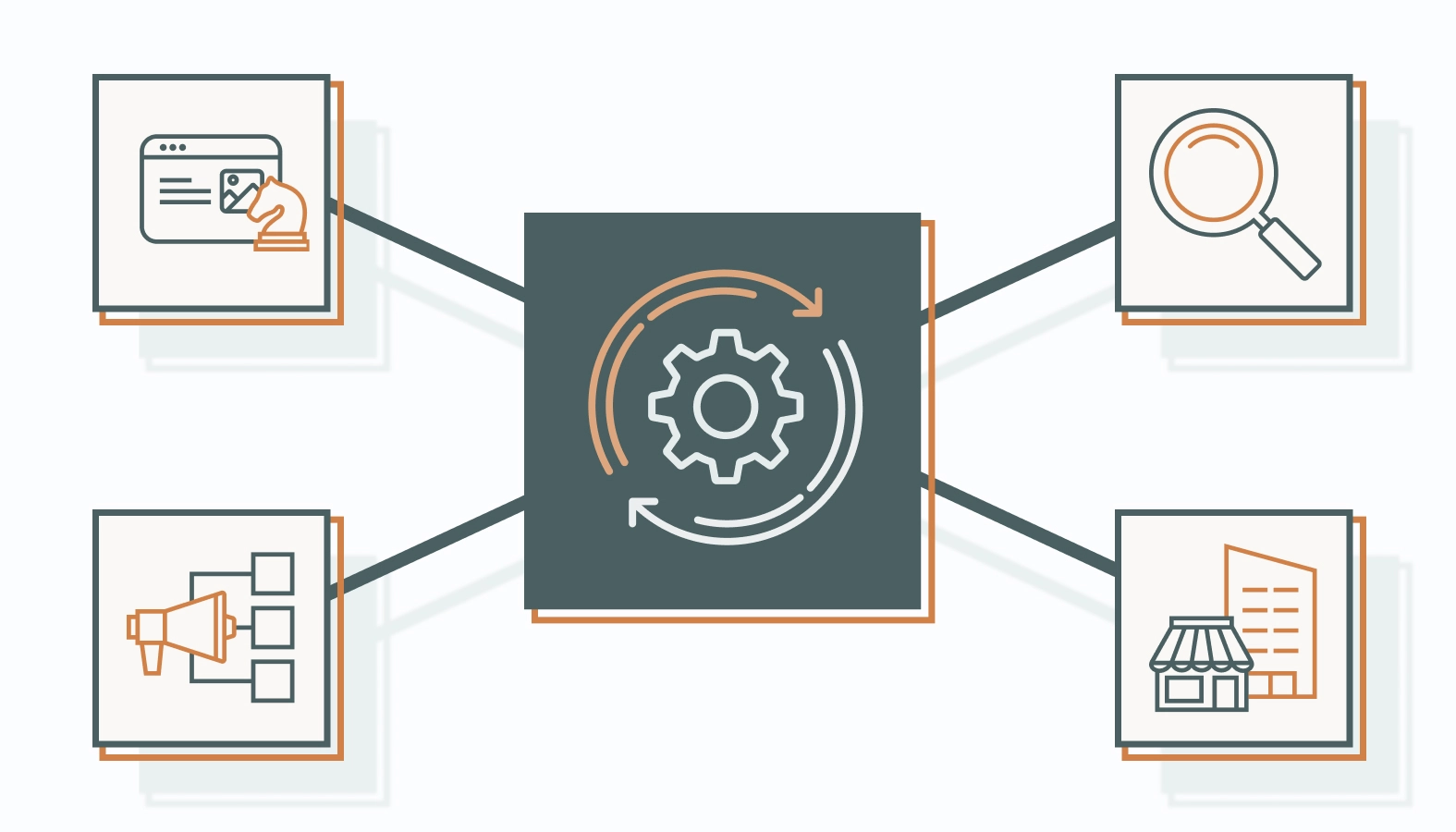
A data-driven content workflow turns insights into action, guiding what to create, how to distribute it, and what to optimize.
Close collaboration between data and creative teams ensures priorities align with opportunities, while everyone measures, learns, and iterates together.
It scales from small teams to mature content organizations.
1) Strategize and Plan
Effective content starts with clear objectives linked to business outcomes and measurable metrics.
Insights from search, CRM, customer feedback, and content audits shape hypotheses, like building topic clusters to boost qualified traffic or creating practical content to ease sales friction.
Pillar topics and intent-based subtopics improve authority, linking, and learning paths, while AI can suggest ideas, but humans and data make the final call.
2) Research and Ideate
This phase validates clusters, ensures they’re winnable, and gives creators actionable material.
SERP analysis, competitor teardowns, customer language, and SME input identify gaps, intent, and unique angles.
Clusters are mapped with clear roles, prioritized by business value, ranking feasibility, and speed to impact.
Tools like search analytics, CRM data, call transcripts, and content intelligence, augmented by AI for gap spotting, linking, and decay detection.
Compress research so human minds can focus on strategy, narrative, and proof.
3) Create and Distribute
Execution follows strategy. Each asset begins with a clear brief, strong SEO structure, aligned conversion paths, and specific, proof-driven writing.
Data guides the topic and positioning, while creativity makes it compelling.
Distribution is intentional, publishing where your ICP engages, adapting to platform-native formats, and re-engaging high-intent audiences to drive the next step.
4) Optimize and Scale
Optimization should be part of the system instead of a last-minute fix.
Content compounds when teams continuously test conversion elements, refine messaging and structure, and update assets based on performance and pipeline signals.
Automation handles reporting, monitoring, and workflows so human minds can focus on authenticity and originality.
Over time, this system identifies what works, strengthens it, and scales it with discipline.
Future-Proof Your Content with Data Mastery
Content marketing works when it is guided by data, not opinion.
A data-driven approach turns creativity into a repeatable system. Insights sharpen your messaging. Fundamentals drive compounding growth. A disciplined workflow keeps execution consistent.
As search behavior, platforms, and buyer expectations shift, the advantage goes to teams that continuously measure, learn, and adapt. Maintain that loop, and your content will generate sustained trust, engagement, and pipeline.
Accelerate Your Growth with a Data-Driven Partner
Building this internally is possible, but it requires integrated expertise across strategy, SEO, analytics, and distribution. The right partner brings:
- Clear direction tied to intent and revenue
- Reduced waste through focused prioritization
- A workflow built for testing, optimization, and compounding
- Alignment across sales, product, and customer insight
If you want clarity on what your data is signaling and where growth is being left on the table, schedule a strategic review. We’ll assess what’s working, where friction exists, and what to prioritize next.