


Marketing looks so different nowadays than it did a couple of years back, thanks a lot to AI. With a few clicks, teams can now make campaigns, look at data, and personalize messages at a speed that was almost impossible before. More efficiency, sharper targeting, and less time spent on repetitive stuff all look positive when you initially hear about them.
Here’s the catch, anyway: Rely on it too heavily, and you’ll actually strip away the creativity and personal touch that make your brand feel like it’s truly yours. Worst of all, customers can notice it, too.
This guide walks through where AI marketing automation works greatly, where you still need a real human mind, and how to find that balance so your team works smarter instead of just faster.
Understanding AI Automation in Marketing
AI marketing automation handles the repetitive, data-heavy tasks that used to eat up your entire time for analyzing data, segmenting your audiences, and sending emails at exactly the right time without needing someone to manually do all this stuff. It’s not even a niche thing anymore. Many businesses these days are already incorporating AI in at least one part of their workflows.
Traditional automation, on the other hand, follows fixed rules. AI is different as it adapts as it learns more about customer behavior, and it actually gets better the more data you feed it. A few examples worth mentioning are:
- Programmatic advertising, which places ads in real time
- Chatbots that handle customer service instantly
- Predictive analytics that flag what customers want before they ask
The tradeoff that nobody talks about enough is that leaning too hard on automation can make your team lose touch with the skills that matter, such as creative thinking and solving problems. People consider this a “deskilling trap.” So the goal here is not to give everything to automation, it’s instead figuring out where AI can truly help and where your people need to still use their own creativity. CoSchedule’s 2025 report has found that AI saves marketers over five hours a week on average. That’s five hours that can go straight back into strategy if you let it.
Which Marketing Tasks Should Be Automated With AI?
Not all marketing tasks are created the same way. Some are great for AI marketing automation, others really demand human work. The real test is whether a task is repetitive, data-heavy, and needs precision at scale.
Have that the right way, and AI workflows can help you with large amounts of data fast, catch trends you’d probably miss otherwise, and free your team up for the work that requires strategy.
Data-Driven, Repetitive, and Time-Consuming Tasks
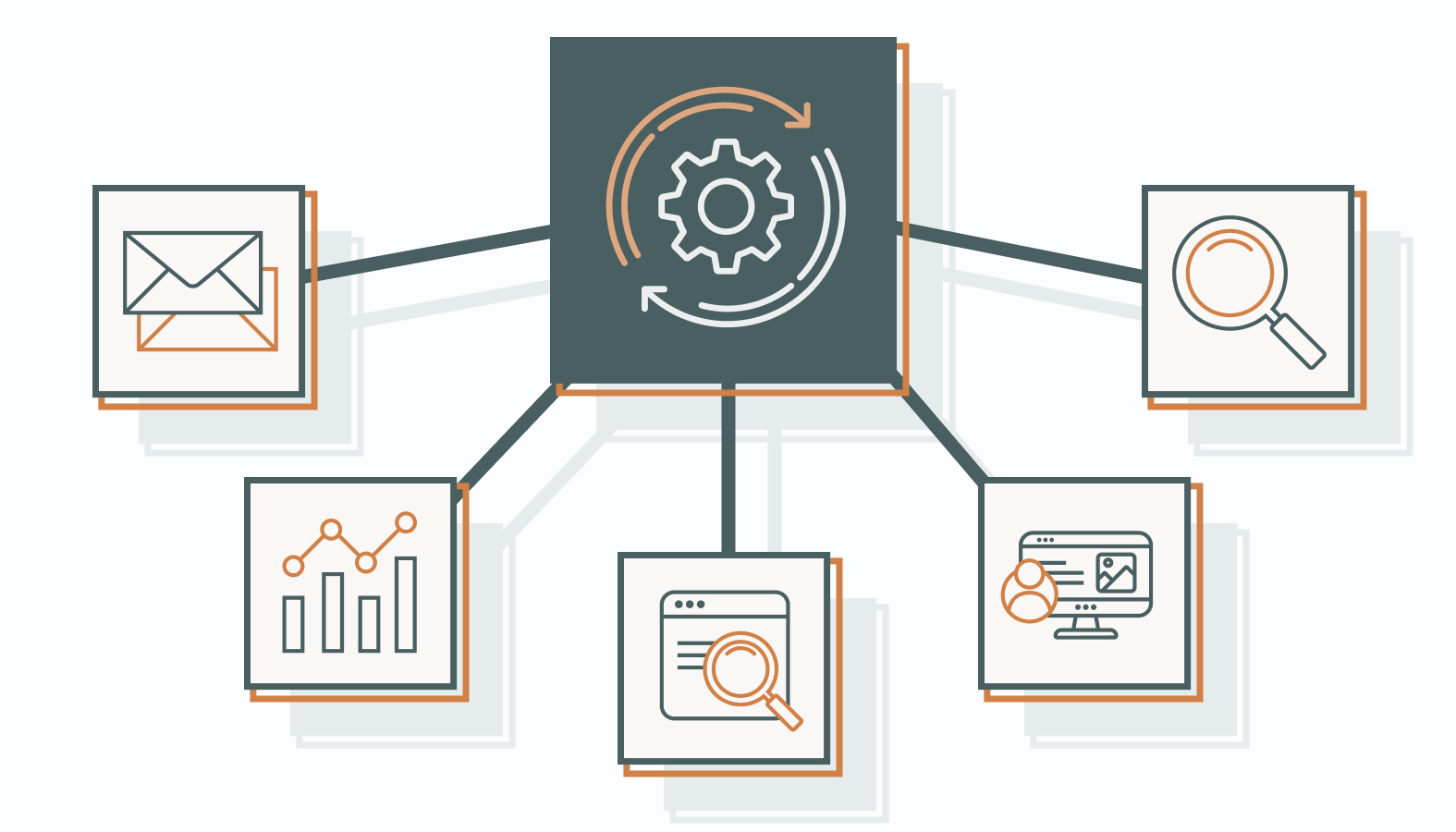
Some marketing work is tedious by nature. It eats hours, demands a lot of massive workload, and involves doing just the same thing over and over again. These are exactly the kinds of jobs where AI works best, boosting marketing productivity and cutting down on human errors.
Email Marketing Automation
AI personalizes emails for each recipient, no matter how huge your list gets. It watches customer behavior, segments your audience, and times each send for when it’s most likely to land. Automated segmentation, scheduling, and tracking commonly translate to better open rates and more conversions, and a lot less time manually sorting lists.
Social Media Scheduling and Analytics
AI schedules posts for when your audience is online and tells you what’s working. That keeps your brand visible and consistent everywhere you show up, while real-time analytics let you adjust depending on your audience’s type and behavior.
Ad Campaign Optimization
AI tools adjust bids, target the right segments, and focus the budget on things that are performing, real-time pausing those that are not, and that usually means better ROI and less confusion in digital advertising.
Lead Scoring and Nurturing
AI looks at things like website activity, email management, and past purchases to figure out which leads to chase. From there, automated nurturing sends the right content at the best time, so the visitors can convert into customers without someone having to keep following up on every single contact by hand.
SEO Keyword Research & Technical Audits
AI searches thoroughly for keyword opportunities, checks out competitors, and surfaces trending topics quickly. Technical audits catch broken links, slow pages, and duplicate content, which are things hurting your SEO, so they need to be spotted immediately.
Which Marketing Tasks Should NOT Be Automated With AI?
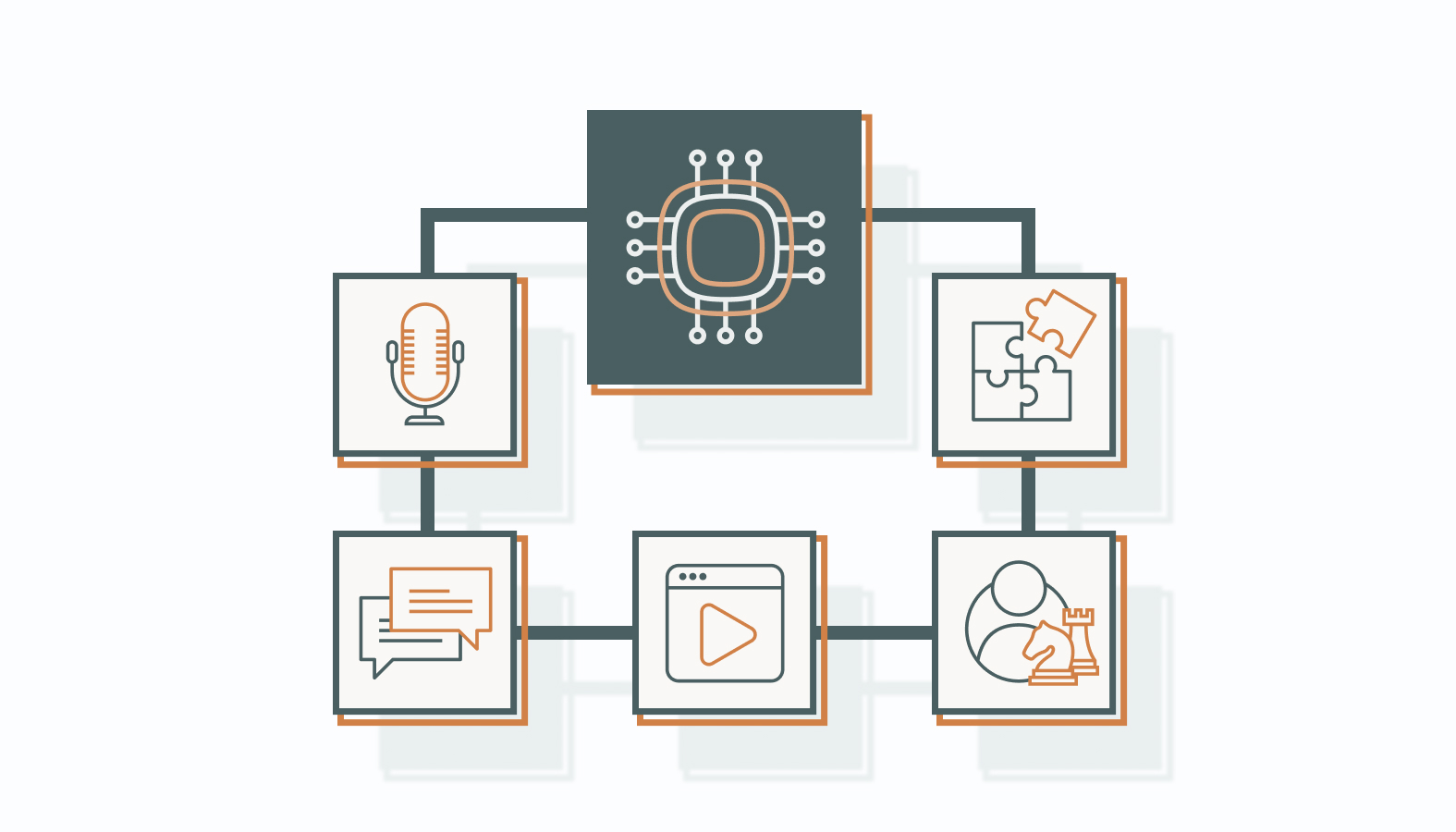
AI marketing automation and AI workflows are highly effective for efficiency, that’s for sure. However, some things need nuance, empathy, and creativity. Those are areas where no algorithm can outdo an actual person. Automate wrongly, and you’ll risk mishandling something sensitive and essential.
Strategy, Creativity, and Brand Voice
Strategic planning and creative brainstorming rely on intuition, experience, and a deep understanding of your audience, which are qualities AI can’t completely replicate. A distinct, authentic brand voice is still built by people, and not machines.
Brand Messaging and Storytelling
Intuition and real experiences are the main drivers of both strategic planning and creative brainstorming, which audiences can resonate with. AI simply can’t replicate that, no matter how good, comprehensive, and perfect it might seem. Authentic brand voice still comes from human minds.
High-Stakes Content Creation
Things like flagship campaigns, thought leadership, and crisis responses require original thinking and a person who can think critically under pressure. AI can definitely help nail an outline or give you data that you need, but the substance of the content still has to come from a real human.
Crisis Management and PR
When a brand faces a crisis or a sensitive PR situation that needs judgment, emotional intelligence, the actual human mind is the one that can relate and solve what needs resolution. Automated responses sound obviously robotic, which doesn’t really make sense, and might even just worsen the situation. Only a person can read a situation accurately and respond accordingly.
Relationship Building and Community Engagement
Trust and authenticity are the main baseline for building real relationships with your audience. Automation can handle reminders or organize data, yes, but it can never replace an actual conversation. People become loyal to your brand when they know they are heard properly, instead of being bombarded with many, almost unhelpful canned responses.
What to Automate and What to Keep Human
When to use automation and when to keep human work should be balanced, as both are important for marketing productivity and your brand’s long-term success. Determine where the fine line between the two sits, so you’ll be aware if your brand feels personal or simply robotic.
Frameworks for Deciding Automation
As there is no general single right answer for every AI workflow, you have to weigh both how complex the task is and how serious it can have an impact on your business.
The Task Complexity and Impact Matrix
This is like a column of two: one is task complexity, and the other is business impact.
- Low Complexity, Low Impact: Automate with no question. Routine data entry, basic reporting.
- Low Complexity, High Impact: Automate it, but still keep a sharp eye on it because it affects outcomes.
- High Complexity, Low Impact: Consider not automating at all. Manual might work best here.
- High Complexity, High Impact: This should be purely human, as this contains strategy, crisis management, and things that determine where your brand’s headed.
Questions to Raise Before Automating
Before jumping into a new AI workflow, ask yourself these questions:
- Will this improve quality, or more likely just save time?
- Does a project need emotion, creativity, and real judgment?
- What will the consequences be if automation gets it wrong?
- Does this task change regularly that automation can’t keep up?
- Could this be a reason for ruining customer trust and your reputation as a brand?
- Do you have any way of spotting errors before they turn into larger problems?
Regularly revisit these questions, especially if you know that your team and tech keep changing.
Examples of Smart Automation
A national retailer automated their email segmentation and scheduling. Open rates began to go up, as well as repeat purchases, because people are finally getting the right message at the right moment.
A regional pool service company automated appointment reminders and follow-ups, which resulted in improved results, and referrals keep coming.
A B2B software company has tried automating social media engagement. It didn’t do well, surprisingly. The canned responses fell flat, so they decided to go back to having real people for addressing real conversions and only used AI for scheduling posts and performance tracking.
The bottom line is that automation works great when it supports your team instead of replacing them and their jobs.
The Risks and Challenges of AI Marketing Automation
AI marketing automation and AI workflows bring efficiency, no doubt about that. However, they pose real risks too, and knowing them can help you protect your brand’s reputation.
Ethical Considerations & Compliance
AI marketing usually comes down to handling sensitive customer data, which requires responsibility around privacy and security, and following the rules. That responsibility grows more as automation touches the customer journey.
To be on the right side of this, you’ll have to:
- Be upfront about how you collect and use data
- Make sure your AI tools comply with privacy laws like GDPR or CCPA
- Audit your data flows and security regularly
- Give people real ways to opt out or control their data
- Train your team to spot ethical issues before they become bigger issues
At the end of the day, trust is about putting people ahead of any processes.
Common Pitfalls and How to Avoid Them
1) Deskilling and Talent Erosion
Give AI almost everything, and you’ll start to notice that your team’s critical thinking starts to decline. In the long run, it might even hurt adaptability and tank morale too, since people stop taking ownership over their own work. To avoid such a problem:
- Keep training and upskilling going alongside automation
- Rotate people through both automated and manual tasks
- Still encourage creative, strategic work so people remain engaged
2) Content Cannibalization
AI can fill content fast, but this doesn’t always mean a good thing. Automated content gets repetitive quickly, and it can even compete against itself in search results, hurting your SEO instead of boosting it. To keep things sharp:
- Review and prune automated content regularly
- Get human editors involved so every piece adds something more
- Set guidelines for keeping content still original and differentiated.
3) Over-Optimization and Brand Dilution
Chase click-through rates and conversions only with AI, and you’ll end up sounding so generic, completely losing your brand voice along the way. Do these instead:
- Balance the metrics against your actual brand goals
- Keep people involved in writing and reviewing campaigns
- Check in periodically to make sure the automated output still sounds like you
Best Practices for Implementing AI Automation in Marketing
Achieving real value out of AI marketing automation means building something flexible: a strategy that keeps your brand voice intact and your team empowered.
Start Small, Scale Wisely
Start with some low-risk, high-value tasks (email segmentation, social scheduling) so you can detect what’s working before going further. Early wins build confidence, catch problems early, and let you scale at a pace that’s sustainable.
Maintain Human Oversight
People still need to be the ones overseeing the work. Ongoing review spots mistakes, keeps quality up, and makes sure marketing still feels like your brand. Build in feedback loops so issues are flagged and fixed as soon as possible. Treat AI only like an assistant to help you, not another you replacing the real you.
Invest in Training and Collaboration
While bringing on more AI tools, make sure your team keeps up through real training. And get marketing, data, and IT talking to each other. This cross-team collaboration tends to boost marketing productivity and spark ideas nobody would’ve landed on alone.
Monitor, Measure, and Adjust
This is not a set it and forget it set-up. Track real metrics, such as engagement, conversions, time saved, and use regular check-ins to make sure your AI workflows are still actually connecting with your business goals.
FAQs: AI and Marketing Automation
1) Will AI Replace Marketers in the Near Future?
Never. AI is only great at repetitive, data-heavy tasks, but it can’t match the creativity, strategic thinking, and, mostly, emotional intelligence that a real marketer can bring. Humans are still the ones leading the way, building relationships, steering the strategy. AI should be treated as a powerful assistant instead of a complete replacement for human competence.
2) How Do I Decide Which Marketing Tasks to Automate with AI?
Look at your current workflows and ask yourself which tasks are:
- Repetitive and time-consuming (data entry, basic reporting)
- Heavily data-driven (lead scoring, keyword research)
- Rule-based and consistent (scheduling emails or social posts)
Focus on one area first. Measure what happens. Keep revisiting as your business and the tech itself keep evolving.
3) What Are the Risks of Over-Automating Marketing with AI?
Going too far, you’ll potentially risk:
- Losing your brand voice under a pile of AI-generated content
- More errors or tone-deaf responses in moments that actually matter
- Compliance or privacy issues with the data weren’t handled carefully
Find balance by letting AI work on the repetitive things while keeping people involved wherever judgment or empathy matter.
4) How Do I Ensure My AI Marketing Is Ethical and Compliant?
- Be clear with customers about how their data gets used.
- Make sure your tools comply with laws like GDPR or CCPA
- Get consent for data collection wherever you can
- Audit your AI workflows regularly for compliance
- Train your team to spot and handle ethical gray areas
Build ethics and compliance into the strategy itself, so you’ll establish trust along the way, which protects your reputation more than any single campaign could.
Where to Go From Here
The line between automation and human judgment isn’t fixed. It shifts as your tools get better and your team gets more comfortable figuring out what AI should and shouldn’t touch. What matters is that every decision stays intentional. Every workflow you hand off, every campaign you keep human, should be made because it’s a human choice, not a tool handed off to you.
The brands that get this right treat automation as just a portion of the process, not the whole strategy. They built checkpoints. They listen for the moments customers notice a difference. And they’re willing to pull something back into human hands if the results say they should. That willingness to adjust more than any tool or framework is what separates marketing that actually scales from marketing that just gets bigger.
Not Sure Where Your Automation Should Start?
Every brand’s mix of automation and human touch looks a little different, and getting that balance wrong can cost you time, trust, or both. Our team can help map out exactly which tasks are ready for AI and which ones need your people more than any tool can promise. Schedule a candid conversation with one of our experts.»