


Learning how to re-engage cold leads can uncover pipeline opportunities without relying entirely on more net-new acquisition. Your CRM may already contain prospects who requested pricing, downloaded content, booked demos, or spoke with sales before going quiet. Instead of treating those contacts as dead ends, a structured re-engagement strategy can identify which ones still have buying potential, reconnect them with relevant value, and return qualified opportunities to the pipeline.
Reactivating your dormant database can be more efficient than relying entirely on net-new acquisition, particularly when those contacts already have a history with your business. This guide covers how to assess dormant pipeline value, segment contacts, personalize outreach, measure reactivation, and use automation to scale the process.
The Hidden Cost of Abandoning Your Inactive Pipeline
Abandoning your inactive pipeline costs you real revenue, since every dormant lead represents interest you already paid to generate. Most teams never sit down and calculate that cost directly, which is why it stays invisible on a budget spreadsheet.
The Baseline: What is a “Cold Lead”?
A cold lead is a prospect who previously showed interest in a business but has stopped engaging for a meaningful period. That may include someone who submitted a form, booked a demo, requested pricing, downloaded a high-intent resource, or spoke with sales before going quiet. The reason may be timing, budget constraints, organizational changes, competing priorities, or an unresolved sales issue. The original need may still exist even if the buying process has changed, which makes the contact worth evaluating before it is permanently deprioritized.
The Myth of the Burned List
Some growth teams treat old leads as low-value contacts and shift most of their budget toward net-new generation. That approach can overlook recoverable pipeline value. A list you already spent money building, through ads, content, or outbound, still holds value. A dormant contact does not automatically lose its potential value simply because there has been no engagement for six months. Treating it as burned means paying twice: once to generate the original interest, and again to generate new interest that costs more.
A team that writes off its dormant database may end up allocating additional budget to recreate demand among net-new audiences. Before doing so, it is worth comparing the potential value and expected cost of re-engaging qualified dormant contacts with the economics of acquiring new prospects.
The CAC Reality Check
Re-engaging an existing prospect can require fewer acquisition resources than generating awareness and initial interest from a completely new audience, although the economics vary by lead quality, channel, industry, and sales cycle. Harvard Business Review has highlighted research showing that acquiring new customers can cost substantially more than retaining existing ones. That finding applies to customer retention rather than cold-lead reactivation, so it should not be treated as a direct cost comparison. However, it illustrates why businesses should evaluate the value of existing customer and prospect relationships before directing all acquisition spending toward net-new audiences.
Because the original prospecting, awareness, and qualification work has already occurred, re-engagement may require fewer resources than building an equivalent relationship from scratch. The actual cost advantage should be measured against your historical acquisition and reactivation data. You’re not paying for awareness again, nor for a first click. You’re reopening a conversation with someone who already knows your name, which is fundamentally cheaper than a cold click from an unfamiliar prospect.
Data-First Assessment
Before building any re-engagement campaign, quantify what’s sitting dormant. Pull inactive contacts from the past 12 to 18 months and segment them by funnel stage, lead source, industry, deal size, and previous engagement. For qualified dormant opportunities, estimate potential pipeline value using average deal value and your historical opportunity-to-close rate. That figure usually surprises teams who’ve never run it. It’s rarely small.
For example, 500 qualified dormant opportunities with a $10,000 average deal value and a historical 20% close rate represent an estimated $1 million in potential pipeline revenue before accounting for current lead quality or reactivation probability
Run this exercise before you decide whether re-engagement is worth prioritizing this quarter. Teams that skip this step tend to underestimate the opportunity, since a dormant database rarely feels as valuable sitting in a CRM as it does once the actual figure gets calculated.
Why Re-Engaging Old Leads Can Complement Net-New Lead Generation
Re-engaging old leads outperforms net-new lead generation because it starts from trust and data you’ve already earned, instead of building both from scratch. According to Forrester’s 2026 buyer research, the typical B2B buying decision now includes 13 internal stakeholders. That makes historical deal context particularly valuable during re-engagement. A stalled opportunity may reflect changing priorities across several decision-makers rather than a complete loss of interest, so previous notes, objections, stakeholders, and buying criteria can help shape a more relevant second conversation.
Efficiency Metrics
Re-engaged opportunities may require less early-stage education when the prospect already understands the problem, solution, or vendor. Compare average sales cycle length, cost per opportunity, opportunity-to-close rate, and revenue per reactivated lead against your net-new acquisition benchmarks. This comparison shows whether re-engagement is actually producing greater efficiency for your business rather than assuming it will.
Leveraging Historic Context
Every past interaction stored in your CRM leaves behind valuable data, from viewed pages and downloaded resources to sales notes and previous objections. That context lets you open the second conversation with specifics instead of a blank slate, a level of relevance a brand-new prospect doesn’t have.
A rep who references the exact reason a deal stalled six months ago sounds different from a rep introducing the company. One shows the prospect they were paying attention. The other is starting from zero, no matter how polished the pitch is.
Data-Driven Best Practices for Re-Engaging Old Leads
Effective re-engagement starts by identifying which contacts deserve attention first, then personalizing outreach and coordinating communication across multiple channels.
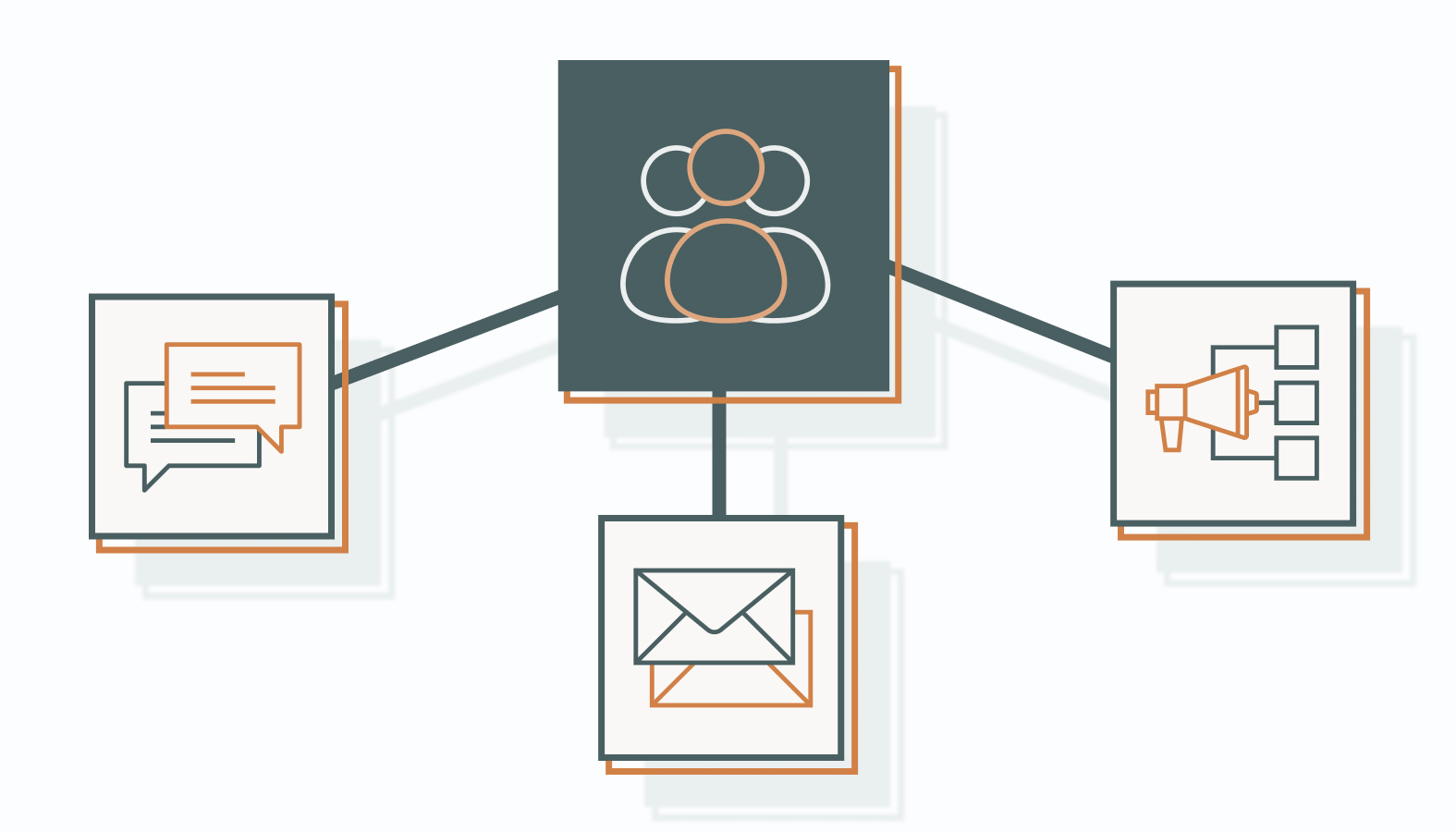
Advanced Segmentation: Separating Dead Ends From Golden Opportunities
Not every cold lead deserves the same attention. Audit your database using behavioral triggers such as repeat website visits, renewed email opens, product page views, or pricing page activity. Mailchimp’s analysis of segmented email campaigns found substantially higher click rates for segmented sends, reinforcing the value of tailoring messages to distinct audience groups. For dormant leads, that means separating high-intent contacts from genuinely inactive records instead of sending one generic win-back message to the entire database. Clean, vetted lead data through disciplined Sales Enablement & RevOps practices before you launch anything, since a messy list wastes effort on unresponsive contacts.
Prioritize contacts using a combination of fit, historical intent, recency, engagement, and potential deal value. A dormant enterprise opportunity that previously reached proposal stage should not receive the same treatment as an unqualified contact who downloaded a top-of-funnel article once.
Hyper-Personalization: Moving Beyond “Just Checking In”
A generic mass email is unlikely to give a dormant prospect a compelling reason to re-engage and can contribute to poor engagement or spam complaints when targeting is weak. It gets ignored, marked as spam, and enough of that hurts your domain’s deliverability for every campaign that follows. Personalize outreach using previous conversations, purchase history, CRM notes, content downloads, and current industry developments. Specific beats generic every time a cold lead decides whether to open your email.
“Just checking in” is one of the weakest openers available. It only asks the recipient to remember why the conversation mattered. Referencing the exact reason it stalled does that work for them.
Omni-Channel Orchestration: Moving Beyond the Inbox
Email alone isn’t enough to re-engage someone who’s already ignoring your inbox. Coordinate appropriate touches across Email & Lifecycle Marketing, LinkedIn, and, where supported by your advertising platform and privacy requirements, customer-list or account-based advertising audiences. A prospect who sees a relevant LinkedIn post the same week as a personalized email is more likely to respond than one getting the same message through a single channel repeatedly.
How to Reactivate Inactive Customers: A Three-Phase Win-Back Framework
Reactivating inactive customers at scale comes down to three phases: diagnosing why they went quiet, designing a win-back offer, and measuring what moved.
Cold leads and inactive customers require related but distinct reactivation strategies. A cold lead has not necessarily been purchased, while an inactive customer has an established history with the business. Lead re-engagement focuses on recovering buying intent; customer win-back focuses on understanding why an existing relationship became inactive and creating a relevant reason to return.
Phase 1: Diagnosing the Silence (Inactive vs. Lost Accounts)
Not every inactive customer relationship is permanently lost. Look at specific behavioral markers: login drops, missed contract renewals, email opens that stopped entirely. A temporarily quiet account still shows some residual activity. A lost account shows none. Before assuming the market or the timing killed the relationship, check your internal touchpoints first. A missed renewal call or an unresolved support ticket is a fixable problem, and it’s usually a more honest explanation than blaming external conditions.
This step matters because the fix depends on what actually happened. A prospect who went quiet because of an unresolved support issue needs a different first message than one whose budget got reallocated elsewhere.
Phase 2: The “Value-First” Win-Back Campaign Design
Rather than relying immediately on discounts, consider value-based offers such as exclusive insights, personalized audits, or early access to new features. These approaches often reinforce your expertise while giving prospects a meaningful reason to re-engage. Offer something with real value instead: proprietary industry data, early beta access, or a free optimization audit specific to their account. Blend that offer with thought leadership across a soft, automated sequence, LinkedIn touches paired with timed emails, so the outreach becomes a real conversation, not a sales push.
A tailored audit can demonstrate relevance before asking for a sales commitment, particularly when it addresses a problem documented during the original customer relationship. A blanket 20% off code signals the opposite: that the price was never firm to begin with, and that impression is hard to undo.
Phase 3: Quantifying the Impact (Real-World Retention Turnarounds)
Open rates alone tell you little about whether a win-back campaign generated business value. Track pipeline velocity, reactivation rate, revenue recovered, customer retention, and return on marketing investment. Those figures show the real financial impact. Once you have that baseline, build a repeatable model your team uses to audit database health regularly, instead of treating re-engagement as a one-time push.
A campaign with a modest open rate but pulls three enterprise accounts back into active pipeline beats a high open rate and nothing behind it. Measure and report accordingly, especially to leadership, who care about the figure at the bottom, not only the vanity metrics.
Essential MarTech & Retention Marketing Automation Tools
The leading re-engagement tools for customer retention marketing vary by the workflow they support, from behavioral segmentation and automated messaging to customer-data management and cross-platform integrations. These platforms help automate segmentation, outreach, and reporting across the customer lifecycle.
When evaluating these tools, separate core customer-engagement platforms from workflow automation tools. CRM and marketing automation platforms manage segmentation, scoring, messaging, and campaign triggers, while integration platforms connect those systems and automate data movement between them.
HubSpot Marketing Hub
HubSpot combines CRM data, behavioral insights, segmentation, and sales workflows in one platform, making it useful for teams that want to manage re-engagement activity alongside existing customer and prospect records. If your data already lives there, re-engagement segmentation takes far less manual work than piecing it together across disconnected tools.
Klaviyo
Klaviyo is built around customer data and purchase behavior, triggering hyper-personalized campaigns based on precise historical patterns rather than broad segments. It’s particularly strong for businesses with transactional purchase history.
ActiveCampaign
ActiveCampaign provides behavioral segmentation, automated campaigns, and pipeline-related workflows for businesses building more sophisticated re-engagement sequences. It’s often more accessible for teams building their first real re-engagement workflow.
Zapier / Make
Zapier and Make connect the rest of your stack, so a new form submission or other re-engagement signal can automatically trigger a sales notification, CRM update, or follow-up task instead of relying on someone to monitor the dashboard manually.
3 Critical Mistakes That Will Kill Your Re-Engagement ROI
Most re-engagement campaigns fail for one of three reasons: over-automation, ignored deliverability, or a broken hand-off between sales and marketing.
Over-Automation
A sequence that feels entirely robotic turns off exactly the prospect you’re trying to win back. If every touch reads as a template with a name swapped in, the automation does more harm than the silence it was breaking. Automation should create scale while preserving the context that makes the outreach relevant.
Ignoring Data & Deliverability
A list full of hard bounces and dead addresses damages your sender reputation for every campaign that follows, not just the re-engagement push. According to Google’s Gmail sender guidelines, senders should keep spam complaint rates below 0.1% and never let them reach 0.3% or higher. Outdated contacts increase the risk of hard bounces, while poorly targeted re-engagement messages can increase spam complaints. Both can undermine sender reputation, so list hygiene and audience relevance should be addressed before launching a win-back campaign. Clean your list before launching anything. A smaller, cleaner list outperforms a larger, messy one every time, since inbox providers judge your domain by responses, not by how many you tried to reach.
Lack of Sales-Marketing Alignment
A cold lead who opens three emails and clicks through to pricing is showing real signal, and that signal needs a clear hand-off rule to sales immediately. Without one, that reheated lead sits in a marketing queue. Re-engagement is about speed once interest returns, and a slow hand-off wastes the exact momentum the campaign was built to create.
FAQs About Re-Engaging Cold Leads
1) How long should a lead be inactive before it is considered “cold”?
A 90- to 180-day period of inactivity can be a useful starting point for many B2B teams, but the definition of “cold” should reflect the typical sales cycle, purchase frequency, and historical engagement pattern. A business with a nine-month cycle should wait longer before writing someone off than one with a six-week cycle.
2) Can re-engaging old leads hurt our domain email deliverability?
It can, if you skip the list hygiene step. Sending to outdated addresses full of hard bounces damages your sender reputation. Clean the list first, suppress contacts who should not receive marketing communications, and monitor bounce and complaint rates throughout the campaign.
3) What is a realistic conversion rate for a lead reactivation campaign?
Conversion rates vary by industry, audience quality, and campaign personalization. Rather than focusing on a benchmark, compare reactivation campaigns against your historical lead-to-opportunity and opportunity-to-close rates.
4) How do we align our sales and marketing teams when a cold lead suddenly wakes up?
Set a clear qualification trigger in advance, such as a high-intent form submission, pricing-page engagement combined with another buying signal, or a direct reply. Automatically route qualified signals to sales so renewed interest receives a timely follow-up. Waiting for someone to notice manually is how reheated leads go cold again.
5) Should we offer financial incentives or discounts to win back inactive enterprise clients?
Not necessarily. Enterprise customers may respond better to value-based offers, such as exclusive data, a tailored audit, expanded support, or early access to relevant capabilities. Discounts can still make sense when price is a documented barrier and the economics support the offer. Save discounting for genuinely price-sensitive segments where it fits the buying behavior.
Unlocking Your Dormant Revenue Pipeline
Your dormant database is a pipeline asset worth evaluating before increasing net-new acquisition spend. Effective re-engagement depends on identifying the contacts with the strongest combination of fit and historical intent, understanding why engagement stopped, and giving prospects a relevant reason to restart the conversation. The database sitting in your CRM right now is worth quantifying before your next planning cycle, not after it.
Before increasing net-new acquisition spend, quantify what is already sitting dormant in your CRM. If you want help evaluating dormant contacts, identifying re-engagement opportunities, and building a data-driven activation strategy, schedule a candid conversation with one of our experts. Bring your CRM data, and we can identify which dormant opportunities are worth pursuing and where re-engagement can support your pipeline goals.