Lifecycle marketing often lands on a marketing manager’s desk as a simple instruction: “Build it out.” What they inherit is usually a stack of disconnected email campaigns, rising churn, and no clear priority. That’s the actual starting point, not the clean six-stage diagram in a vendor deck.
Teams often treat lifecycle marketing as a channel or a project rather than a customer-state framework that connects customer behavior to revenue outcomes. The result is often a fragmented program: onboarding may improve while retention problems persist because other stages of the lifecycle remain unaddressed.
This guide gives you a six-stage framework, the metrics to assign to each stage, and a practical way to decide what to fix first. The goal is a 90-day plan you can defend with both customer and revenue data.
What Is Lifecycle Marketing?
Lifecycle marketing delivers targeted communications and experiences based on a customer’s current relationship with a business, from first interaction through retention, expansion, or churn. It isn’t a channel or a campaign type; email marketing is simply one channel used within a lifecycle program.
Traditional campaigns are usually time-bound and channel-specific. Lifecycle campaigns, by contrast, are triggered by customer behavior or changes in customer state and can span multiple channels. It maps business outcomes, like acquisition, activation, retention, expansion, win-back, to measurable customer behaviors, so every lifecycle communication has a defined trigger and a measurable success condition. Treating lifecycle marketing as “automated email” produces disconnected sequences that may not reduce churn or increase LTV because they aren’t tied to a shared customer-state model.
Email is one delivery channel inside a lifecycle program. Lifecycle campaigns also span in-app messaging, SMS, direct mail, paid retargeting, and sales touchpoints. What defines lifecycle marketing is the trigger logic, not the channel. A program built on email alone can miss high-intent moments when customers engage elsewhere—in the product, on the website, or through sales.
The Key Stages of the Customer Lifecycle
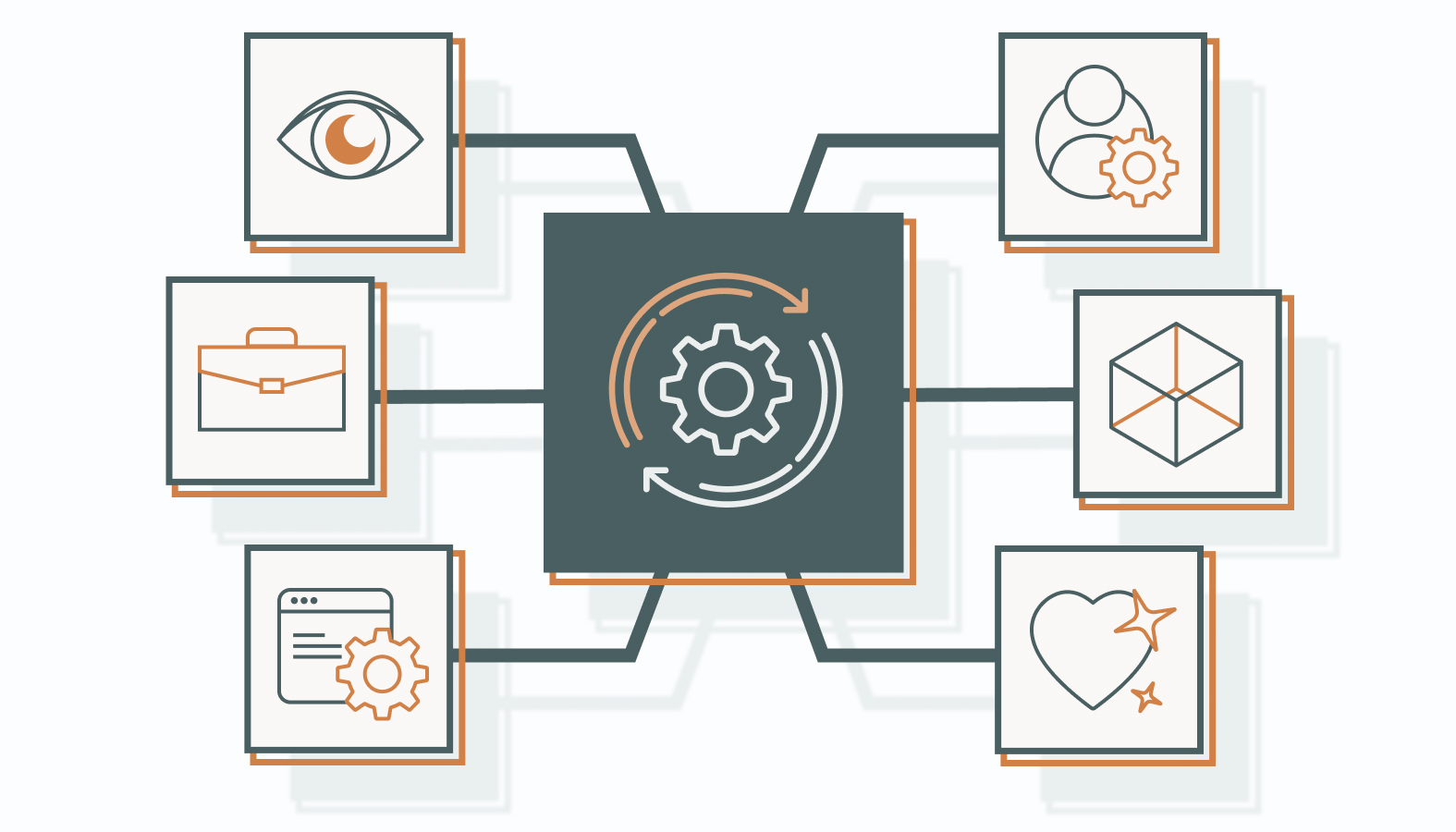
Lifecycle frameworks vary, but six stages provide a practical operating model for most B2B SaaS and e-commerce teams: Awareness, Acquisition, Activation, Retention, Expansion, and Win-Back.
- Awareness: The prospect has encountered the brand or product but has not yet demonstrated meaningful purchase intent.
- Acquisition: The prospect has taken a defined conversion action, such as starting a trial, requesting a demo, subscribing to a list, or making a first purchase. The specific acquisition event depends on the business model.
- Activation: The customer reaches the first meaningful value milestone, for example, completing a core product action in SaaS or demonstrating an early repeat-purchase signal in e-commerce.
- Retention: The customer continues using the product or purchasing from the brand at a frequency consistent with the business model and customer segment. The goal is to identify declining engagement or purchase behavior early enough to reduce churn.
- Expansion: The customer is a candidate for upsell, cross-sell, or seat expansion based on usage signals.
- Win-Back: A churned or lapsed customer is targeted with a defined reactivation intervention based on the reason, timing, or severity of disengagement.
Why Data Is the Foundation of Effective Lifecycle Marketing
Lifecycle programs depend on reliable customer data. Without it, stage entry and exit criteria become guesses, and triggers can reach customers at the wrong moment.
Lifecycle programs typically rely on three data categories: behavioral data (what the customer does), firmographic or demographic data (who the customer is), and transactional data (what they bought, how much they spent, and how often). When each type lives in a different tool, no single system can evaluate a customer’s full state, and the result is stage misclassification and irrelevant messaging.
Start with the simplest setup that gives your team a reliable customer state: a CRM, warehouse, or CDP that can connect behavioral, transactional, and customer-profile data. You don’t need a CDP to start. A CRM with custom properties and consistent event tracking supports most mid-market programs.
One of the easiest lifecycle mistakes is treating email engagement as customer health. Opens and clicks tell you whether someone interacted with an email, not whether they adopted the product, intend to buy again, or are at risk of churning. Email engagement measures channel activity, not customer health.
Awareness often gets excluded because demand generation owns it, but skipping it creates a handoff gap. Contacts entering the funnel with little prior education may require more activation effort, making the handoff from demand generation to lifecycle marketing especially important.
How to Build a Lifecycle Marketing Strategy That Works
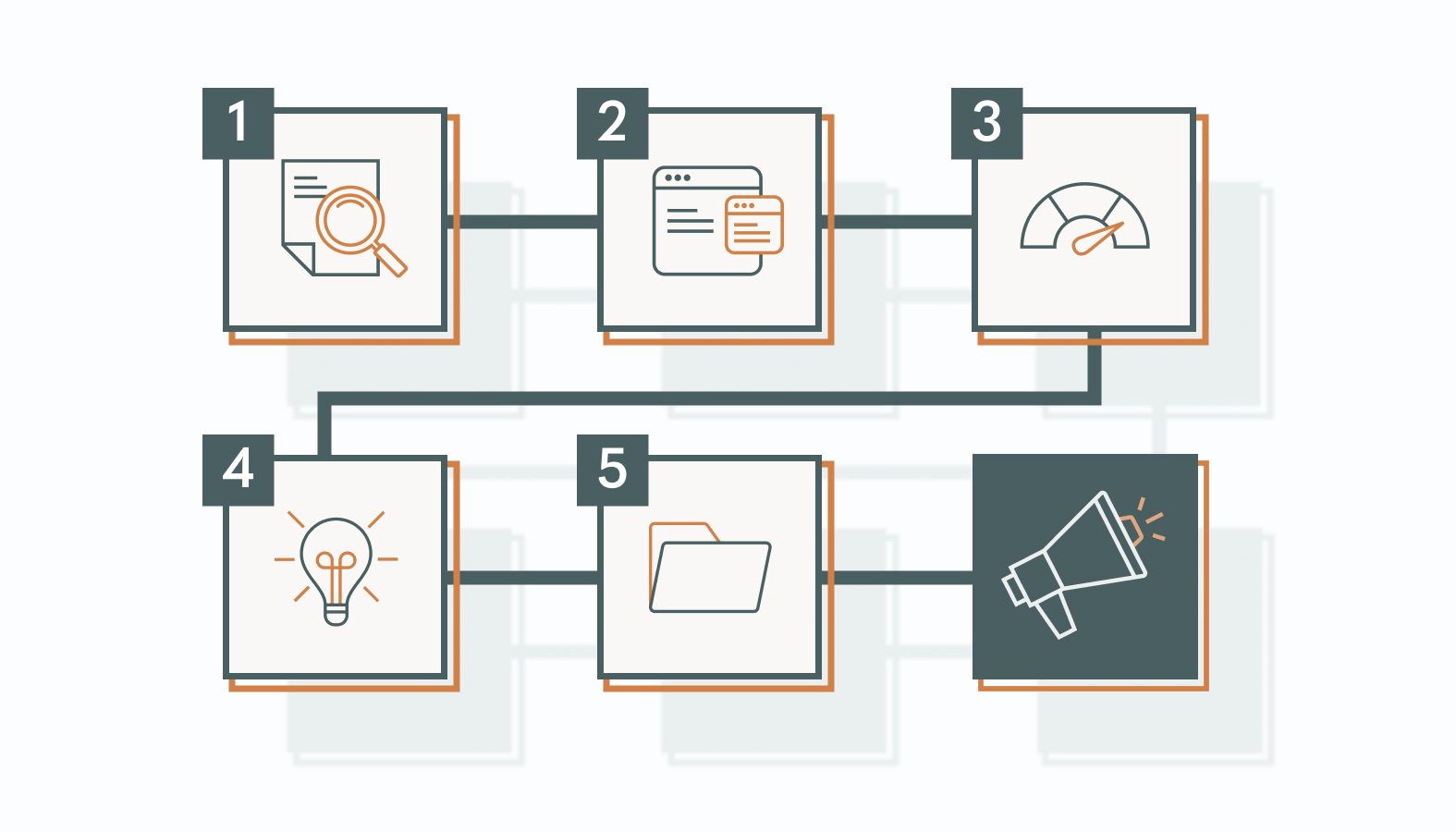
Build the program in sequence. The goal isn’t to implement every lifecycle tactic at once; it’s to identify the highest-impact problem and build around it.
- Audit current customer state coverage: Map every active campaign, automation, and major customer touchpoint to the lifecycle stage it serves. Identify which stages have no coverage and which have overlapping or contradictory messages.
- Define stage entry and exit criteria using behavioral data: For each stage, specify the exact event or metric threshold that moves a customer in or out. A SaaS customer might enter Retention after completing onboarding and logging in during week two, then exit to Win-Back after 30 days without a login.
- Assign a primary metric to each stage: One number that tells you whether the stage is healthy. Don’t track everything. Choose the metric most directly influenced by the intervention you’re building.
- Build the highest-priority stage first, not all stages simultaneously: Simultaneous builds produce shallow programs that are hard to maintain.
- Set a 90-day review cadence: Monitor trigger accuracy, delivery, and leading indicators throughout the period, then use the 90-day mark to decide whether to scale, revise, or replace the intervention.
Connect each stage to a revenue outcome your stakeholders already track: activation can improve CAC payback, retention influences LTV, and expansion contributes to net revenue retention. That’s how the program earns a continued budget, not by reporting email open rates.
How to Decide Which Lifecycle Stages Deserve Your Budget First
To decide which lifecycle stages deserve your budget first, use this decision sequence to identify the highest-leverage stage for your current situation, rather than guessing.
- Start with the stage closest to the largest measurable revenue leak. For SaaS, that may be Retention when churn is materially elevated; for e-commerce, it may be Acquisition or Activation when customers are failing to convert or return. Recurly’s July 2026 benchmark data puts median annual SaaS churn at 3.22%, with top-quartile performers at 1.78% or below. Use benchmarks as directional context, then compare your rate against your own historical performance, customer segment, contract structure, and revenue impact before deciding whether Retention is the highest-priority stage.
- If activation is materially below your historical or segment-specific baseline, prioritize Activation before investing heavily in downstream retention tactics. You’re retaining customers who never understood the product, and no retention campaign fixes that.
- If churn is acceptable but net revenue retention is below your growth target, investigate Expansion, particularly if existing accounts show clear opportunities for upsell, cross-sell, or increased usage.
- If all three are healthy, Win-Back is the last priority. It has the lowest conversion rates and the highest cost per recovered customer.
The principle is straightforward: prioritize the stage creating the largest measurable revenue leak before investing heavily in stages that are merely underoptimized.
The Best Tools and Channels for Lifecycle Marketing
Tool and channel selection should follow strategy, not precede it. Don’t buy your way out of an undefined strategy. Define the customer states, triggers, and metrics first; then buy only the technology needed to execute them reliably. Tools built on an undefined strategy just replicate the same disconnected campaigns at a higher cost.
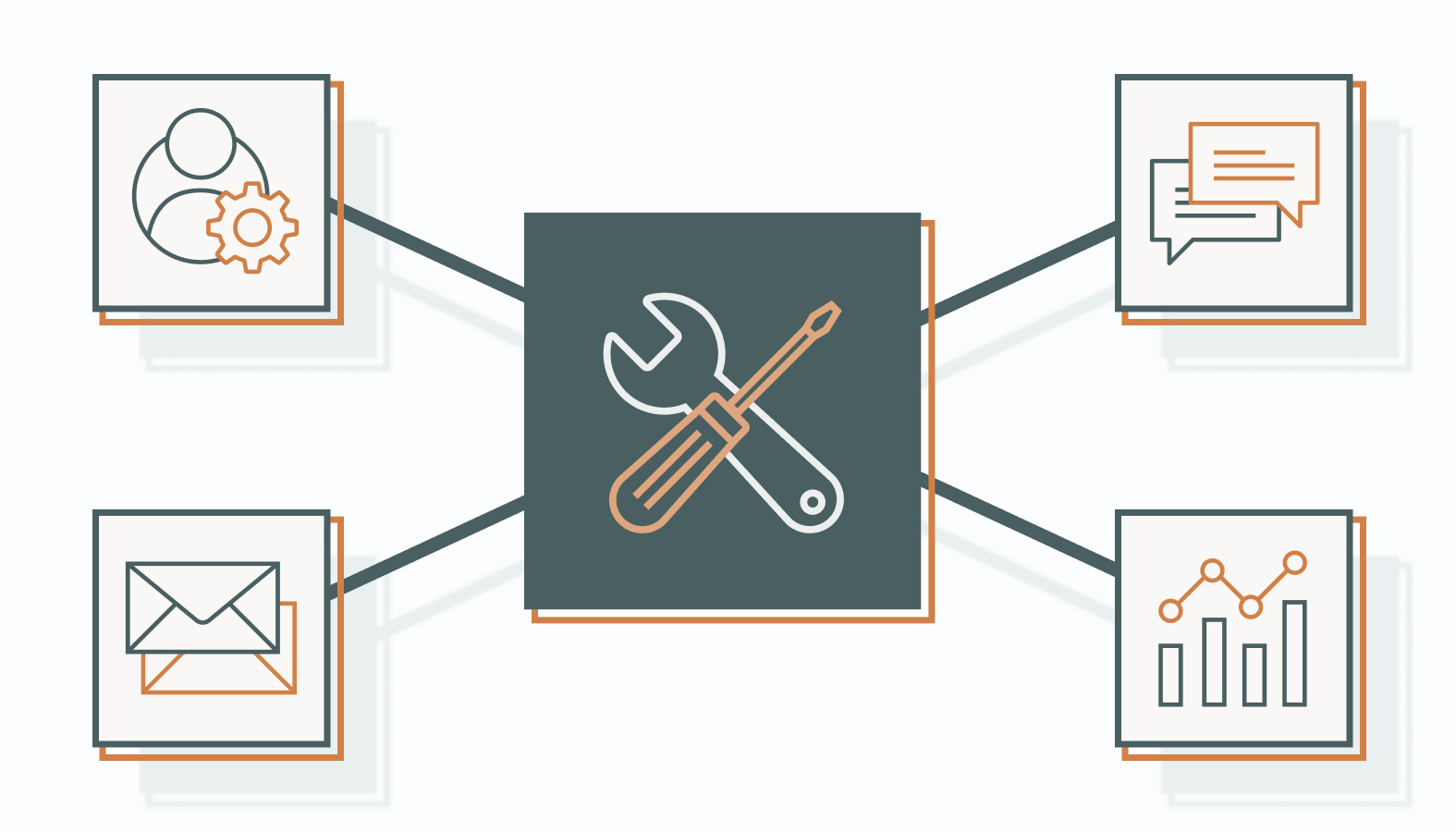
Categorize tools by function, not by vendor name:
- Customer data layer. A CRM, a CDP, or a data warehouse with reverse ETL. Choose based on your data volume and engineering capacity.
- Communication execution. An email platform with behavioral trigger support. The critical capability is event-based triggering, not template design.
- In-product messaging. Useful for SaaS Activation and Retention when customers spend meaningful time inside the product.
- Analytics and attribution. The tool that closes the loop between lifecycle interventions and revenue outcomes. Without this, the program can’t be defended at budget time.
Email remains an efficient channel for many lifecycle use cases, but the right channel depends on the customer state, urgency, and behavior you want to influence. Shopify’s guidance on win-back campaigns notes that SMS is best suited for urgent, time-sensitive messages, like a 24-hour “we miss you” offer. In practice, that’s what a Win-Back stage needs. According to Braze’s data, cited by Business of Apps, users who receive in-app messages show engagement rates 131% higher than users who receive none. That’s why in-app messaging wins for Activation guidance.
Add a CDP only when data fragmentation causes stage misclassification, or integration maintenance exceeds the CDP’s cost. Most mid-market teams can run a functional lifecycle program for 12 to 18 months on a well-configured CRM before a CDP becomes necessary.
Why Lifecycle Marketing Matters for Long-Term Growth
Lifecycle marketing matters for long-term growth because it improves retention by even two percentage points, which compounds into meaningful LTV gains over a 24-month horizon.
Connect lifecycle marketing to the revenue metrics your stakeholders already use: retention and churn, CAC payback, LTV:CAC, expansion revenue, and net revenue retention. A program that can’t be expressed in these terms won’t survive the next budget cycle.
Lifecycle programs improve over time because each stage generates data that refines the next. A campaign-based approach resets with every send. A lifecycle program accumulates signals.
Lifecycle marketing customer retention strategies split into two categories: defensive (preventing churn) and offensive (expanding revenue from existing customers). Both are lifecycle functions, but they require different data and content. Optifai’s benchmark study across 939 B2B SaaS companies found that median net revenue retention runs from 97% for SMB up to 118% for enterprise accounts, and an NRR above 100% means the existing customer base is generating more recurring revenue than it was at the beginning of the measurement period, before accounting for new-logo acquisition. Lifecycle marketing is the mechanism that drives that number up. It isn’t a cost center. It converts acquisition spend into durable revenue.
How to Measure the Success of Your Lifecycle Marketing Efforts
Measure lifecycle marketing at the stage level, not through program-wide vanity metrics. Aggregate email open rates tell you nothing about which stage is healthy and which is broken.
| Lifecycle Stage | Primary Metric | Secondary Metric |
| Awareness | Qualified engagement rate | Cost per qualified engagement |
| Acquisition | Conversion rate to a qualified customer/prospect | Time to first meaningful action |
| Activation | Activation rate (core value moment) | Time to activation |
| Retention | Customer/account retention rate | Product or purchase engagement |
| Expansion | Expansion revenue | Upsell/cross-sell conversion rate |
| Winback | Incremental revenue from reactivated customers | Reactivation rate |
Review stage metrics monthly at minimum. If a stage metric remains flat despite sufficient volume and time to observe an effect, investigate the trigger, audience definition, offer, content, or underlying data.
Attribution is one of the hardest measurement problems in lifecycle marketing. Customers receive multiple touchpoints, and last-touch attribution undercounts early-stage interventions. Use multi-touch or time-decay attribution where your tooling supports it.
Establish internal baselines before comparing to industry benchmarks, since stage metrics vary by business model, price point, and segment. Benchmark reports offer directional context, not a replacement for your own trend analysis.
Frequently Asked Questions About Lifecycle Marketing
1) What are the stages of lifecycle marketing?
Six functional stages: Awareness, Acquisition, Activation, Retention, Expansion, and Win-Back. Each is defined by customer state, not tactic. The exact number of stages varies by framework, but the underlying logic stays consistent.
2) How important is data to lifecycle marketing?
It is foundational: without reliable behavioral and transactional data, stage criteria and triggers become much harder to define accurately. Without behavioral and transactional data unified at the customer level, stage criteria can’t be defined, triggers misfire, and the program produces irrelevant messages that accelerate disengagement instead of preventing it.
3) How can data improve each stage of the customer lifecycle?
Behavioral data drives Activation and Retention. Transactional frequency and recency data drive Win-Back targeting. Usage data drives Expansion. The value compounds across stages, since each stage generates a signal that improves the next.
4) What are some of the best tools for lifecycle marketing?
Organize by function, not vendor name: a customer data layer (CRM or CDP), communication execution (an email platform with event-based triggering), in-product messaging for SaaS, and analytics. Tool selection should follow a defined stage strategy, not precede it, and most mid-market teams can start with existing tools before investing in a CDP.
Start Optimizing Your Customer Journey
Lifecycle marketing is a customer-state framework, not a campaign type. Its value comes from connecting each stage to a defined customer behavior, a measurable outcome, and a clear next action.
Start with the stage producing the most revenue damage, build the trigger and content for that stage, measure it for 90 days, then move to the next. Don’t attempt to build all stages at once with constrained resources.
Audit your current automations against the six lifecycle stages. Identify which stages have no coverage and which primary metric sits furthest from a healthy baseline. That gap is where your 90-day plan starts. If you want an experienced outside perspective, schedule a candid conversation with one of our experts to identify where your lifecycle is leaking revenue and what to fix first.