The best tools for content gap analysis in 2026 have moved past simple keyword matching into something closer to semantic entity coverage and intent fulfillment. A tool that only tells you which keywords a competitor ranks for, and you don’t, is working from an incomplete model of how search functions now.
The bigger shift now is AI search visibility. Google AI Overviews, Perplexity, and other AI-native search surfaces don’t work the way a traditional results page does, and a gap that once showed up primarily as a ranking disadvantage can now also mean losing visibility as a cited source in AI-generated answers. If you want to know how to identify gaps in AI search visibility SEO, start with understanding that a brand can rank on page one and still be invisible inside an AI Overview that never mentions it.
This guide covers what to look for in a modern content gap stack and which specific tools are genuinely worth your budget in 2026.
The Hidden Cost of Manual Auditing: Why Legacy Frameworks Fail
A manual, static spreadsheet audit can be outdated almost as soon as it gets delivered, particularly when the underlying data changes quickly. The data may have been current when it was pulled. By the time a client opens the file, competitors may have published new content, rankings may have shifted, and the spreadsheet can already be describing a materially different competitive landscape.
Scale is the real underlying issue here, not effort or a lack of trying. A mid-sized site compared against five real competitors across tens of thousands of keywords produces more data points than any team can manually track, let alone refresh weekly.
Operational efficiency isn’t a nice-to-have at that scale. It’s the only thing that makes the audit useful past the day it was run, and it’s a delivery framework a growth partner should already have built rather than reinventing for every new client.
What to Look for in a 2026 Content Gap Stack
The right stack does three things a legacy keyword tool never could, and all three matter more now than they did even a year ago, as AI-native search keeps taking a larger share of how people find information.
First, it should help measure AI visibility, including whether your content appears as a cited source in AI-generated answers.
Second, it needs bulk cross-domain analysis, so you can compare topical coverage across entire sites rather than manually comparing one URL against another.
Third, it needs API and workflow interoperability, pushing data into wherever your team actually works, whether that’s ClickUp or a custom internal database.
The Top Content Gap Analysis Engines for Mid-Market & Enterprise Brands
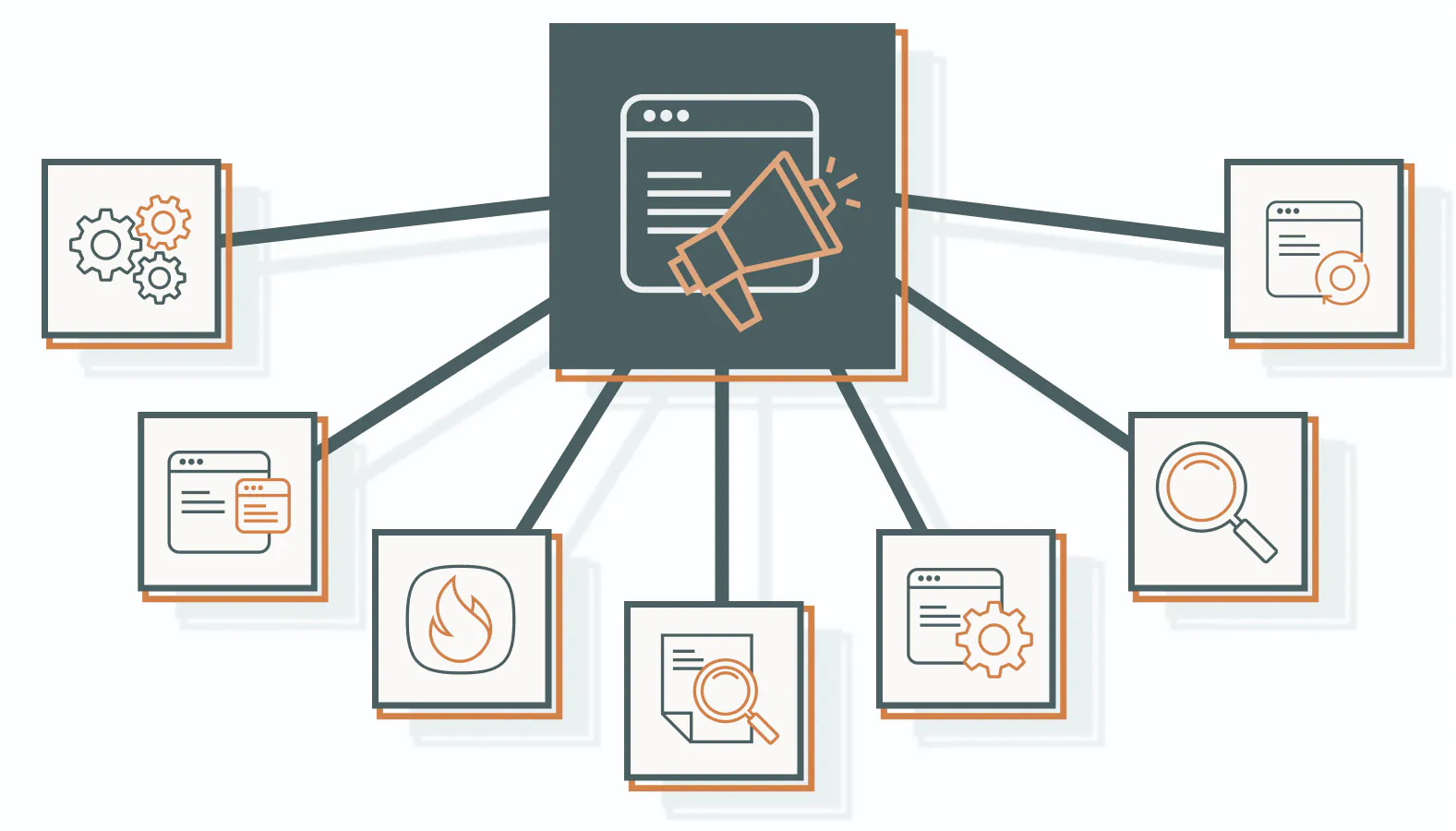
Choosing the right content gap analysis tool depends not on which one has the longest feature list but on where your current process is actually breaking down. Each of them does something different, and most serious stacks end up combining two or three of them rather than relying on just one, since no single platform yet covers discovery, semantic modeling, and execution equally well.
RankLynk — The Autonomous Gap-to-Publish Engine
RankLynk automates the full pipeline from gap identification straight through to publish, which is a meaningfully different category from tools that only stop at reporting and leave the actual writing to someone else. Its AI features are built to identify a content gap and generate a draft against it in the same workflow, cutting out the handoff delay between finding an opportunity and acting on it. Pricing typically scales with content volume rather than seat count, which matters for a team publishing at scale rather than a handful of posts a month.
This is the right fit for a team that has more validated gaps than it has hours to act on them manually. The actionable tip here: don’t let the automation run fully unsupervised on your highest-value pages. Use it to clear the long tail fast, and keep a human reviewer on anything tied directly to your core revenue keywords.
Semrush Content Gap Tool — Macro Share of Voice & Competitor Intel
Semrush’s content gap feature is built for competitive keyword and topic analysis at a macro level, showing you where competitors have keyword visibility that your site doesn’t, rather than limiting the comparison to a single term. It integrates cleanly with the rest of the Semrush suite, so a gap you find here connects to the same platform’s reporting and tracking tools, which saves the step of exporting data into a separate system.
This is a strong fit for a team that wants gap analysis and ongoing competitive tracking under one roof, rather than stitching together multiple platforms. The practical tip: compare multiple search competitors rather than just your closest business rival, since the widest gaps can come from sites you don’t consider direct competitors.
Ahrefs Content Gap — Granular Link & Click-Metric Benchmarking
Ahrefs’ academy documentation describes Content Gap as its competitive analysis tool for seeing which keywords competitors’ sites rank for that yours doesn’t, and its own walkthrough uses this filtering approach, narrowing results to keywords where multiple competitors rank in the top 10, to uncover untapped opportunities fast.
Ahrefs adds filters for metrics such as keyword difficulty and traffic, along with position and SERP-level filters that help narrow a large gap report into more actionable opportunities. A term with high search volume but low organic CTR may be less attractive than its volume suggests, particularly when SERP features or AI Overviews satisfy the query without requiring a click.
Use the Content Gap report specifically to filter for low-hanging fruit: keywords where multiple competitors already rank and you don’t, which can surface lower-friction opportunities because competitor rankings provide evidence that the query has search demand and established search intent.
This tool is best for a team that wants to benchmark against several competitors at once rather than just one, and the backlink data layered on top gives useful context for why a competitor is winning a specific term.
MarketMuse — Premium Topic Modeling & Semantic Analysis
MarketMuse is built around AI-driven topic modeling, surfacing authority gaps at the level of an entire subject, not individual keywords. MarketMuse’s product page states that while most content brief tools only analyze the top 10 to 30 results on a Google SERP, its AI analyzes hundreds to thousands of pages to build a topic model, with the goal of identifying broader topic coverage rather than simply replicating the language used by the top-ranking pages. It’s the right tool for deep, upfront content planning rather than quick tactical wins, since its real value shows up when you’re mapping out a full topic cluster before writing a single piece.
The platform sits at a premium price point, which makes the most sense for a team planning a genuine content investment rather than running a one-off audit. Treat the output as a planning document your whole content team references for a full quarter, not a report you generate once and quietly file away.
Surfer SEO — Tactical, SERP-Driven Structural Optimization
Surfer focuses on the structural side: SERP-driven content briefs that tell you what a page needs to include based on what’s already ranking, down to word count ranges and specific terms competitors are using. It also integrates with tools including Google Docs, WordPress, Zapier, and its API, so it can fit into an existing content-production workflow rather than operate as a standalone editor.
This is the tool for the execution stage, once a gap has already been identified and someone needs to know how to structure the page that fills it. Run the audit feature on existing pages too, not just new ones, since a page missing a structural element competitors already have is often an easy, quick fix rather than a full rewrite from scratch.
Moz Pro Keyword Gap — Authority-Weighted Opportunity Discovery
Moz’s verified product listing describes its Keyword Gap tool as comparing your domain against competitors to surface keywords they rank for that you don’t, and its keyword explorer separately shows search volume, difficulty, and Domain Authority benchmarks for any term. Moz brings its Domain Authority and Page Authority metrics into the broader competitive-research workflow, giving teams an additional benchmark alongside keyword overlap and ranking data. Its keyword explorer is easy to use without a steep learning curve, which matters if the person running the audit isn’t a full-time SEO specialist and needs to get a usable answer without weeks of onboarding.
Its positioning makes it a practical option for teams that want competitor keyword analysis without building a more complex enterprise SEO stack.
Clearscope — Premium Semantic Modeling & Content Health Quality
Clearscope’s strength is semantic and topical coverage, helping writers evaluate whether a piece covers the concepts and terms associated with the target topic. It’s built for brief generation and content optimization, less for the initial gap discovery, so it works best paired with a discovery tool rather than standing alone as your only platform.
Pair it with a discovery tool like Semrush or Ahrefs, and use Clearscope for the writing stage that follows, once you already know which gap you’re filling and need the finished piece to be comprehensive enough to compete against what’s already ranking.
Architectural Blueprints: Automating Your Content Pipeline
Stop exporting CSVs. Connecting your content workflow to Google Search Console or GA4 can help flag declining pages earlier, especially when you build automated monitoring around clicks, impressions, conversions, or other performance signals.
The full agency-scale workflow looks like this: gap discovery happens inside the tool, the resulting brief gets optimized through an LLM layer, the task routes automatically into a project management platform like Asana or ClickUp, and distribution happens from there.
Each step should hand off automatically to the next. A workflow that still relies on repetitive manual handoffs isn’t meaningfully automated, no matter how sophisticated the individual tools are.
Frequently Asked Questions
1) How do modern tools identify gaps in AI search visibility?
Modern tools for content analysis move beyond simple keyword tracking. Semrush’s LLM Gap Analyzer can compare your article against sources cited in Google AI Overviews, identify missing information or weak areas, and provide recommendations for improving the content’s chances of being cited. That’s a fundamentally different data set than a traditional keyword rank tracker was ever built to capture, since a page can rank well and still never get pulled into an AI-generated answer.
2) Why should large enterprises avoid manual content gap spreadsheets?
The math doesn’t hold up at scale. At enterprise scale, a site with thousands of pages compared against multiple competitors across tens of thousands of keywords can quickly produce millions of rows of comparative data, and it’s already obsolete when it’s exported, since nothing in a static file updates itself as competitors publish new content the following week.
3) Which content gap tool is best for agencies managing multiple client accounts?
Evaluate strictly on multi-tenant architecture, white-label API reporting, and seat licensing limits, not on whichever platform has the flashiest single-account dashboard. A tool built for a single in-house team often breaks down fast once an agency tries to run it across a dozen separate client accounts at once, and licensing costs that seemed reasonable for one brand can become unworkable once multiplied across a full client roster.
4) How often should an automated content gap audit be scheduled?
Run a tiered schedule instead of treating the audit as a one-off project: use monthly or quarterly competitive audits for broader movement, then use automated monitoring for meaningful changes in clicks, impressions, rankings, or conversions. The cadence should match the speed of change in your market and the value of the pages you’re monitoring.
Stop Guessing Where Your Traffic Is Going
A tool stack is only as powerful as the strategic mind actually operating it. Technology eliminates much of the manual work involved in pulling and cross-referencing data. It doesn’t eliminate the strategic decision about what to prioritize. Building a roadmap that supports revenue still requires an experienced growth leader deciding which gaps are worth pursuing and why.
Tired of unfulfilled marketing promises and wasted budgets? Schedule a candid conversation with one of our experts to map an autonomous data strategy for your business today.