


Lead qualification is the process of determining which prospects are most likely to become customers and which ones are unlikely to convert. This distinction matters because there’s a significant difference between a sales pipeline that looks impressive in terms of volume and one that consistently generates revenue.
This article explores the fundamentals of sales lead qualification, including what it is, why it matters, where many teams go wrong, and how to build a qualification process that helps sales teams focus on opportunities with the highest potential.
What is Lead Qualification
Not every lead is worth pursuing. Lead qualification is how sales teams determine which prospects have a realistic chance of converting into paying customers. It helps identify high-potential opportunities while filtering out poor-fit contacts, allowing the team to focus their time and effort where it’s most likely to generate results.
In the sales process, qualification acts as a bridge between marketing and sales. Without it, sales representatives often spend valuable time chasing prospects who were never likely to buy. That’s what sets lead qualification apart from lead generation. The latter casts a wide net to attract potential customers, while the former evaluates those prospects to determine which ones are ready and worth pursuing.
In other words, lead generation fills the top of the sales funnel, while lead qualification determines which opportunities are most likely to move through it.
Key Criteria for Sales Lead Qualification
Sales lead qualification relies on a combination of data points and behavioral signals, never on assumptions.
- Demographic and firmographic data: Is this person in the right industry? Does their company size match your ideal customer profile? Are they in a region you serve?
- Behavioral triggers and intent signals: Have they downloaded a resource, attended a webinar, or requested a demo? Those actions speak loudly. Someone who sat through a 45-minute webinar is in a different category than someone who clicked an ad once and went away.
- Qualification frameworks: BANT (Budget, Authority, Need, Timeline) and CHAMP (Challenges, Authority, Money, Prioritization) are helpful. Neither one is a perfect system, but having a framework at all puts you ahead of teams that are qualifying on instinct alone.
The specific criteria you prioritize will depend on your business, industry, and sales process. However, the most important step is establishing clear qualification standards so every lead is evaluated consistently. Without a defined process, sales teams are more likely to pursue low-quality leads while overlooking stronger opportunities.
The Pitfalls of Chasing Lead Volume
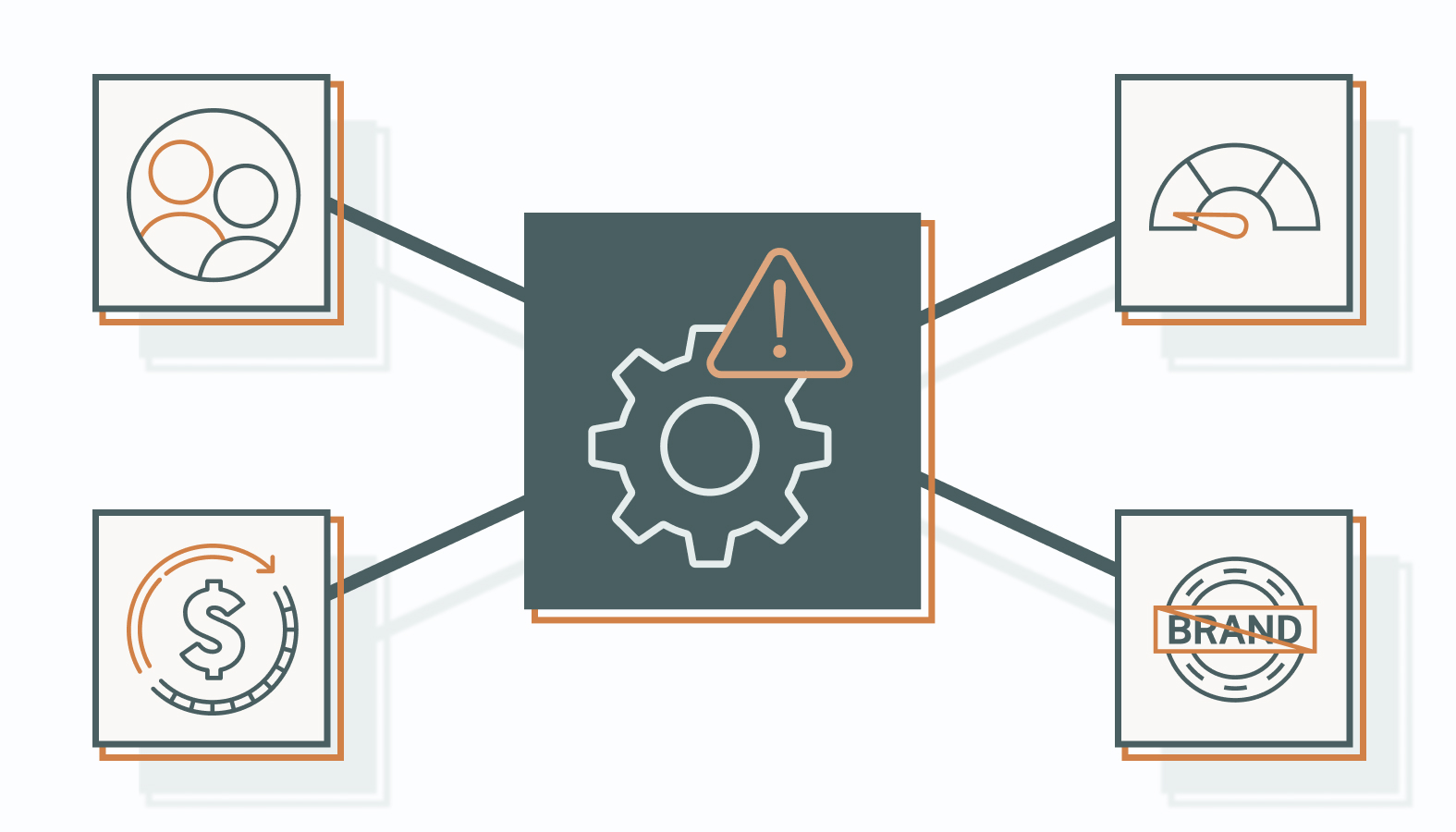
Prioritizing lead volume over lead quality creates problems that compound over time: lower conversions, wasted budget, and a sales team that’s constantly busy but rarely closing.
Overwhelmed Sales Teams and Wasted Resources
Give a sales rep a list of 500 contacts with no qualification behind it and watch what happens. They’ll work through it, sure, but a huge chunk of those conversations will go nowhere. In the long run, that wears people down. It’s not that reps aren’t trying, but it’s actually the leads that weren’t ready to begin with, and that eventually shows up in attitude, effort, and results.
There’s also a resource cost that doesn’t always show up on a report. The hours spent reaching out to leads that were never going to convert are hours not spent on the ones that could have.
Lower Conversion Rates and Inaccurate Forecasts
A pipeline full of unqualified leads looks healthy on the surface until you start tracking what closes. When volume is high but conversion is low, that’s usually more of a qualification problem than a sales problem.
Forecasting becomes a guessing game at that point. Leadership is looking at a pipeline full of contacts and making decisions based on figures that don’t reflect reality. Budgets get set wrong, hiring plans get thrown off, and the quarter ends with a gap nobody fully saw coming. That whole chain of problems starts at the qualification stage, which is exactly why fixing it there matters more than trying to patch it later.
Lead generation services that prioritize quantity over quality tend to make this worse. When the leads coming in haven’t been properly screened, the conversion data gets more messed up, and the forecasting problem compounds.
Increased Marketing Spend with Diminishing Returns
Generating leads costs budget, whether through ads, content, outreach, or lead generation services. When a large share of those leads is the wrong fit, that spend doesn’t come back.
Chasing volume without qualification criteria tends to push marketing budgets toward the contacts least likely to close, and the return keeps shrinking the longer that continues.
Damage to Brand Reputation and Customer Experience
Reaching out to prospects who are a poor fit (wrong industry, wrong role, wrong timing) doesn’t just waste time. It also leaves an impression because people who receive irrelevant outreach might remember it, but not in a positive way.
If that kind of outreach happens repeatedly and at scale, it starts to affect how people think about the company doing it. A prospect who feels contacted incorrectly two or three times in a row isn’t going to be easy to win over later, even if the timing eventually turns out to be right. Trust takes a while to build, and not much to lose it, and aggressive outreach to the wrong audience is one of the fastest ways to prove that trust is indeed hard to gain.
Why Lead Quality Matters More Than Lead Volume

Lead quality matters more than volume because fewer, better leads consistently outperform larger volumes of poorly matched ones. That holds across conversion rates, sales cycle length, and revenue predictability.
When reps talk to people who fit the profile and have shown real interest, the conversations are different. There’s less resistance, less explaining, and a much shorter path from first call to closed deal. That’s what lead qualification brings to you. It’s not just about better data but better use of everyone’s time.
How Lead Generation Services Can Support Quality
Here’s the thing about lead generation services: the difference between a good one and a mediocre one shows up directly in your sales lead qualification results.
What to look for:
- Services that use intent data and behavioral signals, not just contact lists
- Providers that take time to understand your Ideal Customer Profile (ICP) before generating leads
- Transparent qualification criteria, because you should know how a lead was scored before it reaches your CRM
- Feedback loops that allow your sales team to flag poor-fit leads so the service can adjust
The best lead generation services work as an extension of your sales process, not just as a vendor filling a quota. When they’re properly integrated with your sales lead qualification criteria, the leads coming in are already pre-filtered, which means your team can focus on closing rather than sorting.
A good marketing agency can help businesses build and manage this kind of lead pipeline, one where quality is built into the process from the start.
Building a Lead Qualification Process That Works

An effective lead qualification process is repeatable, measurable, and aligned between sales and marketing. Here’s how to build one:
- Define your ICP: Be specific. “Mid-sized B2B companies” is not an ICP. Industry, company size, role, pain points, and what usually triggers a purchase decision are where to start.
- Set qualification criteria: Pick a framework like BANT or CHAMP and adapt it. The out-of-the-box version won’t fit every sales context, so adjust it until it reflects how your best customers buy.
- Align sales and marketing: If both teams are working from different definitions of what a qualified lead looks like, leads will fall through the cracks. Getting alignment here saves a lot of friction downstream.
- Build a lead scoring system: Attach values to actions and attributes. A prospect who attended a demo and works at a company in your target range should score higher than someone who opened one email. Leads that cross a certain threshold move forward; others go into a nurture track.
- Use the right tools: HubSpot, Salesforce, Marketo, and Bombora are the market platforms that exist specifically to help teams track, score, and act on lead data without doing it all manually. Pick what integrates with your existing setup.
Review regularly, as qualification criteria should be updated as your market changes. What worked last year may not reflect your best customers today.
Common Mistakes to Avoid:
- Relying on job title alone without factoring in intent or timing
- Letting marketing automation run without human review
- Skipping the feedback loop between sales and marketing
Continuous Improvement in Lead Qualification
Lead qualification is more than a one-time project or setup because markets shift, buyer behavior changes, and what made somebody a good lead a year ago might not hold today, so your approach must also adapt to and go with the changes.
The teams that stay sharp on this treat their sales representatives as a real source of information. Reps know things about what’s happening in conversations that don’t always make it into a CRM, such as what objections are coming up, which industries are responding, and which lead sources are consistently going cold. That feedback, gathered regularly and acted on, is what keeps a qualification process from going stale.
On the metrics side, watch lead-to-opportunity conversion rate, average deal size, and sales cycle length. If those start to move in the wrong direction, something in the qualification process needs a closer look.
Frequently Asked Questions (FAQs) About Lead Qualification

1) What are the best practices for identifying qualified sales leads?
The starting point is a shared ICP: one that sales and marketing have both had a hand in defining, and both actually use. From there, layer in firmographic data alongside behavioral signals so you’re evaluating fit and intent together instead of separately. A framework like BANT or CHAMP keeps the process consistent across the team. Review your closed-won deals regularly to spot patterns among your best customers, as those patterns should inform your qualification criteria to go forward.
2) What is the difference between an MQL and an SQL?
An MQL (Marketing Qualified Lead) is a prospect who is engaged enough that marketing believes they are worth passing to sales. They fit your ICP and have taken actions (like filling out a form or attending a webinar) that suggest potential interest.
An SQL (Sales Qualified Lead), on the other hand, is what happens after sales takes a look and agrees. It means the lead has been reviewed and meets the additional criteria (budget, authority, timeline) that make them worth a direct conversation.
MQL is marketing saying “this one looks promising.” SQL is sales saying “we’re ready to move on this.” The handoff between the two is where deals either gain momentum or quietly die. When both teams have agreed upfront on what moves a lead from one stage to the other, like a score threshold, a demo request, or a specific action, the whole process runs cleaner and faster.
3) Why is a lead qualification checklist important?
Without a checklist, qualification becomes inconsistent. One rep might move a lead forward based on a good conversation; another might hold back a nearly identical lead because they had a bad week. A checklist removes that variability because every lead gets evaluated against the same criteria, regardless of who’s doing the reviewing.
A solid checklist includes:
- Does the lead fit the ICP in terms of industry, company size, and role?
- Have they shown buying intent through their actions?
- Do they have the authority to make or influence a purchase decision?
- Is there an identified budget or a timeline for making a decision?
- Are there any obvious disqualifiers?
Additionally, this makes onboarding new team members faster, since the criteria are written down rather than just passed along in an unorganized way.
4) What are signs that my team is focusing too much on lead volume?
A few patterns tend to show up when volume is being prioritized over quality, such as:
- Conversion rates from lead to opportunity are declining
- Sales reps regularly complain about the quality of leads in the pipeline
- Sales cycles are getting longer without a clear reason
- Marketing and sales are pointing fingers at each other over pipeline performance
- Marketing budgets are increasing, but revenue isn’t following
When these show up together, the issue is usually rooted in qualification, or the lack of it. Start by pulling lead-to-opportunity conversion data and sitting down with your sales team for an honest conversation about what they’re actually seeing. Not a formal review, just a real conversation about which leads are worth their time and which ones aren’t.
Elevate Your Sales Success by Prioritizing Lead Quality Over Quantity
A bigger pipeline isn’t a better pipeline. It’s just more to manage. The sales teams that hit their targets consistently aren’t the ones with the longest lead lists but the ones that know exactly who they’re chasing and why, with fewer leads but better fit, and a process that supports their plans and business strategies.
If your data is flat, your forecasts keep missing, or your team is busy but not closing, the qualification process needs to be reviewed. Start with your ICP, check whether sales or marketing are working from the same idea of a good lead, and look honestly at whether the data behind your pipeline reflects actual buying intent. Small adjustments at the qualification stage can have a bigger impact.
If you’d like help reviewing your current process, Agency is happy to take a look. Schedule a candid conversation with one of our experts » and we’ll give you an honest read on where your lead qualification stands or falls. No pressure, just an honest look at your pipeline and where the gaps are.