


A strong B2B value proposition can determine whether a prospect ignores your message or starts a sales conversation. It’s the short, clear explanation of why your product or service solves a business buyer’s specific problem better than the alternatives. For marketing leaders, content managers, and founders, getting this statement right shapes everything downstream, from messaging to sales conversations to the campaigns built around them.
This guide walks you through what separates a working value proposition from what just sounds good, and how to build one using a framework you can repeat.
Understanding a B2B Value Proposition
A B2B value proposition explains what your business offers, who it serves, and why it delivers better outcomes than competing alternatives.
What Makes a B2B Value Proposition Beneficial
An effective B2B value proposition does three things simultaneously:
- identifies the buyer’s problem accurately
- explains the outcome your solution produces
- gives a reason to believe you over a competitor
Missing any one of those three makes the statement turn into filler that sales teams end up rewriting on their own.
The strongest versions are short enough to say out loud without losing meaning. If a rep can’t repeat it accurately after hearing it twice, it’s too long or too abstract.
How B2B Differs from B2C Value Propositions
Consumer buyers usually make a decision alone, often based on price, convenience, or how a product makes them feel. Business buyers, on the other hand, rarely have that kind of luxury because a purchase typically passes through several people, each one weighing it against a budget line and a set of internal risks.
That difference changes what a value proposition needs to say. A B2C pitch can lean on emotion, while A B2B one has to answer harder questions: What does this fix? What does it cost to ignore the problem? Who else needs to sign off before this moves forward?
Why It’s the Foundation of Effective B2B Marketing
Every campaign, landing page, and sales deck traces back to the value proposition. When the core statement is unclear, everything built on top of it lacks clarity — ad copy drifts, sales messaging contradicts marketing messaging, and content stops connecting to a clear reason for existing.
Get the value proposition right first so that the rest of the B2B marketing stack has something solid to build from.
How B2B Positioning Shapes Your Value Proposition Development
B2B positioning shapes where your company sits in the market relative to competitors, which dictates what you can credibly promise to buyers. It lays the groundwork for a value proposition that resonates.
Skip this step, and your messaging will likely sound generic, like every other company in the category, because it wasn’t built against anything specific.
Defining Your Market and Audience
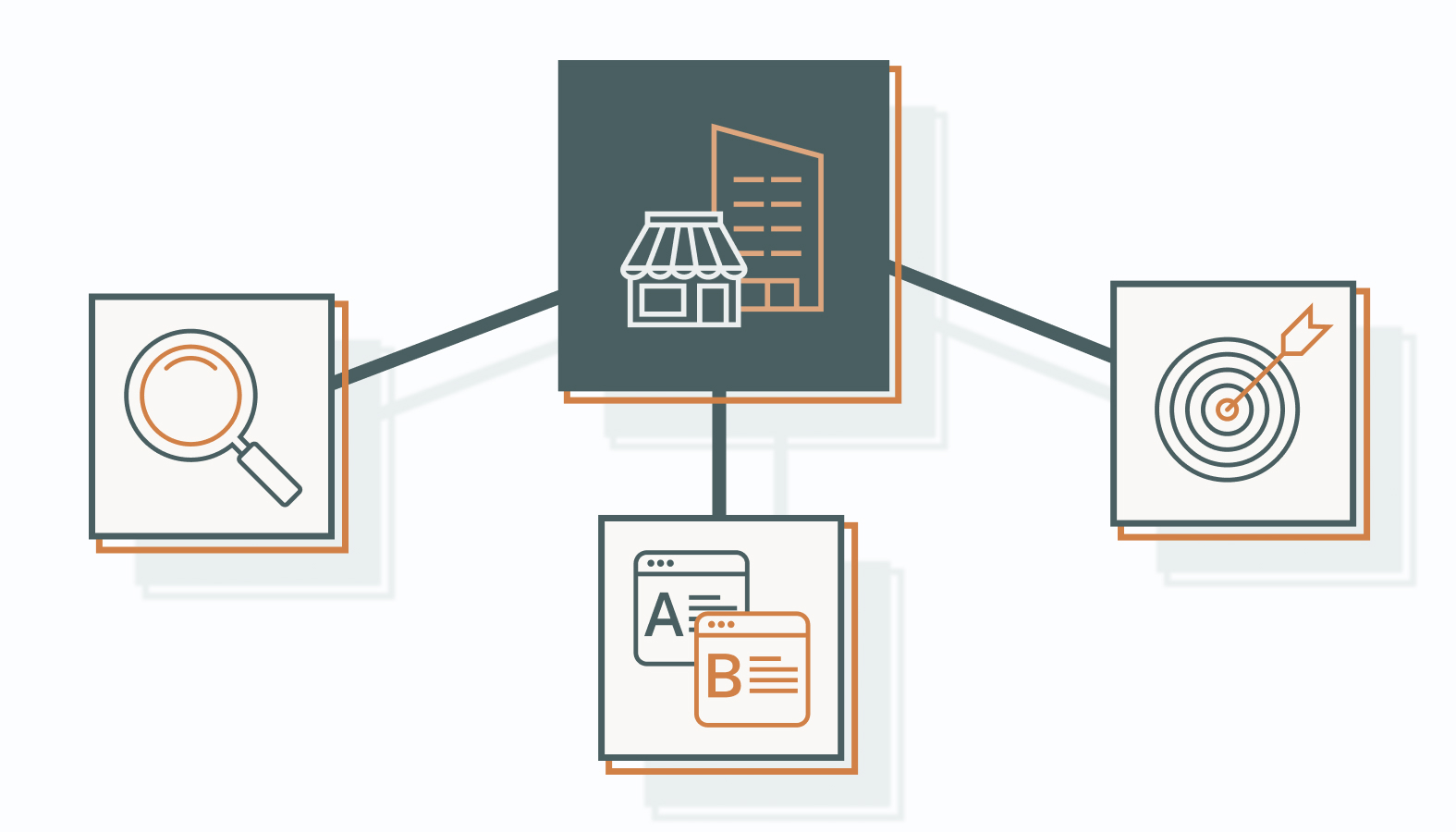
Positioning starts with a narrow, honest answer to a basic question: who is this truly for? Not “mid-market companies” in general, but the specific role, industry, and situation where your solution consistently outperforms the alternatives.
Before drafting your messaging, define the following:
- The exact job title or function that owns the buying decision
- The trigger event that makes someone start looking for a solution like yours
- The internal objections that typically stall a deal
- The competitors this buyer is comparing you against, rather than perceived competitors
Competitive Differentiation: Standing Out in B2B
Once the audience is defined, the next question should be what makes your offer different enough to matter. This is where a lot of companies default to claims like “better service” or “more experience,” which don’t hold up because every competitor says the same thing.
Real differentiation comes from something specific — a process competitors don’t use, a result you can measure, or a segment of the market you understand better because you’ve worked in it directly. A B2B marketing consulting partner can often identify differentiators that internal teams overlook because of organizational familiarity.
Aligning Positioning with Business Goals
Effective positioning supports measurable business objectives. A company chasing enterprise deals needs different positioning than one focused on volume through smaller accounts, even if the underlying product is identical.
Before finalizing your positioning, check it against current revenue goals rather than last year’s priorities. Priorities shift, and a value proposition built around an outdated business objective will only misdirect the entire marketing effort.
Using the Value Proposition Canvas to Build a B2B Value Proposition

A value proposition canvas is a structured tool that maps buyer needs against what your business offers, side by side, so gaps and overlaps become visible instead of assumed.
The framework consists of two connected sections: one side lists the buyer’s core jobs, pains, and desired gains; the other lists your products, pain relievers, and gain creators. The value proposition sits in the overlap.
How Can the Value Proposition Canvas Be Useful for Businesses
The canvas is useful for businesses, as it forces a level of specificity that internal brainstorms skip. Instead of guessing at what customers want, teams have to write down the actual jobs a customer is trying to get done, the specific pains involved, and the outcomes they’re hoping for. This matters because a lot of value propositions are built from the inside out, based on what a company is proud of rather than what a customer is struggling with. The canvas flips that order.
How to Use the Canvas for B2B Positioning
Using the canvas for B2B positioning generally follows this sequence:
- List the customer’s core jobs, both functional (what task they’re completing) and emotional (what they’re trying to avoid feeling, like risk or embarrassment to leadership)
- Identify pains connected to each job, ranked by how severe they are
- Identify gains the customer wants, both expected and unexpected
- Map your product’s features against those pains and gains directly
- Cut anything on your side of the canvas that doesn’t connect to something on the customer’s side
That last step is where most of the actual value proposition gets written because it is what’s left after the noise is removed.
Real-World Examples of the Canvas in Action
1) A B2B software company selling to finance teams might discover, through the canvas exercise, that the loudest pain isn’t the cost of their tool but the time finance staff lose reconciling data by hand at month-end. That insight shifts the value proposition away from “affordable software” toward “cut your close process by days,” which is a stronger claim because it’s tied to something specific and measurable.
2) A services firm might find a similar pattern: clients care less about the number of years you are in the business and more about how fast a project gets from kickoff to results. Mapping that gain on the canvas gives the firm language it can actually use in a pitch.
How to Build a B2B Value Proposition Step by Step

Crafting a B2B value proposition works best as a sequence, not a single brainstorm session. Each step below produces something the next step depends on:
Step 1: Research and Customer Insights
Start by talking to actual customers rather than relying solely on internal assumptions. Interviews, CRM win-loss analysis, sales call recordings, and support tickets reveal the language buyers naturally use, which tends to be more useful than internal terminology built up over time.
Look specifically for patterns: phrases multiple customers repeat, objections that come up more than once, and the specific data points customers reference when explaining why they bought.
Step 2: Prioritize Customer Pain Points and Desired Outcomes
Take what surfaced in research and organize it by severity and frequency because not every pain point deserves equal weight in the final statement. The ones worth building around are the ones customers mention unprompted and describe with some urgency.
Step 3: Articulating Unique Value
With pains and gains mapped, draft your initial value proposition. A useful structure to test against: for (specific audience), who struggle with (specific problem), a (company) provides a (specific solution), resulting in a (specific, provable outcome).
This format forces teams to be precise in every part of the sentence, which is usually where early drafts fall apart.
Step 4: Testing and Validating Your Proposition
A value proposition shouldn’t be finalized based on internal opinion alone. Run it past actual prospects or existing customers and watch for two things: do they understand it without explanation, and does it match a problem they’d describe as urgent?
If a version tests well internally but confuses external audiences, the internal team is likely too close to the product to judge it fairly.
Step 5: Messaging Across Channels
Once you’ve validated the value proposition, it should remain consistent across every marketing channel without losing its core claim. Whether it’s a homepage headline, sales pitch, or LinkedIn ad, the core message should remain the same, just adjusted for length and context.
If the underlying claim changes between channels, that’s usually a sign the original statement wasn’t specific enough to survive translation.
Common Pitfalls and How to Avoid Them
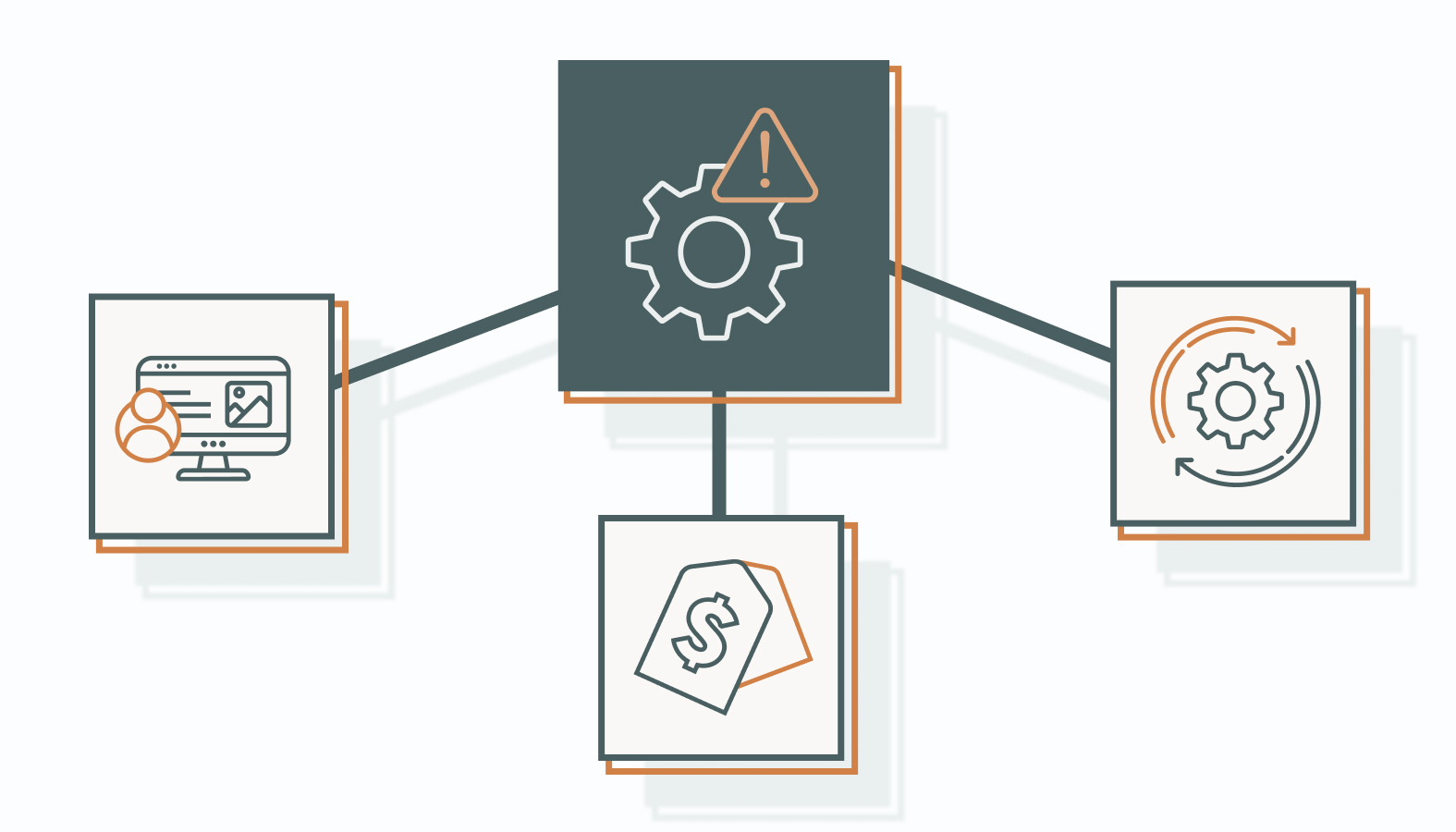
Most ineffective B2B value propositions fail for one of three common reasons, and each one is avoidable with a specific fix.
Overcomplicating the Message
The problem: teams try to fit every product feature into one statement, worried that leaving something out means losing a sale.
The reason this happens: internal stakeholders each want their area represented.
The solution: pick the single strongest claim and let supporting content carry the rest of the detail. A value proposition isn’t the place for a full feature list.
Ignoring Internal Buy-In
The problem: marketing builds a value proposition in isolation, then sales quietly ignores it because it doesn’t match what they say on calls.
The reason: sales wasn’t part of the process, so the statement doesn’t reflect what truly closes deals.
The solution: sales and marketing alignment–involve sales early, test the language with the sales team directly, and adjust based on what you hear from prospects in real conversations.
Failing to Evolve with the Market
The problem: a value proposition gets written once and then left alone for years, even as the market, competitors, and customer priorities shift.
The reason: revisiting it feels like starting again from zero.
The solution: schedule a review at least twice a year, and treat any major shift in the competitive landscape or customer base as a trigger to revisit sooner.
Case Studies: Winning B2B Value Propositions
The following case studies show how the concepts above play out in practice:
SaaS Example: Slack’s Shift from Feature List to Feeling
Slack’s earliest pitch was the direct one: a real-time messaging platform for teams. It was accurate, but it didn’t move anyone to try it.
According to interviews published by former Slack marketing leader James Sherrett, the team tested five different landing pages and let visitor behavior decide, instead of internal opinion. The version that won was the shortest, condensed into three words: “Be less busy.”
That phrase anchored Slack’s B2B value proposition for years, through a stretch when the company grew from an internal tool built during a failed game project into one of the fastest-growing software companies of its time. The lesson is that the team tested its assumptions against real decisions instead of defending an untested draft.
Consulting Example: Bain & Company’s Results-First Positioning
When Bill Bain and six colleagues left Boston Consulting Group to start Bain & Company, they built the firm around one premise: measurable client results, not reports that sat on a shelf. Unlike many strategy firms that delivered recommendations and stepped away, Bain stayed involved through implementation, working alongside clients until there were finally changes.
That premise shaped what came next. Bain & Company has publicly documented its role in developing the Net Promoter Score methodology alongside Fred Reichheld. The firm grew at roughly 50 percent a year through its first decade, a pace often tied to how clearly that positioning set it apart from firms offering advice alone.
Lessons Learned
Despite operating in different industries, both companies succeeded for the same reason: they built their value propositions around one clear, differentiated outcome. Slack won by testing a felt outcome against real behavior instead of guessing internally. Bain won by picking one differentiator and proving it repeatedly through how the firm actually operated, not just what it claimed.
FAQs: B2B Value Proposition Essentials
1) What makes a value proposition “compelling” in B2B?
A compelling value proposition names a specific buyer, problem, and provable outcome. Vague claims about quality or service don’t hold up against buyers comparing several vendors at once.
2) How often should you revisit your B2B value proposition?
At least twice a year, and sooner if a major competitor enters the market or customer priorities shift noticeably. Treat it as a living statement, instead of a one-time deliverable.
3) Can the value proposition canvas be used for service businesses?
Yes. The canvas works for any business model, since it maps customer pains and gains rather than just the product features. Service firms can find it useful for clarifying what clients actually value beyond the service itself.
4) What are the signs your value proposition isn’t working?
Signs that your value proposition isn’t working include sales reps rewriting it in their own words, prospects asking “so what do you actually do” after hearing it, and marketing content that doesn’t tie back to a consistent core claim.
5) How do you get buy-in from stakeholders?
Involve sales, customer success, and leadership early in the research phase rather than presenting a finished statement for approval. People support what they helped build.
6) What services do B2B marketing consultants offer?
The services that B2B marketing consultants offer include positioning research, value proposition development, messaging frameworks, and campaign strategy built around a validated core claim rather than internal assumptions.
Unlocking Growth with a Standout B2B Value Proposition
A B2B value proposition is the strategic foundation of every successful B2B marketing initiative. It is the statement that every landing page, campaign, and sales conversation should reinforce. Get it wrong, and every campaign built on top of it works harder than it should. Do it right, and the rest of the marketing effort has something solid to stand on.
The work doesn’t end once a version is written down. Your B2B value proposition should evolve as markets shift, competitors adapt, and customer priorities change. A message that worked last year may already need refining. Treat it as something to revisit on a schedule, not just something to file away once it’s approved.
If your team is ready to test whether your current statement still holds up, schedule a candid conversation with one of our experts ». Bring your current messaging, and we’ll help you identify what’s working, what needs improvement, and where to focus next.