


Most teams push hard, yet results don’t always follow. When work piles up and processes stumble, the ability to streamline operational efficiency becomes the primary lever for sustainable performance. Instead of adding more tasks to a crowded plate, this approach refines how work flows, allowing your team to focus on high-impact outcomes without the usual friction.
To help you achieve this, we will explore practical ways to remove delays, align workflows, and use tools strategically. These steps ensure your organization can perform at peak efficiency and respond to challenges without the constant scramble.”
What Does “Operational Efficiency” Mean?
If growth starts to feel heavier than it should, flaws in operational efficiency are usually the culprit. A matter of systems not working smart, to be exact.
Operational efficiency converts how effectively your organization converts effort, time, and resources into meaningful results.
In practical terms, it answers a fundamental question: Are we achieving the right outcomes without wasting motion, money, or momentum?
When operational efficiency is strong, the effects are visible:
- Work flows smoothly without distractions.
- Decisions happen faster because data is clear and reliable.
- Teams spend more time creating value and less time fixing preventable problems.
- Costs are controlled through smarter design of processes and resource allocation.
Streamlining operational efficiency focuses on refining the system itself:
- Removing redundant steps that add time and confusion.
- Clarifying ownership so responsibilities are clear and accountability is direct.
- Aligning tools with actual workflows to ensure technology supports productivity rather than creating friction.
As friction decreases, performance becomes faster and more predictable, enabling the organization to scale without disruption.
Before making improvements, it’s essential to understand how operations truly function, not just how they look on paper. Observing work in action, identifying hidden inefficiencies, and collecting actionable data sets the stage for long-term operational success.
Now, let’s move from theory to impact.
Tangible Benefits of Streamlining Operations
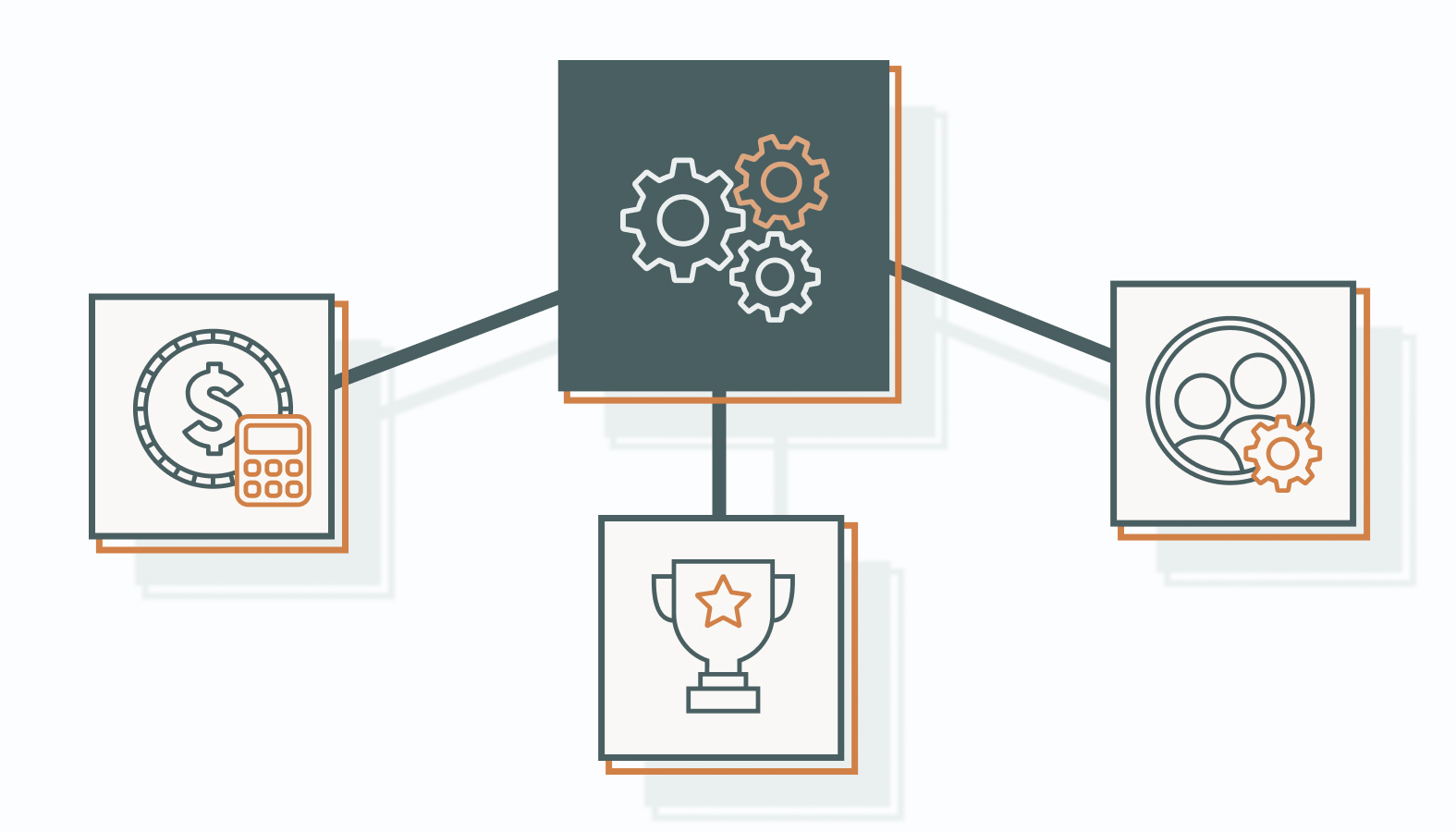
When operations run with discipline and clarity, the desired results show up where it matters most, like in margin, speed, and team stability.
Streamlining operations strengthens a business to perform under pressure and scale efficiently. These benefits are measurable and visible in financial reports, product timelines, and retention metrics.
Financial Savings and Cost Reduction
Efficiency impacts profitability steadily over time. Every unnecessary step, duplicated effort, or avoidable error carries a hidden cost.
By identifying and eliminating these inefficiencies, resources are freed to invest in growth, innovation, or customer experience.
Efficiency also means redesigning processes so the same effort produces consistent, higher-quality output. Over time, this thing reduces strain on both people and systems while stabilizing margins.
Examples by sector:
- Manufacturing: Automating repetitive tasks lowers labor costs and reduces defects, which means fewer reworks and less scrap.
- Retail and distribution: Smarter inventory planning reduces storage costs and minimizes overstock or rush shipping.
- Professional services: Standardized workflows decrease billable leakage and reduce time spent correcting preventable errors.
Small operational gaps accumulate quickly. Closing them protects margins and ensures scaling drives profitability rather than operational strain.
Faster Market Entry for a Competitive Advantage
Speed matters, but it should be disciplined speed.
Aligned operations allow teams to move from concept to launch without unnecessary delays. Product development cycles shorten, approvals don’t stall progress, and cross-functional handoffs feel coordinated.
The benefits are:
- Shorter time-to-market
- Faster response to customer demand
- Greater flexibility when priorities shift
In competitive industries, timing often determines who gains traction. Streamlined operations provide readiness and responsiveness.
Stronger Employee Retention and Morale
Operational strain drives attrition. When systems are unclear, high performers compensate for gaps, leading to performance fatigue.
Streamlined operations improve the work experience by providing:
- Clear expectations and defined ownership
- Fewer redundant tasks
- More time focused on meaningful contributions
Clarity reduces burnout and improves engagement. When employees see leadership investing in better systems, not just higher outputs, trust grows.
Efficient operations improve results, stabilize performance, protect profitability, and strengthen your workforce. A combination that is difficult for competitors to replicate.
This time, we’ll move from understanding the opportunity to executing it.
Steps to Streamline Operational Processes
Streamlining operations is a disciplined progression, not a motivational exercise. Breaking it into phases makes improvement manageable, measurable, and repeatable. Precision tuning, not overhaul.
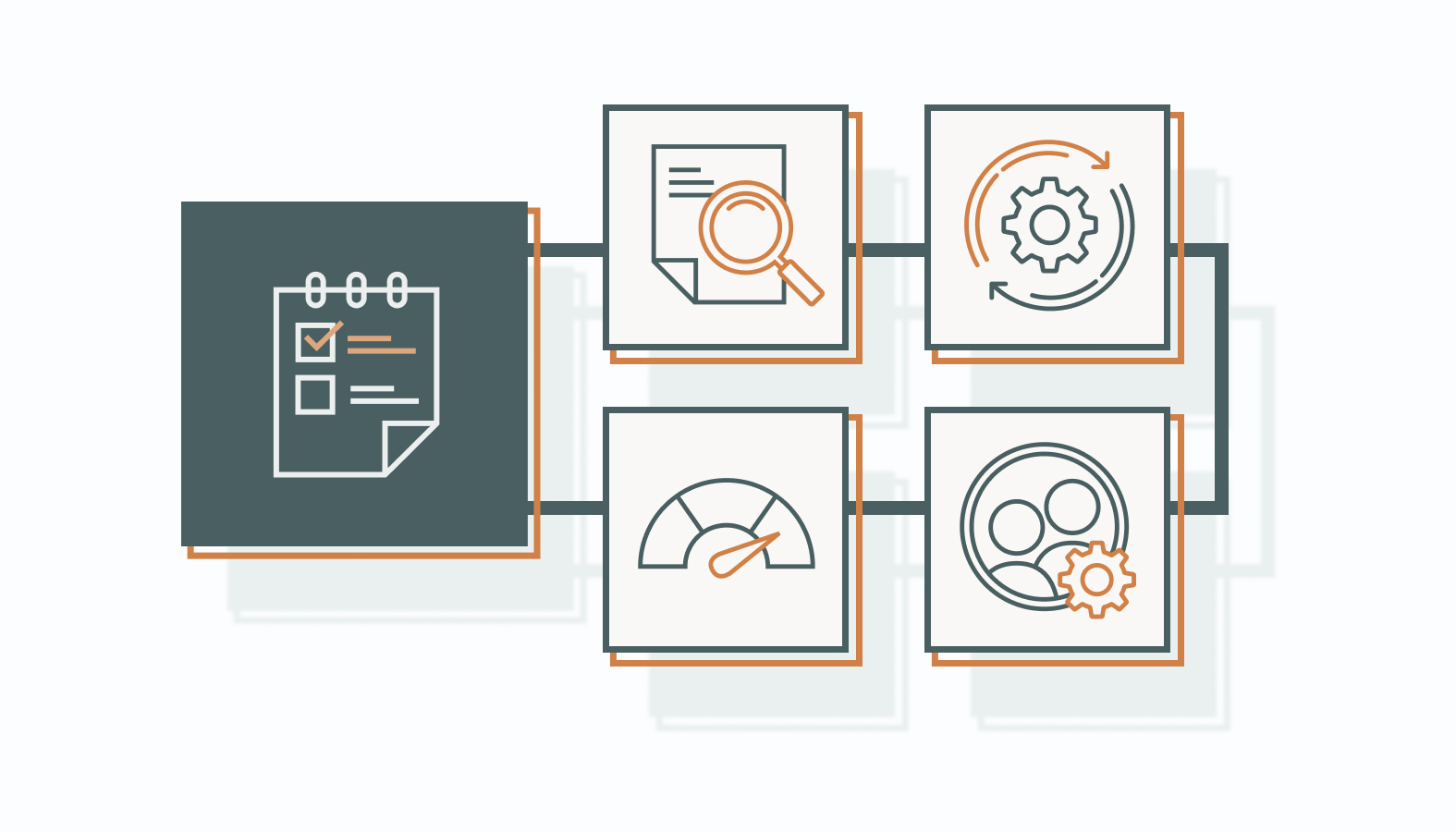
Here’s how that progression works:
Phase 1: Review Your Current Operations
Before you change anything, you need clarity. Not assumptions or anecdotes.
A thorough operational review establishes your baseline and reveals where performance drifts from intention.
Visualizing the Workflow
Before you can improve operations, you need to see them clearly. Often, much of the work exists only in people’s heads, which makes inefficiencies invisible until they cause problems. Getting the work onto paper or a digital tool reveals the true flow of tasks and decisions.
Mapping workflows helps you uncover patterns that are otherwise hidden: steps that don’t add value, handoffs that slow progress, or areas where responsibilities overlap. This clarity makes it possible to address root causes.
Common tools include:
- Process maps: show the step-by-step sequence of tasks and decisions.
- Flowcharts: illustrate how work moves through a system, including decision points.
- Swimlane diagrams: highlight cross-functional responsibilities and handoffs between teams.
When you visualize the full sequence of work, redundancies that previously went unnoticed become obvious.
Visual clarity exposes redundancies, allowing prioritization of interventions and smoother process design.
Analyzing Performance with Data
Once workflows are visualized, it’s time to pressure-test assumptions with hard numbers. Perception can only take you so far. Real insights come from measurable data.
By analyzing operational performance quantitatively, you can pinpoint exactly where friction exists and determine whether issues are isolated or systemic.
Key metrics to examine include:
- Cycle times: the duration required to complete a task or process from start to finish.
- Error rates: the frequency of mistakes, defects, or rework that slow progress or increase cost.
- Cost per transaction or unit: the actual resources consumed for each output, helping identify hidden inefficiencies.
- Throughput by team or function: the volume of work completed over a given period, highlighting capacity constraints.
In addition to tracking these metrics, benchmarking against industry standards or historical performance can provide context and reveal opportunities for improvement. Using KPIs to guide the analysis adds objectivity, converting decisions into an informed strategy.
Data transforms subjective impressions into actionable insights. With a numbers-driven view of performance, leaders can make smarter decisions, prioritize the most impactful improvements, and confidently design processes that deliver consistent results.
Phase 2: Core Strategies to Streamline Operational Efficiency
Once the baseline is clear, improvement becomes intentional.
No one-size-fits-all solution exists. Context matters. Industry, size, growth stage. All of it shapes the right approach.
Still, two principles consistently deliver results:
Simplifying Processes
Complexity tends to accumulate quietly. Extra approvals. Duplicate documentation. Workarounds that became permanent.
Simplification often means:
- Removing non–value-added steps
- Clarifying decision rights
- Standardizing repeatable tasks
Methodologies like Lean or Six Sigma provide structure, but the real objective is practical. It is to reduce friction without compromising quality.
Using the Latest Technology
Technology should support operations, not complicate them. Automation can eliminate repetitive manual work. Cloud systems improve access and coordination. AI tools can enhance forecasting and reporting accuracy.
The goal isn’t to adopt everything new. It’s to apply the right tools where they remove effort and improve consistency.
Phase 3: Overcoming the Human Element
Even the best-designed improvements stall without alignment.
Operational change affects routines, roles, and comfort zones. Addressing that reality directly prevents silent resistance.
Handling Change Resistance
People support what they understand and influence.
Effective leaders:
- Communicate the rationale clearly
- Involve team members in shaping improvements
- Provide consistent feedback during implementation
When employees see progress and feel heard, adoption accelerates.
Training for Flexibility
True operational improvement depends on people adopting and sustaining them. Training shouldn’t be treated as an afterthought or a one-time event. It’s a strategic investment in building an adaptable, capable workforce.
Focused training ensures that employees develop the skills and confidence necessary to operate effectively within the new system. Well-structured development programs help build:
- Technical competence ensures team members understand the tools, software, and processes required to perform their roles efficiently.
- Cross-functional awareness gives employees insight into how their work connects with other teams, which reduces handoff errors and encourages collaboration.
- Confidence in new workflows helps employees feel capable and comfortable executing updated processes without reverting to old habits.
When training is prioritized, teams follow instructions and internalize best practices, adapt quickly to changes, and maintain momentum even as operational demands evolve.
This adaptability is crucial for sustaining efficiency gains and preventing regression, ensuring that improvements in workflows translate into lasting performance benefits.
Phase 4: Ongoing Improvement and Monitoring
Operational performance isn’t static. Markets shift. Volume changes. Priorities adjust.
Regular monitoring ensures gains hold under pressure. Scheduled reviews and performance tracking prevent small issues from expanding quietly.
The Continuous Improvement Loop (PDCA)
The Plan–Do–Check–Act cycle keeps refinement structured:
1) Plan improvements
2) Implement changes
3) Measure results
4) Adjust based on findings
This iterative rhythm turns improvement into a habit rather than a one-off event.
Avoiding “Efficiency Paradox”
There’s a trap here. In the pursuit of optimization, organizations sometimes introduce more layers, more tools, more reporting, and complexity creeps back in.
Guard against that by asking one consistent question: Does this make the work clearer and faster, or just more elaborate? Simplicity scales. Overengineering doesn’t.
Follow these phases with discipline, and operational improvement becomes systematic rather than reactive. And when that happens, performance strengthens in a way that competitors can see and feel.
Efficiency Should be a Habit, Not a Project
Streamlining operations is more than a one-time fix; it is a mindset that redefines how your organization functions. When you refine processes and remove systemic friction, you move beyond just “working hard” and begin designing a system where work naturally flows.
By making the decision to streamline operational efficiency a daily habit, you create a foundation that scales with confidence. The result isn’t just better numbers – it’s a team that has the space to innovate and the clarity to execute without the constant scramble.
Ready to Lead a Smarter Operation?
Identifying the levers of efficiency is the first step, but pulling them requires precision and a commitment to the technical “heavy lifting” that most busy teams can’t spare. Mapping complex workflows and auditing deep-seated redundancies is a significant undertaking – one that shouldn’t distract you from your core mission.
Our experts specialize in navigating these complexities. We help you identify hidden friction and embed improvements that stick, allowing you to reap the rewards of a refined system without the manual burden of doing it all yourself.
Schedule a candid conversation with one of our experts,» and we’ll help you drive real results and take control of your efficiency today.