


Customer expectations don’t end after the first purchase. As competition increases and acquisition costs rise, customer retention marketing has become a larger priority for brands focused on improving long-term growth, customer loyalty, and revenue stability.
Retention needs more than marketing campaigns. For customers to continue buying and prevent gradual disengagement over time, build on customer experience, onboarding, communication, support, engagement, and product value.
Understanding how those factors shape retention performance can reveal where businesses are strengthening customer relationships, and where they may be quietly losing them.
What is Customer Retention Marketing?
Customer retention marketing focuses on increasing the value of existing customer relationships more than concentrating only on first-time purchases. Retention efforts aim to improve repeat business, customer loyalty, and long-term engagement.
Strong retention strategies often help businesses:
- Increase repeat purchases
- Improve customer lifetime value (CLV)
- Reduce customer churn
- Create more predictable revenue
- Generate more referrals and repeat engagement
Retention shifts marketing priorities beyond acquisition alone. Yes, attracting new customers is important, but businesses that retain customers effectively place more attention on customer experience, communication, onboarding, support, and ongoing engagement after the first sale.
As customer acquisition costs continue to rise across many industries, retention becomes a larger performance metric for brands focused on long-term growth and overall efficiency.
How Retention Marketing Differs from Acquisition
Acquisition and retention have different roles in a growth strategy.
Acquisition is about bringing new people into your ecosystem. Paid ads, SEO, and lead magnets are designed to capture attention and convert strangers into first-time buyers. The focus is on reach, awareness, and initial conversion.
Retention marketing, on the other hand, is about maximizing the value of customers you already have. The tactics shift to personalized email campaigns, loyalty programs, proactive support, and tailored offers. The goals shift, too, and you’re aiming for increased purchase frequency, higher lifetime value, and deeper loyalty.
With acquisition, the challenges are crowded channels, tight competition with other brands, and rising costs.
With retention, the challenge is to keep experiences timely, relevant, and valuable, or else, even loyal customers will eventually look elsewhere. Loyal customers are less price-sensitive, more forgiving of occasional missteps, and more likely to refer others.
Setting Realistic Retention Rate Benchmarks
What is considered “good” for retention rates? It really depends on your industry, business model, and customer lifecycle.
- SaaS and subscription businesses: Best-in-class annual retention often sits above 90%, but anything above 80% is solid for mid-market companies. However, for monthly retention, 95%+ is elite.
- E-commerce: Retention rates vary widely, but 25–30% annual retention is a strong target for established brands. Reaching 40%+ makes your company unique.
- Mobile apps and gaming: Monthly retention above 20% after 90 days is considered strong. Most apps see steep drop-offs within the first week.
Business maturity is just as important. Startups usually see lower retention while finding product-market fit, while established brands should expect higher benchmarks.
The best approach is to track your own numbers, compare them against industry averages, and focus on continuous improvement rather than chasing a believed “perfect” rate.
Why Focusing on Customer Retention Grows Your Business
For business leaders and marketers seeking sustainable growth, customer retention is one of the most powerful levers available.
Since nowadays acquisition costs increase and consumer attention becomes unpredictable, retaining existing customers is the most profitable move a company can make.
Lower Costs Compared to Acquisition
According to Bain & Company, acquiring a new customer can cost five to seven times more than retaining an existing one, and the true competitive edge from retention only comes when companies take a holistic approach to the entire customer experience.
Acquisition involves ad spend, sales resources, onboarding, and the challenge of persuading someone unfamiliar with your brand to trust you. Retention, in contrast, builds on relationships and trust already established.
For example, a SaaS company might spend $300–$500 to acquire a new subscriber but only $50–$100 per year to keep that subscriber engaged and satisfied. Multiply that cost difference across the number of customers, and the financial case for retention becomes undeniable.
Higher Customer Lifetime Value
Retention strategies help increase customer lifetime value (CLV), which is the total revenue earned from a customer over the span of their relationship with your brand.
Retained customers buy more often, try new products, and stay longer. Even a slight improvement in retention rate can have a bottom-line impact. Research published in Harvard Business Review found that a 5% increase in retention can boost profits by 25% to 95%, depending on the industry.
Higher CLV also means you can reinvest more into product quality, service improvements, and customer experience, creating a compounding cycle of growth that acquisition-heavy brands struggle to replicate.
Turning Customers into Loyal Advocates
Loyal customers, aside from staying, become one of your most effective marketing channels.
Satisfied, engaged customers love to refer friends, leave positive reviews, and advocate for your brand on social media. Referral programs, VIP communities, and user-generated content campaigns are proven mechanisms for channeling that loyalty into visible growth.
Dropbox famously scaled through a referral program that rewarded both the referrer and the new user, driving 3,900% user growth in just 15 months.
Starbucks Rewards members are both frequent buyers and enthusiastic brand advocates, driving word-of-mouth growth that paid advertising finds hard to replicate.
Common Retention Challenges
Even well-resourced teams face consistent struggles in retention. The most frequent include:
Lack of personalization: Customers expect relevant, tailored experiences. Generic messaging feels discouraging and leads to disengagement because it has no depth or personalization.
Poor onboarding: If customers do not see value right away, they are likely to disappear before a real relationship is formed.
Inconsistent communication: Irrelevant outreach makes customers feel like they are forgotten or unimportant.
Limited feedback loops: Without understanding why customers leave, fixing the underlying causes is nearly impossible.
Product or service gaps: Strong marketing cannot cover for a product that consistently fails to meet expectations.
Each challenge has a solution. Invest in personalization tools, build solid onboarding journeys, maintain regular and relevant communication, actively solicit and act on feedback, and commit to continuous product improvement.
Key Metrics and KPIs for Customer Retention Marketing
You have to measure what you want to improve. The right retention metrics convert guesswork into an actionable strategy.
Below are the core and advanced KPIs every retention-focused team should track consistently.
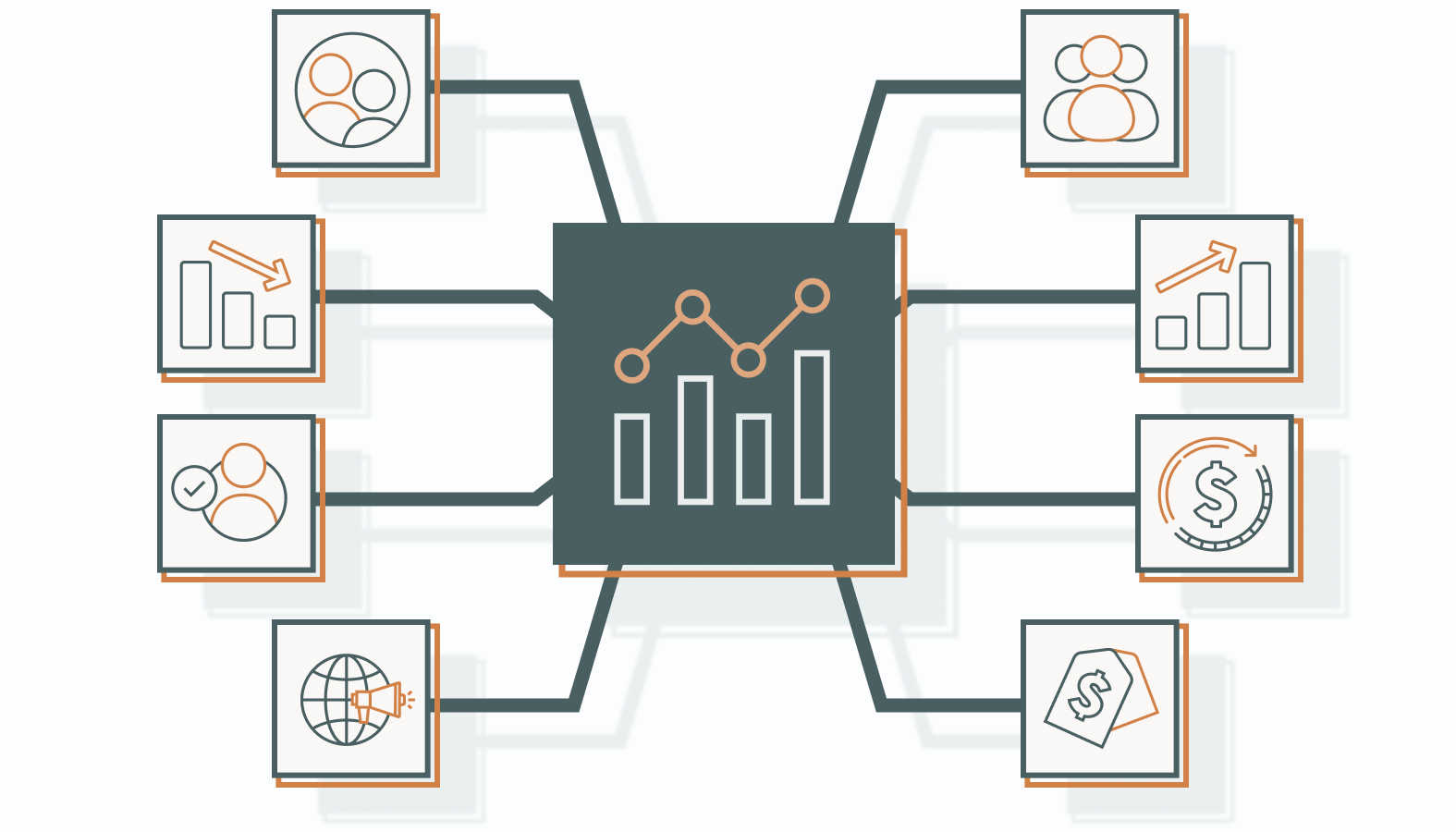
Customer Retention Rate
Your customer retention rate is the foundation of your retention strategy. To calculate it: select a time period, note the number of customers at the start (S), count customers at the end (E), subtract new customers acquired during the period (N), then apply the formula: Retention Rate = ((E − N) / S) × 100.
For example, if you started with 100 customers, ended with 110, and gained 20 new ones, your retention rate is ((110 − 20) / 100) × 100 = 90%. Without this baseline, you have no way to evaluate whether your retention efforts are working.
Churn rate
Churn is the opposite of retention, as this is the percentage of customers who leave over a given period. Churn Rate = (Customers Lost / Customers at Start of Period) × 100.
High churn can undermine growth even when the acquisition is strong. To reduce it: analyze exit surveys for patterns, proactively reach out to at-risk customers, improve onboarding, and regularly refresh product offerings. The sooner churn is identified, the faster you can improve it.
Customer lifetime value (CLV)
CLV tells you the total revenue you can expect from a typical customer over their relationship with your brand. A simple formula: CLV = Average Purchase Value × Purchase Frequency × Average Customer Lifespan.
If a customer spends $100 per order, buys twice a year, and stays for five years, CLV = $1,000.
Knowing your CLV helps determine how much to invest in retention, which customer segments to prioritize, and whether your acquisition spend is justified.
Net Promoter Score (NPS)
NPS was first introduced by Fred Reichheld in 2003 and has since become one of the most widely used customer loyalty metrics in business.
NPS measures loyalty through one question: “How likely are you to recommend us to a friend or colleague?” Respondents score from 0–10. Scores of 9–10 are Promoters, 7–8 are Passives, and 0–6 are Detractors. NPS = % of Promoters − % of Detractors.
A high NPS signals strong loyalty and predicts future growth. Use NPS data to identify advocates worth nurturing and detractors who need to be won back before they turn to churn.
Repeat Purchase Ratio
This metric shows the percentage of customers who return for additional purchases: (Number of Returning Customers / Total Customers) × 100.
A rising repeat ratio can signal that retention efforts are working. To increase it, deploy targeted campaigns, personalized offers, and loyalty incentives timed around natural repurchase activities.
Revenue Churn and Monthly Recurring Revenue (MRR) Growth
Revenue churn tracks the percentage of recurring revenue lost from existing customers due to downgrades or cancellations aside from customer headcount.
This metric is especially important for SaaS and subscription businesses, where expansion revenue can mask underlying churn problems.
MRR growth tracks the change in predictable recurring revenue month after month. Steady MRR growth can reflect customers staying, upgrading, or buying more, which are all signs of satisfaction and loyalty.
Net Dollar Retention (NDR)
NDR is an advanced metric that measures how much recurring revenue you retain from your existing base, accounting for upgrades, downgrades, and churn. NDR = (Starting MRR + Expansion MRR − Churned MRR − Contraction MRR) / Starting MRR × 100.
An NDR above 100% means your existing customers are spending more with you for a length of time, which is a hallmark of world-class retention. It is especially valuable for SaaS businesses where expansion revenue can drive growth even in periods of moderate churn.
Time between purchases
Tracking the average time between purchases reveals the engagement rate of your customers. A shrinking interval means your retention tactics are working.
A growing interval is a signal to re-engage with targeted offers, fresh content, or direct outreach to avoid having the relationship go cold entirely.
Proven Customer Retention Strategies You Can Use
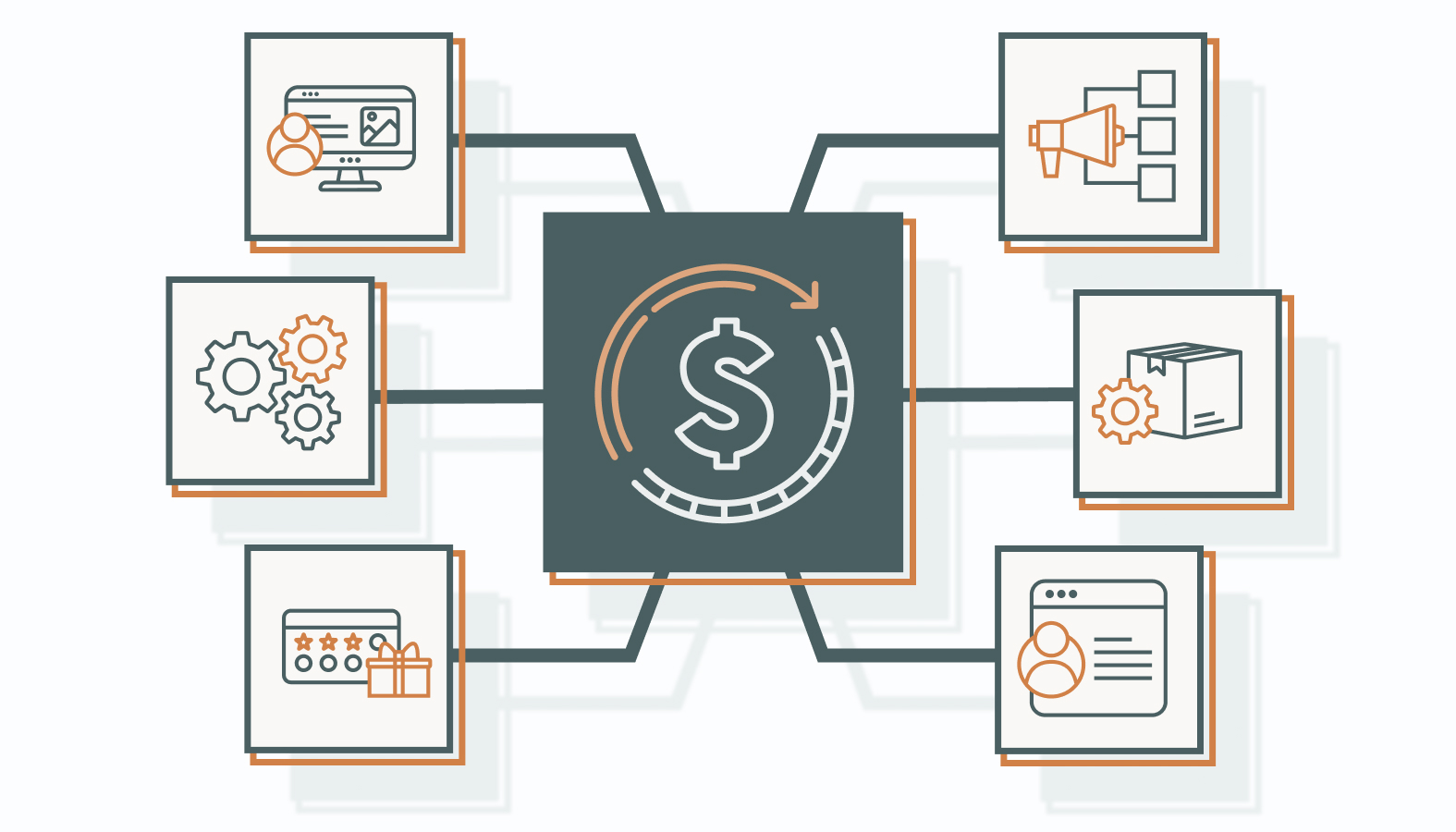
Retention strategies work best when they consistently improve customer experience, engagement, and long-term value.
Personalize Every Customer Interaction
Personalization provides effective retention. When customers feel recognized and understood, they are more likely to stay engaged and spend more.
Effective personalization ranges from using a customer’s name in emails to recommending products based on browsing history to tailoring offers for specific preferences and past shopping behavior.
Segmentation and Targeted Messaging
Segmentation is where personalization begins. Group customers by behavior, purchase history, lifecycle stage, geographic location, or engagement level, then deliver messages that reflect those differences.
Dynamic content tools, such as those offered by Klaviyo, Salesforce, or Shopify, can automatically surface relevant recommendations and update messaging in real time based on individual customer activity.
Start with simple segmentation, then layer in more granular criteria as you accumulate more data.
Automate Email Marketing for Better Engagement
Email automation allows you to deliver timely and relevant communication at scale. Three categories of automated email are especially high-impact for retention:
- Welcome and onboarding series: Send the first email immediately after sign-up, then follow up over the next several days with a quick-start guide, key feature highlights, a thank-you note or offer, and support resources.
First impressions can set the tone for the entire customer relationship.
- Re-engagement campaigns: Trigger automatically after a set period of inactivity, such as 30, 60, or 90 days.
A personalized incentive, a highlight of new features, or a simple “we miss you” message can awaken interest and bring lapsed customers back before they go away permanently.
- Transactional and loyalty emails: Order confirmations, shipping updates, and renewal reminders carry high open rates. Use these touchpoints to reinforce value and encourage the next action.
Loyalty milestone emails, such as “You’re one purchase away from VIP status,” make customers feel seen and motivate continued engagement.
Build Loyalty and Rewards Programs
Loyalty programs can help drive repeat business and emotional brand attachment, and 90% of program owners report positive ROI, with members spending significantly more than non-members.
Three structures consistently deliver results:
- Points-based systems: Reward customers for every purchase or qualifying action. Make earning and redeeming points easy and transparent.
Extend point opportunities beyond purchases to include referrals, product reviews, and social shares to deepen engagement across multiple behaviors.
- Tiered programs: Motivate customers to reach higher loyalty levels with increased perks of early access, VIP support, exclusive gifts, or priority service. Communicate progress clearly so customers always know how close they are to the next tier.
Tiered programs tap into people’s desire for status and recognition.
- Referral programs: Turn satisfied customers into active growth drivers. Reward both the referrer and the new customer, make the referral process easy, and promote the program consistently.
A clearly designed referral program can create a compounding loop where retention and acquisition reinforce each other.
Connect Across Multiple Channels
Retention does not happen through one channel alone. The most effective strategies reach customers wherever they spend time (online, in-app, and offline).
- Social media: Active engagement on social platforms humanizes your brand and creates community.
Respond to comments, share user-generated content, host live Q&As, and recognize loyal customers publicly. Two-way communication makes customers feel heard, which can stir continued loyalty.
- Messaging and push notifications: Direct messaging via WhatsApp, SMS, or in-app push notifications offers real-time, highly personal touchpoints. Messages should be timely, relevant, and non-intrusive.
Segment your audience carefully and tailor message content to individual preferences and behaviors.
- Events, webinars, and surveys: Interactive experiences deepen customer relationships beyond transactional exchanges. Educational webinars, exclusive events, and quick feedback surveys signal that you value customers’ time and input.
Offering incentives for participation can increase response rates and reinforce that their voices are heard to have enough impact on your decisions.
Deliver Exceptional Customer Support
Support is a frontline retention tool. Fast, empathetic, proactive service can make a frustrated customer a loyal one. Speed matters, but empathy matters just as equally.
Customers want to feel heard and understood instead of being processed like robots.
Use engagement and usage data to anticipate problems and reach out before issues arise. Empower support teams to resolve problems as quickly as possible and with a personal touch rather than routing customers through complicated escalation processes.
Equally important is a strong self-service infrastructure, as many customers prefer resolving issues independently.
A well-maintained knowledge base with tutorials, troubleshooting guides, community forums, and video walkthroughs reduces support volume while improving satisfaction. Keep self-service resources always up-to-date and based on common questions and product changes.
Enable Customer Success through Education
Customer education is a retention edge that many brands have overlooked. Onboarding is the starting point: help customers reach their first meaningful outcome with your product as soon as possible.
Use interactive walkthroughs, short video tutorials, live demos, or step-by-step guides to get new users there. When customers see real value fast, the early-stage churn can be prevented.
Beyond onboarding, ongoing education through regular webinars, product updates, advanced tips, and industry insights keeps customers engaged and growing with your brand.
These touchpoints also provide opportunities to introduce new features, upsell relevant offerings, and reinforce the value customers get from staying.
Prioritize user experience and product quality
Retention marketing cannot always compensate for a product that consistently underdelivers. UX and product quality are still the key drivers of any sustainable retention strategy.
Consistency builds trust. Customers expect the same high standard every time they interact with your brand, whether it is placing an order, contacting support, or navigating your app.
Gather ongoing feedback through surveys, usability testing, and analytics to identify friction points. Prioritize fixes that reduce effort and enhance the experience.
Great UX is often not visible to the customer side. They rarely notice when things work smoothly, but they always notice when things don’t go right.
Prevent Churn Before It Happens
The best retention strategies are proactive instead of reactive. Use engagement data, login frequency, purchase intervals, and support history to build a profile of at-risk customers.
Predictive analytics tools and machine learning models can surface these signals automatically at scale. Once at-risk accounts are identified, reach out with personalized check-ins, exclusive offers, or targeted support before those customers disengage completely.
Pair this with a consistent feedback loop. Post-purchase surveys, NPS tracking, and open communication channels give you early warning signals about customer sentiment.
Acting visibly on customer feedback and communicating what changed as a result closes the loop and reinforces that your relationship with customers is a two-way conversation.
Build Trust Through Social Proof and Community
Trust is one of the strongest retention levers available. Social proof, such as customer testimonials, verified reviews, and case studies, reinforces existing customers’ ease in their decision to stay.
Request feedback after positive interactions, showcase authentic reviews on your website, and use real names and photos where possible to maximize credibility.
Brand communities take this further by creating a sense of shared identity. Online forums, user groups, and peer-to-peer support spaces give customers a reason to stay engaged beyond purchase timelines.
Recognize top contributors, facilitate meaningful conversations, and keep the community active. Customers who feel like they are part of something bigger than a plain business transaction are most likely to remain loyal long-term.
Motivate Customers with Timely Incentives
Strategic incentives can be very effective when they are timely, relevant, and truly valuable.
Flash sales, limited-time offers, and surprise rewards create urgency and delight, which is a combination that keeps customers engaged between natural repurchase windows.
Design incentives to feel like a reward rather than a discount. Avoid over-relying on discounts because they can erode perceived value over time. Instead, experiment with early access, exclusive experiences, or surprise gifts to reinforce repurchases and loyalty.
How to Analyze and Act on Retention Data
Tracking retention metrics is only the first step. Knowing how to interpret and act on that data is what separates high-performing brands from those that stagnate. A few key principles:
When benchmarking, start with industry-specific data from analyst reports and published studies, then compare your current performance against your own historical results quarter-over-quarter.
Break retention down by segment (new vs. long-term customers, product lines, geographic regions) to pinpoint where you are strong and where you are losing ground.
Use retention data as a strategic map. If churn spikes after onboarding, double down on early education and support during the first 30 days.
If some of the customer segments show consistently higher CLV, invest more in their experience and use those profiles to guide acquisition targeting.
If NPS scores are slipping, treat it as an early warning signal and dig into the qualitative feedback to find the root cause before it compounds.
A SaaS company that discovers users who attend a training webinar in their first 30 days are 40% more likely to renew, will make webinars a core part of onboarding, and see measurable retention improvement.
An e-commerce brand that finds repeat purchase rates climb sharply when customers join a loyalty program will invest in driving sign-ups, instead of just traffic.
Retention data works when it drives decisions aside from reports.
Real-World Customer Retention Marketing Examples
These real-world examples show how successful brands keep customers engaged, loyal, and returning for more.
E-commerce: Harry’s Razors Subscription Flywheel
Harry’s, the direct-to-consumer razor brand, built its entire model around subscription-based retention. Simple sign-up flows and personalized starter kits helped new customers experience product value immediately.
Flexible subscriptions that customers could pause, swap, or customize at any time gave them a sense of control, which reduces churn.
Occasional surprise bonus products and thoughtful packaging created memorable moments of delight that went beyond the functional value of the product.
The result was high retention rates and strong customer lifetime value in what would otherwise be a commodity category.
Retail: Old Navy Super Cash and Micro-Urgency
Old Navy’s Super Cash program rewards shoppers with coupons for future purchases every time they buy. The coupons are only redeemable during specific, limited time windows, creating a micro-urgency that gives customers a clear reason not to delay their return.
Frequent reminders via email, the app, and in-store signage ensure redemption rates stay high.
The program increases repeat purchase frequency, shortens the interval between visits, and frames promotions as something earned rather than just a discount. It’s a distinction that protects brand perception while driving loyalty.
Tech/gaming: Xbox Achievement Points and Gamification
Xbox’s achievement point system rewards players for completing specific in-game actions. These achievements are visible on public player profiles, turning individual progress into social proof and status.
Leaderboards and social sharing features tap into competitive instincts and keep players coming back. Achievements can also reflect individual play styles, making the progression system feel personal instead of generic.
The result will be extended game lifecycles, ongoing platform engagement, and a loyal community that translates directly into higher retention and sustained revenue for the platform.
While the tactics vary across industries, the goal remains the same: create experiences that keep customers engaged long after the first purchase.
Building Stronger Customer Relationships Over Time
Customer retention improves when businesses consistently deliver relevant communication, strong support, better experiences, and ongoing value.
Brands that monitor customer behavior, respond to feedback, and refine the customer journey as time goes by are often better positioned to reduce churn and strengthen long-term loyalty.
The most effective retention strategies don’t need to be dramatic. Small improvements across onboarding, engagement, personalization, and customer experience can create the biggest long-term impact on repeat purchases, customer lifetime value, and revenue stability.
Improve Your Retention Strategy
Small retention gaps can quietly affect revenue, loyalty, and overall business growth. If you want help improving customer retention, reducing churn, or building a stronger customer experience strategy, we’re ready to help. Schedule a candid conversation with one of our experts.»