Most teams can define cross sell vs upsell. The harder part is knowing which tactic to use, when to use it, and what customer signal should trigger it. Without that decision rule, reps and CRM workflows fall back on guesswork, leading to irrelevant offers, weaker engagement, and inconsistent conversion.
The cost of guessing isn’t abstract. A mismatched offer can reduce engagement, increase unsubscribes, and weaken the likelihood of a repeat purchase. The real problem is the lack of a trigger-based rule that tells a rep or CRM workflow which tactic to use and when.
This guide covers a repeatable decision system tied to account age, usage depth, and purchase history, one a manager can hand to a team as a written rule instead of a judgment call. Cross-selling and upselling aren’t interchangeable. The right choice becomes much more consistent when you map observable customer signals to defined decision rules.
What is Cross-Selling?
Cross-selling means offering a complementary product or service that is distinct from what the customer is already buying. It expands the transaction horizontally, across product lines, rather than vertically within one.
Here are practical cross-selling examples across e-commerce, SaaS, and B2B services:
- E-commerce: a customer buying a DSLR camera gets offered a memory card and a camera bag
- SaaS: a customer on a project management plan gets offered a time-tracking add-on
- B2B services: an accounting client buying audit services gets offered tax advisory as a separate engagement
Cross-selling can increase average order value in e-commerce and contribute to expansion revenue when complementary products or services are sold separately. Common cross-sell opportunities appear at checkout, after purchase, during onboarding, and in account reviews — once there is evidence that the complementary offer is relevant.
Why Cross-Selling Works
Cross-selling is more likely to work when the complementary product addresses an adjacent need demonstrated through purchase history, product usage, or other behavioral data — not simply demographic assumptions. The offer has to feel like a logical continuation of the decision just made, not a separate pitch.
Relevance is a major factor in cross-sell performance. An irrelevant offer can reduce engagement and, when repeated or poorly timed, contribute to unsubscribes and weaker customer relationships.
What is Upselling?
Upselling means encouraging a customer to choose a higher-tier, higher-capacity, or premium version of the product they are considering or already using. It moves the customer vertically within a product hierarchy, not horizontally across product lines.
A few upselling examples:
- E-commerce: a customer viewing a 256GB laptop gets shown the 512GB model with a direct price comparison
- SaaS: a customer on a Starter plan gets prompted to upgrade to Pro after hitting a usage limit
- B2B: a consulting client on a standard retainer is offered a higher service tier with expanded scope and dedicated support
Upselling primarily moves customer lifetime value and MRR in subscription businesses, and higher per-transaction margin in one-time purchases. It typically appears on product pages, pricing comparisons, in-app upgrade prompts, and renewal conversations.
When Upselling Becomes Pressure
Upselling is only legitimate when the higher tier delivers proportional value. If the upgrade offers no real functional difference, it reads as pressure, not value, and damages trust the same way an irrelevant cross-sell does.
An effective upsell presents the upgrade as a solution to a problem the customer is about to run into. Lead with the value the customer gains from the upgrade rather than framing the offer around what they are missing.
Cross-Selling vs. Upselling: Key Differences
Both tactics share the goal of increasing revenue per customer, but they operate on different axes, move different metrics, and require different trigger conditions.
| Cross-Selling | Upselling | |
| Definition | Offers a complementary, distinct product | Offers a higher tier of the same product |
| Direction | Horizontal, across product lines | Vertical, within one product line |
| Primary metric | AOV, attachment rate, incremental revenue per customer | upgrade rate, expansion MRR/ARR, revenue per account |
| Typical placement | Checkout, post-purchase email, account reviews | Product pages, in-app prompts, renewal conversations |
| Customer readiness needed | Relevant need for the complementary product is established | Current tier no longer fully meets demonstrated needs |
| Risk if mistimed | Feels off-topic, adds cognitive load | Reads as pressure, damages trust |
| Example offer | Camera + memory card | 256GB laptop → 512GB laptop |
Three consequences follow: Confusing direction produces off-topic offers. Upselling often works when a customer is evaluating whether their current tier or configuration meets their needs. Cross-selling becomes more relevant when there is evidence of an adjacent need that the complementary product can address.
And measuring both by click-through rate alone hides real performance differences: For cross-selling, teams can track AOV, attachment rate, and incremental revenue. For upselling, upgrade rate and expansion MRR or ARR are more direct measures of performance.
Where Teams Go Wrong
Teams can end up treating the two tactics as interchangeable, rotating between them based on intuition rather than observable customer signals. Neither gets the correct trigger logic, and both underperform. The fix isn’t more creative offers. It’s cleaner decision rules tied to observable behavior.
Why Cross-Selling and Upselling Matter for Revenue Growth
Expanding revenue from existing customers can be more efficient than acquiring new ones because the relationship, product knowledge, and customer data already exist.
Cross-selling raises AOV and product attachment. Customers who adopt multiple products can show stronger retention and expansion, but the relationship varies by product, customer segment, and adoption depth. One possible explanation is that deeper product adoption can increase the operational value of the relationship and, in some cases, make switching more difficult. Upselling can increase revenue per account by moving customers to higher-value tiers, while recurring businesses can measure the resulting expansion in MRR or ARR.
There’s a third, less-discussed benefit: every interaction, accepted or declined, is a signal that improves future segmentation. A customer who accepts a relevant cross-sell has demonstrated expansion behavior. That signal can be incorporated into future upsell scoring, but should be validated against actual upgrade rates before becoming an automated rule.
The Cost of Skipping These Tactics
Teams relying solely on new customer acquisition face compressing margins as costs rise and top-of-funnel conversion fluctuates. Without structured cross-sell and upsell motions, growth can become overly dependent on acquisition volume, which is often more expensive and less predictable than expanding relationships with existing customers.
The Signal-Based Decision Framework: When to Use Each
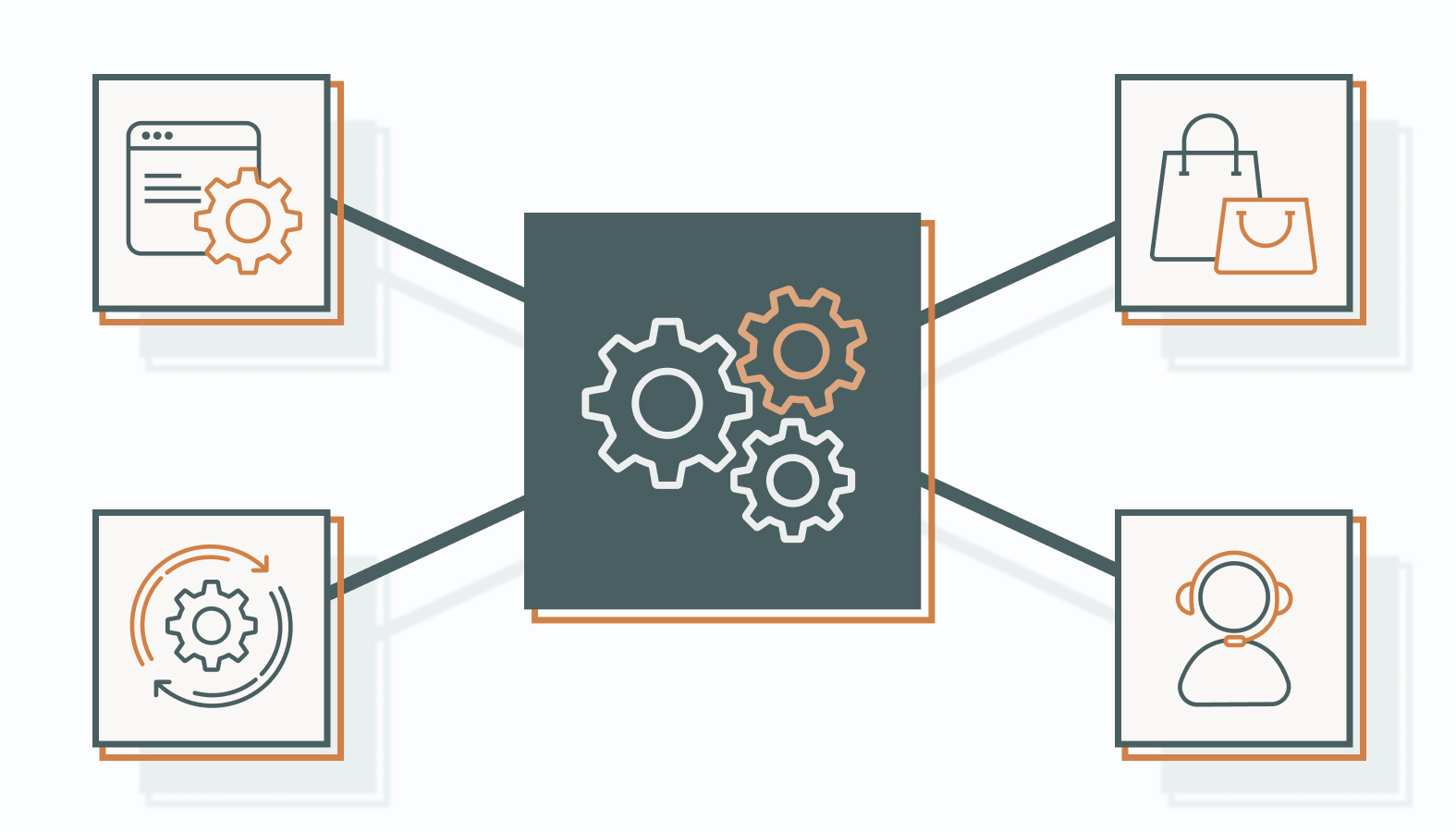
The goal is identifying which tactic the customer’s current situation calls for, not which one the team prefers. A practical starting framework uses four observable signals. The exact thresholds should be calibrated against your own conversion, retention, and expansion data.
- Account age. Use the lifecycle stage as a readiness signal, not a universal cutoff. New customers should generally clear onboarding or activation criteria before receiving expansion offers; established customers can qualify based on demonstrated usage and purchase behavior.
- Usage depth. Define an activation or adoption threshold based on your product’s historical data. Once customers demonstrate meaningful use of the core product, test relevant cross-sells. When customers consistently approach a documented usage or capacity limit, test an upsell.
- Purchase history. Use prior purchases to identify complementary-product affinity. Repeated purchases within the same product family can indicate potential upgrade demand, while purchases across related categories can identify cross-sell opportunities. Treat both as signals to test, not automatic triggers.
- Support and satisfaction signals. Suppress expansion offers when a customer has an unresolved critical issue or materially negative satisfaction signal. Define the threshold using the scoring system and historical churn data for your business.
Translate each signal into a CRM property, event, score, or segment, then define the eligibility, suppression, and exit criteria for each workflow. Then document the rule set in writing. If the logic isn’t documented, the team eventually falls back to guesswork when ownership changes.
Timing Mistakes That Kill Conversion
Upselling before a customer has demonstrated value from the current tier can feel premature and may reduce engagement with the offer. Cross-selling before the customer has demonstrated value from the core product can reduce the likelihood that the complementary purchase will be retained or adopted. Both mistakes are avoidable with a simple account-age and usage-depth filter.
Proven Strategies for Effective Cross-Selling and Upselling
Without trigger logic, a strategy is still just a list of tactics. These work best deployed against the signal framework above.
Cross-selling strategies:
- Bundle products based on actual purchase co-occurrence data, not category assumptions. If Product A buyers consistently purchase Product B within a defined window, use that co-purchase rate as a testable cross-sell signal rather than assuming the products belong together.
- Place cross-sell offers after purchase or onboarding when the customer has demonstrated a relevant need or completed a meaningful activation milestone.
- Use “frequently bought together” logic, but gate it behind a defined co-purchase rate threshold.
Upselling strategies:
- Trigger upgrade prompts at the moment of constraint, not on a calendar schedule. A usage or capacity limit can be a strong upsell signal because it indicates that the customer’s current tier may no longer meet their needs.
- Present the upgrade as a feature unlock, not a price increase. Lead with what the customer gains, not what it costs.
- Use social proof specific to the upgrade tier. Where you have credible customer evidence, use upgrade-specific social proof that connects the higher tier to a measurable customer outcome.
Offer Framing Rules That Apply to Both
Avoid presenting multiple competing offers by default. If a choice-based experience could increase expansion, test it against a single-offer control. Always anchor the offer to a behavior the customer has already taken, since “because you use X” outperforms “you might also like.” And test offer timing before automating it at scale.
Using Sales and CRM Tools to Scale Both Tactics
When cross-sell and upsell offers share one generic lifecycle workflow, the system often lacks the signal-specific entry and suppression logic each tactic requires. Generic execution produces generic results.
Cross-sell CRM features include product purchase history fields, co-purchase segmentation, post-purchase email automation, and lifecycle tags marking onboarding complete.
Upsell features include usage-based event triggers, renewal date fields with sequences starting 60 to 90 days out, tier comparison data in in-app prompts, and satisfaction score fields gating the sequence.
Separating these into two distinct automation workflows is an operational step teams often overlook. Running both through one undifferentiated “existing customer” sequence can erase the signal-specific logic each tactic requires.
Minimum Viable CRM Setup
- Two eligibility segments:
- Cross-sell eligible: activated customer, relevant purchase history, no active suppression signal
- Upsell eligible: demonstrated product value plus a documented upgrade signal, such as sustained usage near capacity or an upcoming renewal
- Two sequences: Each should have its own entry criteria, offer logic, suppression rules, exit conditions, and test/control structure.
- A shared suppression list, so no customer receives both offers at once
How AI Can Scale Cross-Selling and Upselling
AI can scale the decision framework above, but it cannot replace the underlying signal logic. The quality of an AI recommendation is proportional to the signal logic feeding it.
For cross-selling, recommendation models can identify co-purchase patterns and rank potentially relevant products for each customer. The quality of those recommendations depends on data volume, data quality, and how well the model reflects actual customer behavior.
For upselling, usage and behavioral models can identify accounts approaching capacity or showing patterns associated with expansion. Churn signals should generally be used as a suppression or retention signal, not automatically as a reason to push an upgrade.
One practical limit: AI-driven recommendations are only as reliable as the behavioral data, event tracking, and historical outcomes behind them. Smaller datasets may not provide enough behavioral history for reliable predictive personalization. Before deploying AI-driven recommendations, establish clean event tracking, sufficient historical data, and a baseline against which incremental lift can be measured.
What AI Cannot Fix
AI can’t correct a fundamentally wrong trigger rule. If the logic maps the wrong tactic to the wrong signal, AI scales the error, not the result. Audit outputs against the signal-based framework at regular intervals to confirm they’re still aligned.
Frequently Asked Questions
1) Can cross-selling and upselling backfire and damage customer relationships?
Yes, when a tactic fires before the customer has gotten value from the core product, the offer is irrelevant to demonstrated behavior, or offers show up too often. The risk is highest in the first 30 to 60 days, and a satisfaction-score gate in your automation is a direct way to reduce it.
2) Is cross-selling or upselling more effective for e-commerce businesses specifically?
E-commerce businesses often have strong opportunities for cross-selling because complementary products can be offered within the same transaction or shortly after purchase. Upselling can also work well when products have clear configurations, tiers, or capacity differences.
3) How do cross-sell and upsell tactics differ for B2B versus B2C companies?
B2B involves longer decision cycles, multiple stakeholders, and heavier ROI justification. In B2B, cross-selling may require additional discovery to establish the adjacent business need, while upselling often aligns with expansion milestones, usage growth, or renewal conversations. B2C is often more transactional and therefore easier to automate at scale, while B2B expansion typically requires more account-level context and coordination across stakeholders.
4) What is a realistic revenue increase businesses can expect from these programs?
There is no reliable universal revenue uplift. Measure incremental revenue, not just clicks or conversions, by tactic against a control group.
5) What compliance considerations apply to cross-selling and upselling?
In financial services, FINRA Rule 2111 establishes suitability obligations for broker-dealers and associated persons when making recommendations involving securities. The rule requires a reasonable basis for believing the recommendation is suitable based on the customer’s investment profile.
In healthcare, the federal Anti-Kickback Statute prohibits knowingly and willfully offering, paying, soliciting, or receiving remuneration to induce or reward referrals or certain purchases involving items or services reimbursable by federal healthcare programs.
In practice, that’s the exposure a healthcare cross-sell can create if structured carelessly. Consult legal counsel and the relevant regulator before deploying either tactic in a regulated industry.
Make Every Cross-Sell and Upsell Count, Let Signals Decide
The choice between cross-selling and upselling shouldn’t be a creative guess. It’s a data decision, based on observable customer behavior rather than campaign timing or team preference.
A properly configured trigger map gives reps and automation workflows a consistent way to choose the offer, suppress it when conditions aren’t right, and measure incremental revenue by tactic. Audit your CRM or email automation against the four signals in this article. If your sequences don’t check account age, usage depth, purchase history, and satisfaction score before firing an offer, that’s the first change to make, and it’s worth documenting so it survives personnel changes.
If your CRM or lifecycle campaigns are still relying on guesswork, schedule a candid conversation with one of our experts. We’ll look at the signals, workflows, and measurement behind your expansion strategy and identify where your current system is still relying on guesswork.