AI marketing reporting only earns its place on your dashboard if the numbers underneath it are real. Every executive wants real-time dashboards, but automated setups can still produce vanity metrics or misleading outputs that mask what’s really happening in the business. A dashboard that looks impressive and a dashboard that’s correct are not the same thing, and teams often find that out the expensive way.
The tension is real: automated reporting moves fast, and data integrity requires rigor that’s easy to skip when speed is the whole point. AI shouldn’t just generate faster charts. It has to expose tracking discrepancies and back every growth claim with data that can be independently verified.
This guide explains how to build AI-driven marketing reporting and analytics that are trustworthy, not just fast.
The Evolution of AI for Marketing Reporting and Analytics
Reporting has evolved from static dashboards and scheduled exports toward automated analytics and machine learning, and that shift changes what “accurate” means. A report can pull data correctly and still present a misleading picture if the underlying tracking or attribution is wrong.
Beyond the Dashboard: What is True AI Reporting?
A static reporting template pulls defined metrics into the same layout every week. Machine learning-driven analytics can go further by identifying patterns or anomalies that predefined reporting rules may miss.
The meaningful difference is not the polish of the chart. It is whether the system can move beyond reporting historical metrics to identify patterns, anomalies, or potential outcomes from the data. A traditional report can tell you what happened last month. Predictive analytics can estimate what is likely to happen next based on historical patterns, model assumptions, and, where available, additional business or market data.
The Double-Edged Sword of Automated Dashboards
A dashboard that looks clean and organized isn’t the same as a dashboard that’s correct. This is the “black box” problem: when a team trusts an AI marketing reporting tool without understanding what feeds it, a broken data pipeline can produce a confident chart built on incomplete or inaccurate data.
That confidence can lead to a media-buying decision that moves budget toward a channel the underlying data never actually supported, allowing the error to influence decisions until someone catches the mismatch. The chart didn’t lie on purpose. Nobody checked what was underneath it before acting on what it said.
Why Accuracy is the Only Metric That Matters
Accuracy has to be the standard, since a fast report built on bad data can be worse than no report at all. Speed without accuracy just means you’re wrong faster.
Common Data Integrity Gaps in Traditional Setups
Reporting tends to break down in a few predictable places, and teams can have several of these problems running at once without realizing it:
- Cross-platform reporting discrepancies, where two platforms report the same conversion differently because their attribution windows, event definitions, or counting rules don’t match, leaving two plausible numbers that cannot be directly reconciled
- Broken UTM parameters, often caused by redirects, campaign renames, or inconsistent tagging, causing traffic that should be attributed to one campaign to land somewhere else entirely
- Mismatched attribution models, where platforms such as Meta Ads and Google Analytics apply different attribution rules, windows, or definitions to the same customer journey. Improvado reports that summed platform-reported conversions can exceed actual store-reported orders by 20% or more when platforms claim the same conversion under overlapping attribution rules.
None of these show up as an obvious error. They just quietly skew every report built on top of them until someone finally looks, usually right after a decision was already made based on the skewed numbers.
How Smart Automation Fixes Human Reporting Errors
Machine learning can be useful for detecting anomalies that might take a human much longer to notice, especially when the system monitors large volumes of data continuously. A dropped conversion pixel or a budget cap that fails to trigger can be flagged automatically when the monitoring system is configured to detect those conditions, instead of sitting unnoticed until the next manual report.
That’s the actual value of automation in this context: it doesn’t replace a human’s judgment about what a number means, but it reduces the manual work of monitoring for things that have broken, which is difficult to do consistently as reporting volume and complexity increase.
Evaluating Your AI Marketing Reporting Tool Stack
The right tool stack gets the fundamentals right before anything else, since a tool with a beautiful interface and a broken data pipeline is still a broken data pipeline.
Core Infrastructure Non-Negotiables
Automated data normalization is one of the first requirements: cleaning and reconciling data pulled from disparate platforms into one consistent truth, instead of leaving each channel’s numbers in its own separate silo that never quite agrees with the others.
Natural language generation is useful on top of that foundation: it can translate raw database figures into an executive summary someone can act on, instead of leaving a spreadsheet for someone else to interpret.
Both can add significant value, but neither compensates for inaccurate source data, inconsistent definitions, or broken tracking.
Vetting the AI Tech Stack
Before committing to any platform, leadership should get a straight answer to a short list of questions. AppsFlyer’s guidance on marketing attribution notes that each ad platform applies its own counting logic, and none of them are obligated to reconcile with one another, which is exactly why deduplication logic matters before you ever trust a cross-channel total:
- How does the tool handle cross-channel deduplication so the same conversion isn’t counted by multiple platforms?
- What protocols protect client data, where is that data stored, and who can access it once it enters the platform?
- Can the tool show its work, or does it only ever hand back a finished number with no visible logic behind it for anyone to check?
A vendor that can’t answer these clearly isn’t ready to inform decisions involving real budget, no matter how polished the sales demo was.
The Fractional CMO Framework: Scaling Reporting Without Bloating Hours
A fractional CMO model can scale reporting by using automation to absorb repetitive workload as data volume grows, keeping senior attention focused on decisions rather than manual reporting. Automation should change what you’re billed for, not just how fast a report gets built.
Cutting the Fluff Out of Agency Billing
Manual data entry and slide-deck assembly can eat real hours every reporting cycle, leaving clients to pay for administrative work instead of higher-value strategic analysis.
Automation can reduce that administrative layer, so the hours left on an invoice go toward judgment and strategy, not copying numbers between systems. That shift changes what a client is paying an agency for, moving the relationship from execution to strategic partnership.
Integrating Human Strategy with AI Insights
A tool can flag an anomaly. It can’t decide what your business should do about it. Finding out that a channel’s cost per acquisition just spiked is only useful once an experienced growth marketer interprets the signal. That person can weigh the context the model may not have, then adjust the strategy accordingly.
Automation can handle much of the noticing. A person still has to handle the deciding, because the model doesn’t inherently know what the business is trying to accomplish this quarter.
Best Practices for Transitioning to AI-Driven Analytics
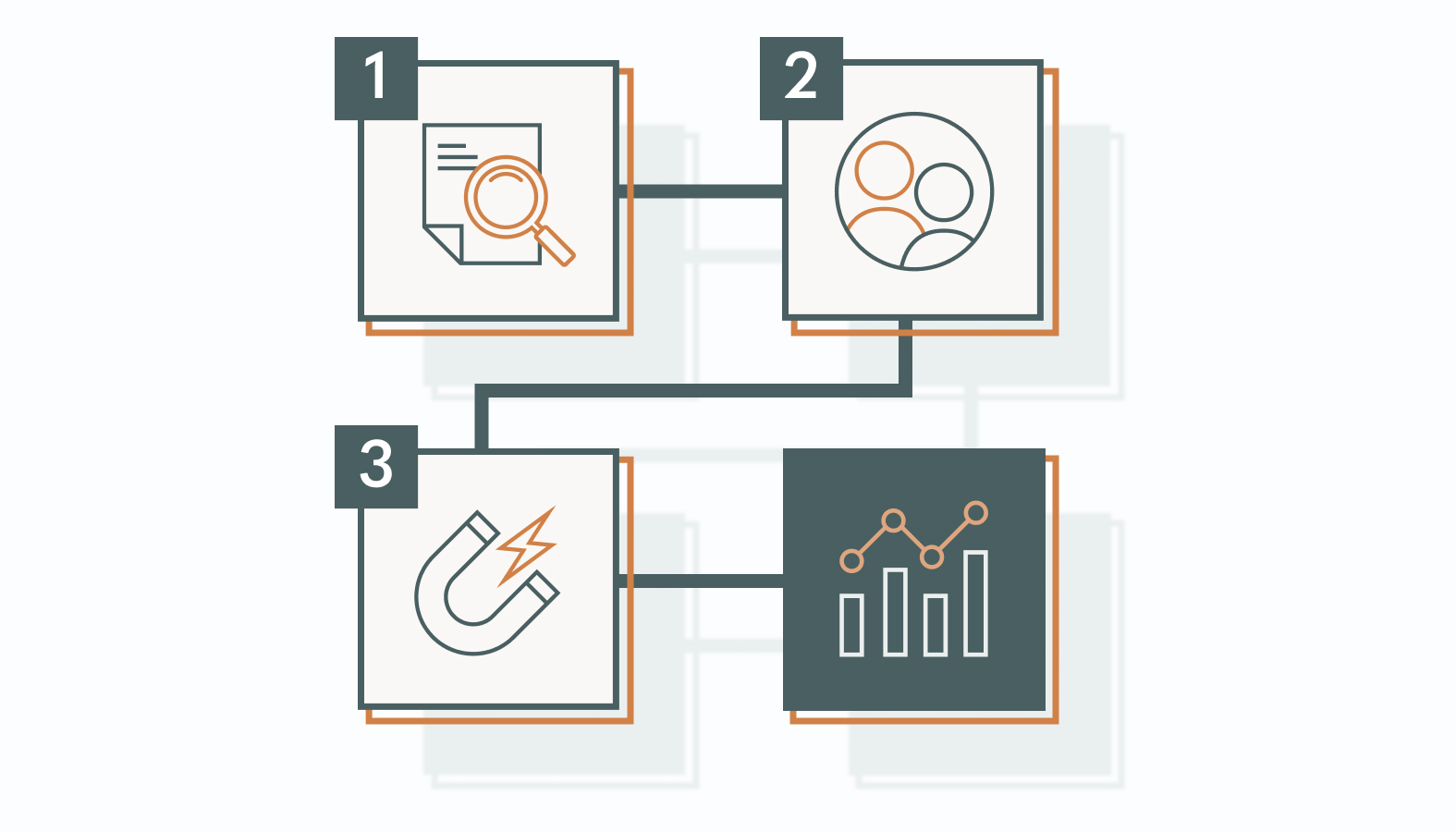
Moving to AI-driven reporting works best as a sequence, not a single rollout, since each phase depends on the one before it being solid, not just technically finished.
Phase 1: The Initial Data Integrity Audit
Before any AI tool touches your reporting, audit what’s already there. An algorithm trained on broken data just automates the same errors at a larger scale.
- Identify every gap where a data source stopped reporting or was never connected, including sources that went silent without triggering an alert
- Resolve discrepancies between platforms that are currently reporting different numbers for the same event, rather than picking whichever number happens to look better
- Establish clear data-quality benchmarks so the team agrees on what “accurate” means before automation goes live, rather than debating it after a report looks wrong
Phase 2: Building Internal Team Data Literacy
A team that can’t interpret what an AI tool is telling them will either trust it blindly or ignore it, and neither outcome is useful. Training sessions, internal workshops, and relevant certifications can help close that gap, so the people reading the reports understand how the numbers were produced, not just what the final chart shows.
A team that understands the mechanics behind a number catches a bad one far faster than a team that only ever sees the finished summary, and that difference matters most when a decision has to be made quickly.
Phase 3: Continuous Optimization Loops
AI-driven reporting isn’t a one-time implementation. Set clear KPIs for the reporting system itself, not just for the campaigns it measures, and build in a feedback mechanism so issues surface instead of getting tolerated for months.
A regular review cycle gives the team a chance to check whether the reporting system is still performing as intended, gather feedback from users, and update the process as the business changes.
Skipping this step is how a reporting system that was accurate at launch quietly drifts out of alignment with reality six months later, without anyone noticing until the gap is significant.
FAQs About AI Marketing Reporting
Can I fully trust an AI marketing reporting tool with my attribution data?
Trust it, but verify it. AI can handle scales that would be difficult for a human team to monitor manually, but that doesn’t remove the need for a human-led infrastructure audit. Someone still needs to verify API configurations, tracking logic, event definitions, and the assumptions behind the reporting.
How does AI improve the accuracy of marketing reports?
AI can improve reporting accuracy by reducing certain manual errors, automating validation checks, and surfacing anomalies faster. Spreadsheet research led by University of Hawaiʻi professor Raymond Panko has repeatedly documented how seemingly small spreadsheet errors can propagate through calculations and affect larger outputs. Automated cross-referencing can catch inconsistencies a person might miss, while anomaly alerts can surface problems such as a broken conversion pixel much sooner.
Will automating my reporting eliminate marketing agency billable hours?
It won’t eliminate high-level strategic hours, and it shouldn’t. What it eliminates is the bloated administrative hours spent manually building slide decks, so more of what a client pays for is actual strategy, not data entry.
What is the biggest risk of using AI for marketing reporting and analytics?
The black box effect. Trusting an automated summary without validating the data underneath it can lead to the budget being shifted toward a channel the underlying numbers never supported.
Moving Fast Shouldn’t Mean Flying Blind
AI is a lever for speed in marketing reporting, but speed without accuracy is just a faster way to waste budget on decisions built on numbers that were never true. The value isn’t in how quickly a dashboard updates. It’s in whether the numbers on it would still hold up if someone checked them by hand, line by line, against what happened in the business.
Stop guessing whether your marketing data is lying to you right now. Schedule a candid conversation with one of our experts » to audit your reporting infrastructure and unlock growth you can truly trust.