Keywords have evolved. If you’re relying on high search volume keywords to fill your content calendar, you will not see consistent organic results. It’s not that SEO hasn’t changed; it’s just that there are more factors to consider when building out a keyword strategy, especially nowadays. With AI overviews answering many questions on the SERP, users are asking more targeted questions, and Google has gotten better at understanding what a page can provide to a searcher.
Understanding what types of keywords exist is going to allow you to build a keyword strategy based on intent, and that’s what this article covers.
The Modern SEO Keyword Taxonomy: Categorizing Different Types of Keywords
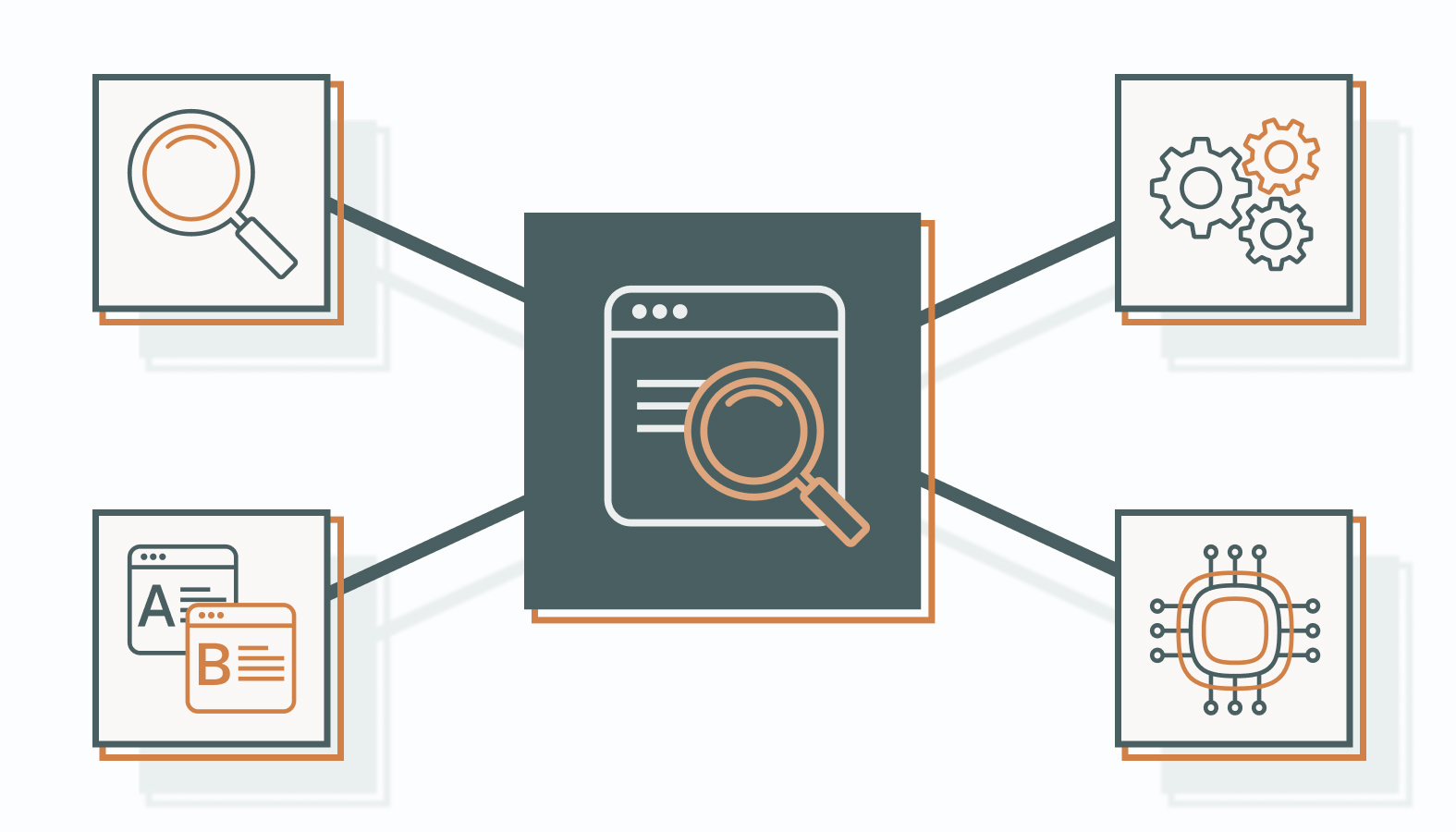
Before a single piece of content gets written, before a single page gets optimized, there is a classification decision that has to be made. What kind of keyword is this, and what does the person searching for it actually need?
This may seem simple, but many businesses fail to do this. They will find a keyword that they think has a good amount of search volume and create content around it. Then they wonder why their page isn’t converting. It could be because they didn’t know what type of keyword they were targeting. Thus, they created content that wasn’t tailored to what the user was looking for.
When learning how to find low-competition keywords, you need to know what type of keywords you are targeting. There are many types of keywords you should know about, and categorizing them before building content assets is the foundation every other SEO decision rests on.
1) Classification by Search Intent (Informational, Commercial, Transactional, Navigational)
Search intent is what the user is trying to achieve when they type a query into Google. Google has categorized search results by intent for quite some time. If you have a page that doesn’t align with the intent of a keyword, you will struggle to rank.
There are four core intent categories:
Informational keywords are used by people looking to learn something. “How does content marketing work” or “what is a keyword difficulty score” are informational queries. The user is not ready to buy. They need education. Pages targeting these terms should deliver clear, well-structured answers, not sales pitches.
Commercial keywords are used by searchers who are looking to compare products or services. They know what they want to buy, but they are still researching. Keywords like “best SEO agencies” or “agency vs. freelancer” are commercial keywords. These searches signal evaluation intent, and the content should help the user make informed decisions.
Transactional keywords indicate purchase readiness. “Hire fractional CMO” or “content marketing services pricing” are transactional. The user wants to take action. Pages targeting such terms have to be direct, credibility-building, and built around a clear conversion path.
Navigational Keywords are keywords that someone is using to navigate to a specific page. Usually, these are brand-related keywords. “Win With Agency Login” or “Win With Agency Blog” would be examples of navigational keywords.
If you target the wrong type of keyword, you will send the wrong type of traffic to your website, which will cause your page to perform poorly. Make sure you’re aware of what type of keyword to target before you build your page for your brand.
2) Classification by Search Volume and Competition (Short-Tail vs. Long-Tail)
Short-tail keywords are broad, high-volume terms, usually one to two words. “SEO strategy,” “content marketing,” “keyword research.” These terms attract significant monthly search volume, which makes them look attractive on paper. The problem is that they’re also the most competitive terms in any industry. Established domains with years of backlink equity dominate those rankings, and a newer or mid-tier domain competing directly for them is not an effective use of resources.
Long-tail keywords are more specific, typically three or more words, and they carry lower individual search volume. But they come with two significant advantages: lower competition and higher conversion probability, so it can be easier to rank for. As Semrush explains, long-tail keywords clearly signal a user’s intent, and because those searchers already know what they want, they are more likely to engage with your content, sign up for your services, or make a purchase.
If you are a smaller website, you can focus on long-tail keywords first. Once you start ranking for those, you can move up to shorter-tail keywords.
It’s important to note that search volume isn’t the only factor to consider when looking at short-tail and long-tail keywords. You also have to make sure the keyword has commercial intent. If a long-tail keyword has 200 searches a month and commercial intent, it’s better than a short-tail keyword with 10,000 searches a month and no commercial intent.
3) Classification by Business Function (Branded vs. Unbranded)
Branded keywords are any keywords that include your company name. Non-branded keywords are any other keywords you may be targeting. Both types of keywords are part of an effective SEO strategy.
When it comes to branded keyword strategy, you’ll make sure you are ranking #1 for your company name. If someone is searching for your business, you want them to find your website first. There are times when competitors will run PPC campaigns on your company name. Or if there are reviews about your company, you want to make sure you are ranking above those.
Non-branded keywords, on the other hand, are where you want to spend most of your time. You’ll make sure you are targeting keywords that your ideal customer would search for when they have a problem you can provide a solution to.
4) Emerging 2027 Classes: Conversational, Local, and AI-Preferred Keywords
People nowadays use voice search and AI assistants when searching for things. This means you’ll have to start targeting these types of keywords.
Conversational keywords are ones that people would say out loud. They are usually longer and more descriptive. “What is the difference between SEO and Paid Search” would be an example of a conversational keyword.
Local keywords are keywords that have a location in them. “Content marketing agency in Austin” or “SEO consultant near downtown Chicago” are local queries with immediate transactional intent. For businesses that serve specific regions, local keyword classification is not a subset of general strategy. It is the strategy. Generic industry terms without local modifiers are largely irrelevant for businesses whose client base is geographically defined.
AI-preferred keywords are complex, multi-part queries that AI search tools are more likely to generate detailed responses for, and more likely to cite external sources on. These are usually longer and more complex questions. For example, “How should I spend my marketing budget if I am a mid-size B2B company?” is an AI keyword.
Make sure you are aware of these types of keywords and target them accordingly so you can continue to get traffic from Google in 2027.
Strategic Prioritization: Evaluating Low Competition Keywords for Real Business Value

When you’re prioritizing your keywords, you may not be looking at what you should be. There are many factors to consider when picking which keywords to prioritize. One of those factors is search volume. It’s nice to see a keyword with a high search volume, but what does that mean for your business? If someone is searching that keyword 8000 times a month, how is that going to help your business?
You need to learn how to find keywords that have low competition and can truly benefit you. Ahrefs points out that you should always manually review the top-ranking pages before creating content because a low difficulty score alone doesn’t mean the keyword makes sense for the type of content you want to create. Here’s what you want to ask yourself when finding keywords that have low competition: Do they have enough search volume to be worth targeting? Are they low competition? Will they help your business if you were able to rank for them?
The Core Matrix: Spotting High Volume Low Competition Keywords with Commercial Value
A “hidden gem” keyword is a term where the keyword difficulty score is low enough to be achievable, but the commercial indicators are strong enough to justify the investment. These terms exist in every industry. Finding them requires looking past raw traffic data to evaluate what the searcher is actually trying to accomplish.
High-volume, low-competition keywords with genuine business value share a few consistent characteristics. Most of the pages that rank for these keywords have low-quality pages that you can easily beat. There is an intent behind the search term and a problem that can be solved. You can tie these keywords back to a service/consultation/product that you offer.
Ask these three questions when you’re deciding to add any keyword to a content roadmap.
First: does the person searching this term have a problem my business solves? If not, the traffic is irrelevant regardless of volume.
Second: is the page that ranks first for this term serving the searcher well? If the top-ranking content is weak, that’s an opportunity. If it’s a comprehensive, well-linked resource from a high-authority domain, the competitive bar is higher than the difficulty score suggests.
Third: if someone reads this page and finds it useful, is there a natural next step that moves them toward a business relationship? If it’s a no, the keyword generates traffic without generating value.
Low competition combined with intent alignment and commercial relevance is the strategy.
The Search Intent Blueprint: Mapping Long-Tail Keywords to the Customer Conversion Journey
Once you learn how to find low-competition long-tail keywords, you’ll understand where those keywords fall within your customer’s journey.
There are many different points that long-tail keywords can fall under in a customer’s journey. They may be experiencing a pain point that they don’t know how to fix. Or they know what type of solution they are looking for. Maybe they know exactly what they need and are looking for a company to help them.
By understanding where your long-tail keywords fit in your customer’s journey, you can create content that helps them move through that journey.
For example, if you have the keyword “signs your marketing strategy isn’t working”. You’ll create content that targets that pain point. You could write about why their marketing strategy may not be working and how to fix it.
If you had the keyword “how to find low competition long tail keywords for a B2B blog”. You would want to create content that explains how to find long-tail keywords. This is where you can start selling your services by explaining how you can help them find more of what they need.
Lastly, a keyword like “fractional CMO services for mid-size companies” sits at the bottom of the funnel. The user is ready to evaluate vendors. Content targeting this term should be direct, credibility-focused, and built around a clear call to action.
The businesses that see compounding results from long-tail content build pages for all three stages and connect them intentionally, not the ones that publish isolated blog posts and just hope for traffic.
Execution and Optimization: How to Rank Low-Competition Keywords Fast
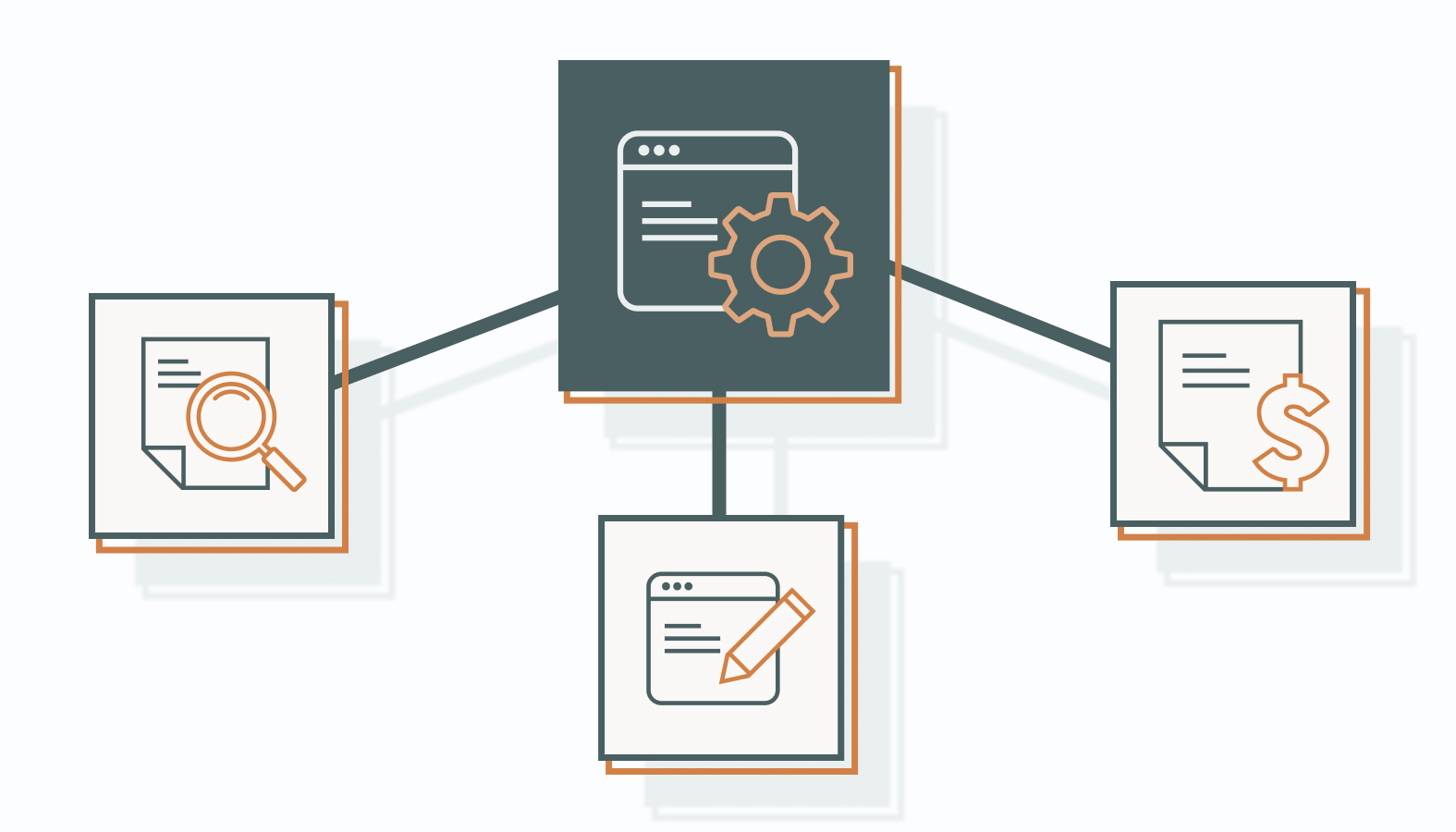
Ranking low-competition keywords fast enough to produce measurable results before the content roadmap moves on is the full work, along with identifying the right keywords.
Once you have your keywords selected, it’s time to create the proper environment for these pages to rank. Not only rank, but rank fast should be the goal.
There are ways to help you rank low-competition keywords faster. By creating topical authority. If you have 10 pages about a certain topic, you’re going to have more authority over a website that has 1 page about that topic. Even if that 1 page is optimized better than all of yours combined.
Entity matching reinforces topical authority. Search engines identify topics through entities — the named concepts, categories, and relationships within content. Pages that consistently reference the right entities in the right context signal relevance to crawlers at a level that generic keyword repetition cannot achieve.
Thin, single-focus content blocks work against both of these signals. A 600-word page targeting one keyword in isolation doesn’t build topical authority. A cluster of interconnected pages, each targeting a specific long-tail variation, all linking back to a central pillar page, builds the kind of authority that produces durable rankings.
Matching UX Layout and Content Formats to Different Types of Keywords
When you are creating a page that targets a keyword, make sure your UX layout matches it. If you are targeting a transactional keyword, have a page that allows the user to take action. If you are targeting an informational keyword, your page should provide them with information. By matching your UX layout to the keyword, you are more likely to rank for it.
Matching Keyword Type to On-Page Placement Rules
Where you place your keyword on the page also matters. Make sure it is in the title tag, H1, and body of your page.
If you have a transactional keyword, it should be found in the title tag and H1. If you have an informational keyword, you can place it in the body of your page.
Don’t Stuff Your Keywords: The last thing to remember when ranking low-competition keywords is not to stuff your keywords because if you do, you might not have them ranked.
The most important thing to remember is that keywords should be placed naturally in your content, not stuffed and not forced just to have them there.
Using Internal Links to Connect Informational and Transactional Keyword Assets
Internal links are what allow your topical clusters to work. When you have pages within a cluster, they should all be linking to one another. Not only will this pass page rank, but it also allows you to pass context to those pages.
Have your informational keywords that are long-tail at the top and mid funnel pointing towards your commercial/transactional pages, so if you have a blog post that targets “how to find low competition long tail keywords for a service business,” you would want to link to your service page that you offer. Whether it be content strategy or SEO, you can link to that page from your blog post. This will pass page rank to your commercial page and allow the user to learn more about what you do.
Make sure you use anchor text that makes sense. Don’t use “click here” or any generic type. Rank Math states that using descriptive and relevant keywords as the clickable text for your internal links gives your audience and search engines clear context about the linked page’s content. You want to use the keyword that your page is targeting or something similar to pass context. By doing this, you are creating an ecosystem of informational keywords that point to your converting pages.
Frequently Asked Questions
Can you target multiple different types of keywords within a single piece of content?
Yes, you can target multiple keywords on one page. Just make sure you have a primary keyword and secondary keywords. Your primary keyword should be what the page is focused on, and your secondary keywords should be related to your primary one.
How do you evaluate high-volume, low-competition keywords for an e-commerce brand?
It depends on what type of page you’re targeting. If it’s a product or category page, you want to be targeting high-intent commercial/transactional keywords. Think of product names, categories, and comparisons. You don’t want to mix these with information-based keywords. Your blog is where you can find high-volume, low-competition keywords. It’s best to have these on your blogs because they will help you gain top-of-funnel visitors, which you can then link to your product/category pages.
Does the framework for how to find low competition keywords change for local service businesses?
Yes, find low-competition keywords for your local business. You have to make sure you are adding location to them. Instead of targeting “plumbing tips,” you want to target “plumbing tips in Denver, CO. ” You can also target keywords that include your neighborhood.
What is the most critical metric when learning how to rank low-competition keywords in an AI-driven search market?
Information gain can be one when learning how to rank low-competition keywords. If your page can provide more information than the pages currently ranking, you have a better chance of outranking your small competitors and gaining more traffic potential.
Aligning Ranking Potential with Real Business Growth
Keyword strategy in 2027 is about understanding what each type of keyword signals, matching that signal to the right content format, and building a connected architecture that moves users from initial search to business outcome. The different types of keywords covered in this guide are practical filters that determine which content gets built, how it gets structured, and what it’s supposed to accomplish.
The businesses that will consistently outperform in organic search are the ones that treat keyword classification as a strategic decision. Schedule a candid conversation with one of our experts. Bring your current keyword list, your top-performing pages, and your 2027 growth targets. We will help you build a keyword strategy grounded in intent, realistic ranking potential, and content that actually converts.