


High-value deals are increasingly complex, involving multiple stakeholders, longer sales cycles, and higher expectations at every move. Account based experience is gaining attention because it highlights how interactions across teams and channels connect, or fail to connect, throughout the buyer journey.
Organizations are noticing that disconnected efforts create friction, slow decisions, and weaken trust with important accounts. Understanding these dynamics is important for teams looking to navigate today’s B2B landscape more effectively.
This guide explores the shifts shaping enterprise sales, how leading teams are responding, and what these changes mean for your approach to high-value accounts.
Understanding Account-Based Experience (ABX)
Account-Based Experience (ABX) focuses on delivering a consistent, relevant experience across every interaction with a high-value account. It aligns marketing, sales, and customer success around a shared goal: moving accounts forward with context, not disconnected efforts.
Instead of running separate campaigns or handoffs, ABX treats the account as a single, continuous journey shaped by data and coordinated execution.
What sets ABX apart:
- Account-first approach: Prioritizes specific high-value accounts over broad audiences
- Cross-team alignment: Marketing, sales, and customer success operate from the same data and plan
- Connected interactions: Every touchpoint builds on the last, rather than starting from scratch
- Data-driven context: Decisions are guided by real account insights, not assumptions
ABX is gaining traction because buying groups are larger and more complex, stakeholders expect relevant, personalized interactions, and disconnected outreach slows deals and erodes trust.
It addresses these shifts by making the experience more consistent, coordinated, and easier for accounts to navigate.
The Four Stages of the ABX Journey
ABX is a journey made up of four stages: Attract, Engage, Close, and Grow. Each is designed to move high-value accounts from first contact to long-term partnership.
B2B decisions involve multiple stakeholders with different needs at every point, and a weak stage can cost you a deal or future growth.
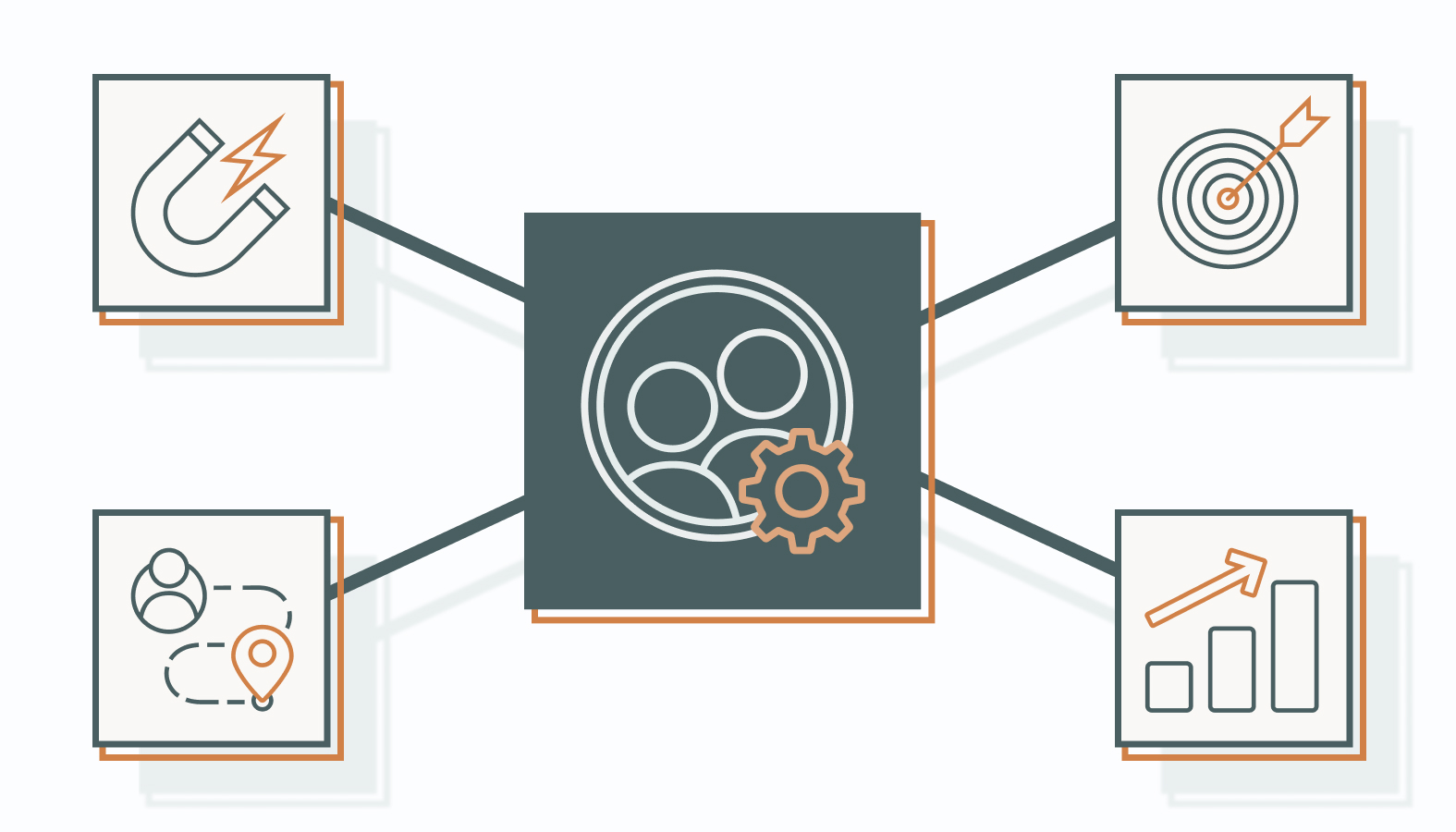
1) Attract
The goal is to identify and pull the right accounts into your pipeline, those that fit your solution and are likely to deliver long-term value.
Key strategies:
- Build a clear Ideal Customer Profile (ICP) to focus on best-fit accounts.
- Use intent data and account intelligence tools to identify companies showing early buying signals.
- Create targeted, personalized outreach, such as custom content, tailored ads, and direct messaging that speaks to each prospect’s specific challenges.
Generic outreach gets ignored. Showing a deep understanding of an account’s needs from the start improves your chances of getting in the door.
2) Engage
Engagement is where you build momentum by connecting with multiple stakeholders within each target account, not just the decision-maker, but influencers, end users, and blockers.
To drive engagement:
- Map the buying committee and build relationships with each key player.
- Deliver role-specific content, like ROI calculators for finance, technical details for IT, and strategic roadmaps for executives.
- Run coordinated campaigns across email, LinkedIn, webinars, and phone to stay relevant.
Effective engagement is about delivering value, instead of pushing a product. The more useful you are upfront, the easier it is to move the deal forward.
It’s also worth noting that engagement quality matters more than volume. One well-timed, relevant interaction outperforms five generic touchpoints every time.
3) Close
It’s where your groundwork converts into revenue, but only if sales, marketing, and customer success are fully aligned.
Best practices:
- Keep communication tight and transparent across all teams to avoid dropped handoffs
- Use data-driven insights to address objections and reinforce your value proposition
- Set clear expectations for onboarding and support during the transition from prospect to customer
When everyone is aligned, deals close faster and with fewer surprises.
4) Grow
The relationship doesn’t end at the contract. The Grow stage focuses on expanding existing customer relationships and turning wins into long-term partnerships.
To drive growth:
- Deliver ongoing value through quarterly business reviews, usage insights, and tailored recommendations
- Monitor account health and engagement signals to identify cross-sell and upsell opportunities
- Equip satisfied customers to share success stories, provide referrals, or participate in case studies
In ABX, the post-sale phase is the start of a new growth cycle, not the finish line.
Core Principles That Make ABX Work
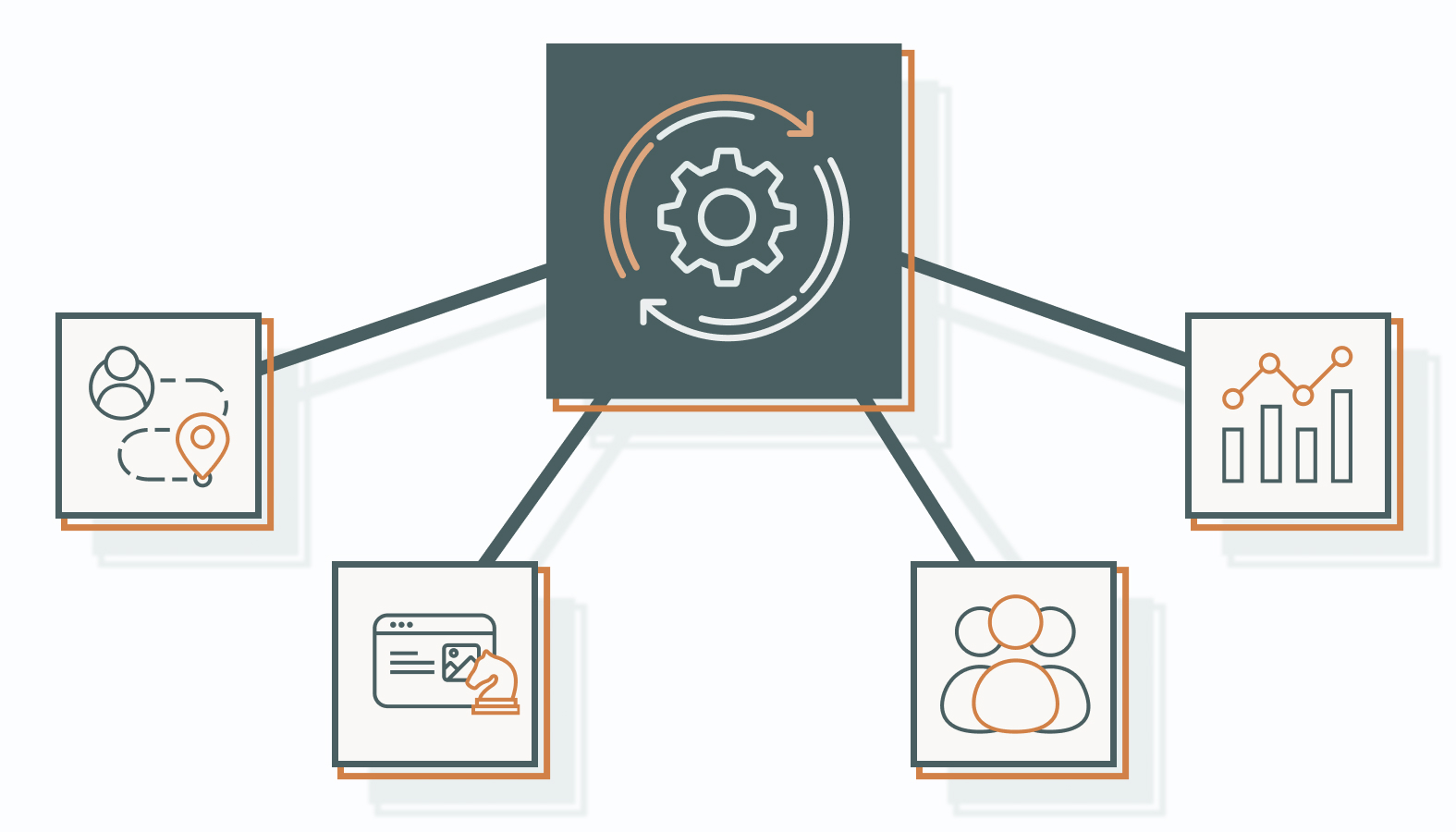
Four principles separate high-performing ABX programs from the rest:
Orchestration Across the Full Account Journey
Orchestration means every interaction, regardless of who delivers it or where, feels coordinated and relevant to the account.
How to implement it:
- Map the full journey for key account segments, identifying every critical touchpoint from first contact to renewal
- Use shared playbooks and campaign calendars to align messaging, timing, and responsibilities across teams
- Use workflow tools that trigger the right actions for the right accounts at the right time
Hyper-Personalization at Scale
In ABX, personalization means delivering content and messaging that speaks directly to the specific needs and goals of each account and its stakeholders.
How to scale it:
- Use dynamic content and modular messaging that adapts based on account attributes and behaviors
- Invest in marketing automation and AI tools that personalize at the account or stakeholder level
- Tier accounts by value and concentrate your highest-touch personalization on accounts with the greatest potential
Unified Revenue Teams
Silos kill ABX. The most successful programs bring sales, marketing, and customer success together with shared goals, shared data, and shared accountability.
How to build unity:
- Run regular cross-functional meetings where account progress and next steps are discussed openly
- Align KPIs across teams, such as shared pipeline targets, NPS scores, or expansion goals
- Use collaborative platforms where all notes, activities, and insights are visible to everyone on the account
Intent Data and Account Intelligence
Intent data shows which accounts are actively researching solutions like yours. Account intelligence adds broader context, such as company news, leadership changes, and funding events that signal shifting priorities.
How to integrate these insights:
- Set up alerts for high-intent activity among your target accounts
- Enrich your CRM with up-to-date firmographic and technographic data
- Build workflows that trigger personalized outreach when an account shows key intent signals
ABX vs. ABM: What Actually Changes?
ABM and ABX are related, but they’re not the same. Their distinction matters when you’re deciding how to structure your go-to-market motion.
ABM is a focused strategy where marketing and sales target high-value accounts with personalized campaigns. It’s primarily about identifying the right accounts, tailoring outreach, and aligning efforts to win deals.
ABX, on the other hand, takes things a step further. It’s not just about marketing or even marketing and sales working together. ABX is a holistic approach that unites marketing, sales, and customer success to deliver a seamless, personalized experience across the entire account journey from first touch through post-sale growth and renewal.
Moving from ABM to ABX means thinking beyond winning deals to building relationships that grow over time. Customer success gets a seat at the table from the start, teams share data and KPIs, and measurement expands to include post-sale outcomes. In practice, this also changes how you resource your programs.
ABX requires tighter cross-functional coordination, a shared technology infrastructure, and a willingness to hold all revenue-facing teams accountable to the same outcomes, and not just the teams closest to the pipeline.
How to Build an Account-Based Experience Strategy
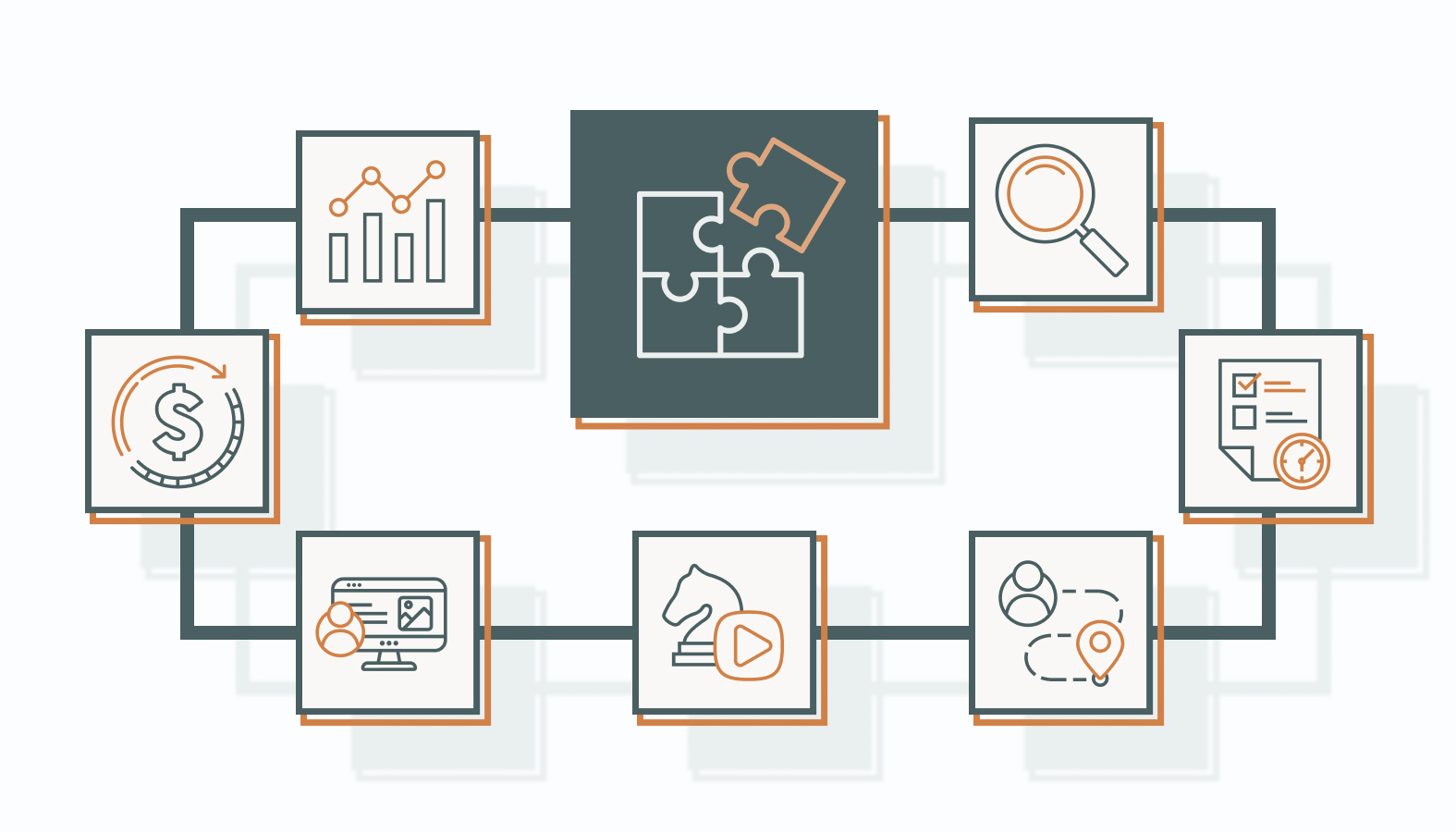
ABX requires structure and ongoing refinement. Here’s how to build it step by step:
Step 1: Get Your Data Right
Audit all data sources (CRM, marketing automation, intent platforms) for gaps and inconsistencies.
Clean and deduplicate records, integrate systems so all teams share a single source, and set up ongoing data hygiene processes.
Step 2: Define Your Ideal Customer Profile (ICP) and Tier Accounts
Your ICP defines what a best-fit account looks like, such as firmographics, technographics, buying signals, and pain points.
Use it to build tiered account lists (Tier 1 = highest potential, Tier 2 = strategic, Tier 3 = nurture) so you can prioritize resources and personalization appropriately.
Step 3: Map the Buying Committee
Research and document all key stakeholders: decision-makers, influencers, users, and blockers.
Record their preferences, pain points, and communication styles in your CRM for coordinated outreach.
Step 4: Build Your Scoring Model
Combine firmographic fit (industry, size, tech stack) with behavioral signals (website visits, content downloads, event attendance).
Assign point values and set thresholds that trigger specific actions, like a sales outreach when an account crosses a score. Refine the model based on closed-won and closed-lost analysis.
Step 5: Design ABX Plays and Journeys
ABX plays are orchestrated sequences of actions tailored to the account’s stage and context.
Map plays to each stage (Attract, Engage, Close, Grow) and account tier, use multi-touch and multi-channel tactics, and personalize timing and content based on intent signals.
Step 6: Sales and Customer Success Alignment
Set shared KPIs (retention rates, expansion revenue, NPS) to encourage joint ownership. Schedule regular syncs to review account health and upcoming renewals.
Use shared account plans and CRM notes for full visibility.
Step 7: Launch and Iterate
Start with a focused set of accounts and clear measurement rather than waiting for a perfect setup. Gather feedback, track key metrics, and refine plays and messaging as you learn. ABX is an ongoing program, instead of a one-time launch.
Common ABX Challenges
ABX introduces a higher level of coordination than most teams are used to. The challenges below aren’t unique to ABX, but they become more visible and more costly when you’re trying to deliver a seamless experience across the full account lifecycle.
Aligning Sales and Marketing
Misalignment often comes from siloed goals and different definitions of success. Fix it by setting shared KPIs across teams, establishing a formal SLA that outlines responsibilities at each stage, and using shared dashboards so everyone works from the same data.
Scaling Personalization Without Sacrificing Quality
Manual personalization doesn’t scale. Use marketing automation with dynamic content and modular templates, leverage AI tools for content recommendations and stakeholder research, and prioritize high-level treatment for top-tier accounts while using scalable frameworks for lower tiers.
Data Quality and Integration
Siloed or inconsistent data breaks personalization and orchestration. Invest in a unified CRM, integrate all key systems (CRM, marketing automation, customer success platforms, intent data tools), and make data quality a shared responsibility across teams.
Measurement
Focusing only on early-stage metrics like email opens or MQLs is a common mistake. Track across the full journey: pipeline progression, deal velocity, win rates, expansion, and retention. Build dashboards that are visible to all revenue teams so everyone can see what’s working.
The Must-Have Tech Stack for ABX Success
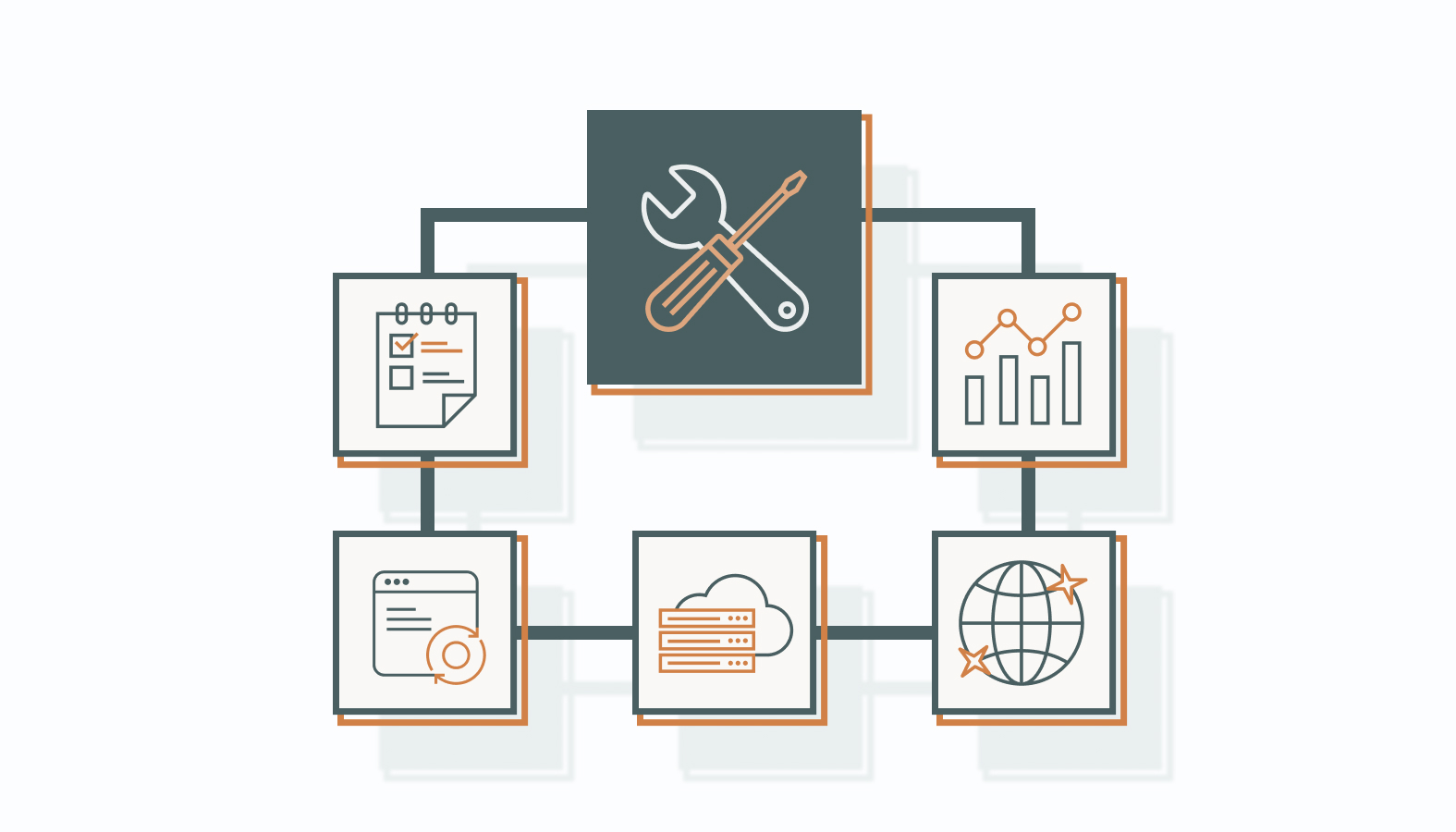
The right tools make ABX scalable and measurable. Focus on these categories:
- CRM: The backbone of ABX. Manages all account and contact data, logs every interaction, and enables workflow automation and account health tracking. It should integrate with every other tool in your stack.
- Marketing Automation: Drives consistent, scalable outreach with dynamic segmentation, multi-step nurture journeys, and personalization based on real-time account activity.
- Intent Data: Surfaces that account for solutions like yours, so you can prioritize outreach and trigger timely, relevant campaigns before competitors do.
- Orchestration Platforms: Coordinates actions and messaging across teams and channels, like automated playbooks, cross-channel campaign management, and real-time triggers for handoffs and follow-ups.
- Analytics: Tracks account engagement scores, pipeline velocity, conversion rates by stage, and post-sale metrics like expansion and NPS. Dashboards should be shared across all revenue teams.
Choose tools that integrate smoothly with your existing systems and scale with your business. You don’t need the most expensive stack. You need the right one.
Start with a solid CRM and one or two complementary tools, then expand as your program matures and your needs become clearer.
Making ABX Work in Practice
Account-Based Experience (ABX) works when teams, data, and execution stay aligned across the entire account journey. Consistency across interactions is what keeps deals moving and relationships growing.
High-performing teams focus on the right accounts, align around shared goals, and ensure each interaction builds on the last. They also measure success beyond early signals, looking at outcomes across the full lifecycle.
Start with a small set of high-value accounts, coordinate closely, and refine based on results. Once the foundation is solid, scaling becomes far more effective.
Align Your High Value Accounts
Feeling like your account efforts are disconnected or hard to scale? Schedule a candid conversation with one of our experts, » so we can help you pinpoint gaps, streamline coordination, and get your teams aligned for better results.
We’re looking forward to connecting!
ABX Frequently Asked Questions
1) Why Is Intent Data Critical for ABX?
Intent data shows which accounts are actively researching solutions like yours, often before they ever fill out a form. It allows teams to prioritize in-market accounts, personalize outreach, and reach buyers at the right moment.
Teams that use intent data effectively typically see higher engagement rates, faster deal cycles, and better win rates.
2) Can Small and Mid-Sized B2B Companies Succeed with ABX?
Yes. ABX is about focus and coordination, instead of the budget size. Start with a small, targeted list of high-value accounts (10–20 is enough), use affordable CRM and automation tools with ABX-friendly features, and prioritize high-touch tactics for top accounts. Smaller teams are often more nimble and can deliver personal experiences that larger organizations struggle to replicate.
The key is to resist trying to do everything at once. Pick your highest-value accounts, run a tight playbook, and expand from there as you build confidence and results.
3) How Do You Make the Most of Intent Data?
Feed intent signals directly into your CRM and sales dashboards. Set up automated triggers for outreach when high-intent activity is detected. Train your team to interpret signals in context, as not every spike means a deal is imminent.
Regularly refine your sources and rules to reduce noise. And avoid relying on intent data alone. Validate signals against engagement data and account fit before acting.