



Every customer carries a story and a number. Understanding customer lifetime value (CLV) lets businesses see beyond individual transactions to the bigger picture: how much a customer truly contributes over time.
Too many companies focus only on immediate sales, missing the deeper patterns that reveal which customers drive sustainable growth. Calculating and interpreting CLV helps you spot high-value clients, allocate resources wisely, and shape strategies that actually stick.
This guide breaks down the models, methods, and strategies you need to measure, improve, and make CLV actionable, so your business isn’t just chasing short-term wins but building long-term momentum. Keep reading to see exactly how to turn insights into results.
Understanding Customer Lifetime Value (CLV)
If data is the lifeblood of modern marketing, Customer Lifetime Value (CLV) is the pulse that tells you how healthy your business really is.
In a market where every click, subscription, or purchase competes for attention, CLV helps you see the full arc of a customer relationship. It focuses not just on what they buy today, but how valuable they’ll be tomorrow.
What is CLV?
Customer Lifetime Value (CLV) measures the total net profit a business can expect from a single customer over the course of their relationship. It’s the ultimate scorecard for long-term profitability.
By quantifying the financial impact of loyalty and engagement, CLV gives you a clear view of which customers truly move the needle and which ones quietly drain your margins.
Think of it as a strategic lens: CLV translates customer behavior into business intelligence. It reveals the kind of insight spreadsheets can: how every touchpoint, interaction, and brand experience compounds into measurable value.
How to Put a Number on Customer Value
Accurately valuing CLV is necessary in strategic business planning. It allows organizations to allocate resources efficiently, tailor marketing strategies, and prioritize customer retention efforts.
By understanding CLV, businesses can adjust strategies to maximize the potential of high-value customers.
Key Drivers of CLV
Several forces shape Customer Lifetime Value, each one a lever you can adjust for growth.
While the exact formula varies by industry, these universal drivers form the foundation of every strong CLV strategy:
- Customer Acquisition Costs (CAC) vs. Long-Term ROI: The lower your cost to acquire, the greater your long-term return. CLV turns CAC into a performance metric, ensuring every new customer is a smart investment, not an expensive gamble.
- Customer Retention and Relationship Depth: Every renewal, upsell, and repeat purchase compounds value. Building habits and trust keeps customers orbiting your brand longer.
- Purchase Frequency and Spend: When customers engage more often and at higher value, your CLV scales exponentially. Incentivize consistency, and the numbers follow.
- Satisfaction and Advocacy: A happy customer doesn’t just buy again; they bring others with them. Positive experiences amplify CLV through referrals and reputation.
Each industry plays by its own rules. Retail thrives on volume, SaaS lives on retention, and B2B wins on long-term relationships. But across the board, CLV helps you pinpoint what drives profitability and turn it into a repeatable system.
When businesses tune into these drivers, they move past short-term metrics and start playing the long game – where every customer interaction becomes a deliberate step toward sustainable growth.
Calculating Customer Lifetime Value
Let’s get real, you can’t manage what you don’t measure. Calculating Customer Lifetime Value (CLV) gives you the hard numbers behind customer relationships, helping you steer business decisions with precision instead of hunches.
When you quantify what a customer brings to your business over time, you’re not just crunching data. You’re uncovering the economics of loyalty, engagement, and brand performance.
Understanding CLV from a numbers standpoint lets teams balance growth ambition with profitability. It brings marketing, sales, and finance onto the same page: where every customer strategy is tied to measurable value, and every decision ladders up to revenue that lasts.
Exploring the Models: Historical, Predictive, Cohorts, and Probabilistic
There’s no one-size-fits-all way to measure CLV; it’s more like choosing the right tool for the mission. Each model offers a unique perspective on the customer journey, depending on how deep you want to go and how sophisticated your data is.
- Historical Model: The simplest starting point. It tallies up past purchases to estimate value based on what’s already happened. Fast and easy, but limited to what your customers used to do.
- Predictive Model: A more forward-looking approach. It uses machine learning and statistical analysis to forecast how customers will behave next. It’s like giving your business a crystal ball, powered by math.
- Cohort Analysis: This model groups customers with shared traits (like signup month, acquisition channel, or product purchased) and tracks how each group performs over time. It’s ideal for spotting trends and refining marketing strategies by audience segment.
- Probabilistic Models (like Pareto/NBD): These take it to the next level, applying probability theory to predict purchase likelihood and timing. They’re the gold standard for precision, but they require data sophistication and a team that loves complex modeling as much as caffeine.
Each model unlocks a different layer of insight. Historical models are great for fast answers, while predictive and probabilistic models fuel long-term planning and high-stakes decisions.
The right choice depends on your data maturity, business goals, and how much analytical horsepower you’ve got under the hood.
Simple Formula for Quick CLV Estimates
Sometimes, you just need a reliable ballpark figure without the algorithms or dashboards. That’s where the simple CLV formula comes in handy – a straightforward way to estimate what a customer is worth over their entire relationship with your business.
Here’s the breakdown:
- Calculate Average Purchase Value:
Total revenue ÷ total number of purchases in a set time period. - Determine Purchase Frequency:
Number of purchases ÷ number of unique customers. - Estimate Customer Lifespan:
Average duration a customer continues buying from your business. - Apply the Formula:
CLV = Average Purchase Value × Purchase Frequency × Customer Lifespan
Example: A coffee shop wants to estimate CLV.
- Average Purchase Value: $5
- Purchase Frequency: 4 times a month
- Customer Lifespan: 3 years (36 months)
CLV = $5 × 4 × 36 = $720
In other words, every regular coffee drinker represents roughly $720 in lifetime value. That’s not just caffeine. It’s clarity. With this insight, the business can invest smarter, design retention programs that actually pay off, and measure marketing effectiveness in dollars, not guesses.
Whether you’re running predictive models or quick calculations on a napkin, what matters is using CLV as a decision-making lens – one that helps you see not just who your best customers are, but how to create more of them.
Why CLV Matters: Strategic Advantages for Your Business
Customer Lifetime Value (CLV) is your business’s north star for growth that lasts. When you understand exactly how much value a customer brings over time, every strategy, campaign, and investment becomes sharper, smarter, and more profitable.
CLV helps you channel energy and resources where they truly count.
1) Unlocking Cost Efficiency
When you know who your most valuable customers are, you stop throwing darts in the dark and start operating with laser precision.
CLV helps you:
- Identify high-return audiences so marketing dollars go further.
- Eliminate wasted spend on low-value or one-time buyers.
- Prioritize personalization by offering rewards, recommendations, or experiences tailored to your best customers.
Pro Move: Use CLV insights to run targeted campaigns for repeat customers. Leverage exclusive perks or loyalty bonuses that increase retention without ballooning ad spend. It’s not about cutting costs; it’s about amplifying returns.
2) Driving Retention That Feeds Growth
Customer retention is where profitability compounds, and CLV is your roadmap. A well-maintained customer relationship fuels advocacy, referrals, and sustainable revenue growth.
Strategies to strengthen retention:
- Design loyalty programs that feel premium, not transactional.
- Deliver personalized communication that anticipates needs and keeps engagement high.
- Build proactive customer support systems that transform service into a retention engine.
Each improvement extends the customer relationship, turning short-term buyers into long-term brand advocates.
3) Recognizing and Amplifying High-Value Customers
Not all customers contribute equally, and CLV shows you who’s truly moving the needle. With the right analysis, you can identify your top-tier customers based on spending patterns, engagement, and longevity.
Once you know who they are:
- Reward loyalty with exclusive benefits like early access, premium experiences, or insider perks.
- Create personalized experiences that reinforce their importance to your brand.
- Use their feedback to shape offerings that attract more customers like them.
High-value customers are growth multipliers. When you use CLV to understand and nurture them, you improve retention and align your entire business around what drives sustainable success.
Strategies to Grow Customer Lifetime Value
Growing Customer Lifetime Value (CLV) is about designing a business that thrives beyond the next sale. When you focus on deepening relationships, amplifying loyalty, and delivering unmatched experiences, you build a customer base that becomes your biggest growth engine.
1) Elevating the Customer Experience
Exceptional customer experience is the backbone of high CLV. Every interaction – whether it’s your website, a support chat, or a delivery moment – shapes how long a customer stays and how much they spend.
Ways to Elevate the Experience:
- Personalize interactions using data that actually matters: recommendations, reminders, and offers that feel effortless and relevant.
- Build a customer support system that’s fast, human, and proactive.
- Gather real feedback and use it to fine-tune products, services, and processes.
Each improved touchpoint adds up to stronger trust, deeper engagement, and customers who keep choosing you again and again.
2) Loyalty Programs That People Actually Want
Forget generic punch cards and points that gather digital dust. A modern loyalty program is an ecosystem of value, exclusivity, and connection. It retains and excites customers.
To make loyalty magnetic:
- Design rewards that speak to real customer desires, not arbitrary discounts.
- Add tiered benefits that evolve as customers grow with your brand.
- Surprise top-tier members with early access, behind-the-scenes previews, or tailored experiences.
When loyalty feels rewarding and aspirational, you’re not just increasing repeat purchases. You’re creating brand evangelists who can’t stop talking about you.
3) Smooth Onboarding That Reduces Churn
The first impression sets the tone for the entire customer journey. A frictionless onboarding experience transforms curiosity into confidence and prevents early drop-offs.
Build a powerful onboarding system by:
- Streamlining sign-up flows with clear, intuitive steps.
- Offering self-serve tutorials or welcome guides that make adoption easy.
- Checking in early (before confusion turns into cancellation).
When customers see value fast, they stay longer. And when they stay longer, CLV compounds.
4) Social Media as a CLV Multiplier
Social media is the best marketing channel for improving your customer relationships. It’s where you engage, humanize your brand, and turn followers into lifelong fans.
Smart plays for social-driven CLV:
- Host interactive campaigns or challenges that drive participation.
- Personalize engagement (respond to comments like a brand that actually listens).
- Use social listening to anticipate needs, spot advocates, and resolve issues before they escalate.
Active, authentic engagement builds trust. And trust translates to retention, advocacy, and higher lifetime value.
5) Smart Upselling and Cross-Selling Tactics
Upselling and cross-selling done right don’t feel pushy; they feel intuitive. You’re helping customers get more out of what they already love.
Tactics that work:
- Recommend relevant upgrades or add-ons that naturally enhance the customer’s experience.
- Bundle complementary products for easy “yes” moments.
- Use behavioral data to time offers precisely: right place, right context, right moment.
The result? Higher average order values, greater satisfaction, and customers who feel understood, not sold to.
Bottom Line: CLV grows when every part of your business – marketing, service, product, and communication – works together with precision. These strategies don’t just increase numbers on a dashboard; they create customers who stick around, spend more, and bring others with them. That’s the kind of compounding value every business dreams of and the smart ones engineer.
Tackling CLV Measurement Challenges
Even the smartest strategies fall flat if your CLV math is off.
Measuring Customer Lifetime Value (CLV) accurately is both an art and a science – a balancing act between data integrity, modeling precision, and business intuition.
When you master it, you’re decoding what makes customer relationships truly profitable.
Fixing Data Gaps and Model Complexities
Let’s face it: measuring CLV can get messy. Between incomplete data, shifting customer behaviors, and the technical nuances of predictive models, many businesses end up with numbers that tell only half the story. The key is building clarity from complexity.
Common roadblocks include:
- Inconsistent Data Quality: Gaps or mismatched sources can distort CLV insights and decisions.
- Evolving Customer Behavior: Shifting preferences, trends, and market shifts can render static models obsolete.
- Model Overload: Sophisticated algorithms are only as good as the assumptions behind them. Too much complexity can cloud real value.
How to overcome them:
- Integrate Your Data Stack: Use unified platforms that merge insights from marketing, sales, and customer service for a 360° view.
- Leverage Predictive Analytics: Deploy tools that evolve with your customers. AI and machine learning models that learn from new data in real time.
- Audit and Update Regularly: Keep your data ecosystem healthy with frequent checks for accuracy, relevance, and alignment with business goals.
When your data flows seamlessly and your models adapt intelligently, CLV becomes more than a projection tool for growth.
Avoiding Misleading Metrics That Skew Strategy
A skewed CLV metric can quietly sabotage a strategy. Misreading the numbers distort your reports and redirects your resources, campaigns, and even your customer focus in the wrong direction. Precision here isn’t optional; it’s profit protection.
Common traps include:
- Overlooking Customer Segmentation: Treating all customers equally masks where the real value lies.
- Ignoring Acquisition and Retention Costs: Leaving out CAC or churn rates can make CLV look artificially inflated.
- Chasing Revenue Instead of Profit: High sales don’t always equal healthy margins.
Best practices for reliable CLV:
- Segment by Value: Break down CLV by customer type, channel, or lifecycle stage to tailor your strategies where they’ll matter most.
- Account for Every Cost: Include acquisition, engagement, and retention expenses for a realistic bottom line.
- Balance the Equation: Track both revenue growth and profit margins. CLV should measure sustainability, not vanity.
When you get CLV measurement right, you’re analyzing performance and steering the business with foresight. The goal isn’t perfection; it’s precision. Accurate CLV turns data from a rearview mirror into a radar system that predicts opportunity, spots risk, and gives your strategy the kind of confidence only numbers and brilliance can provide.
CLV in Action: Real-World Examples
Across industries, Customer Lifetime Value turns customer insights into a competitive advantage, helping brands build loyalty, deepen relationships, and unlock profitability that lasts.
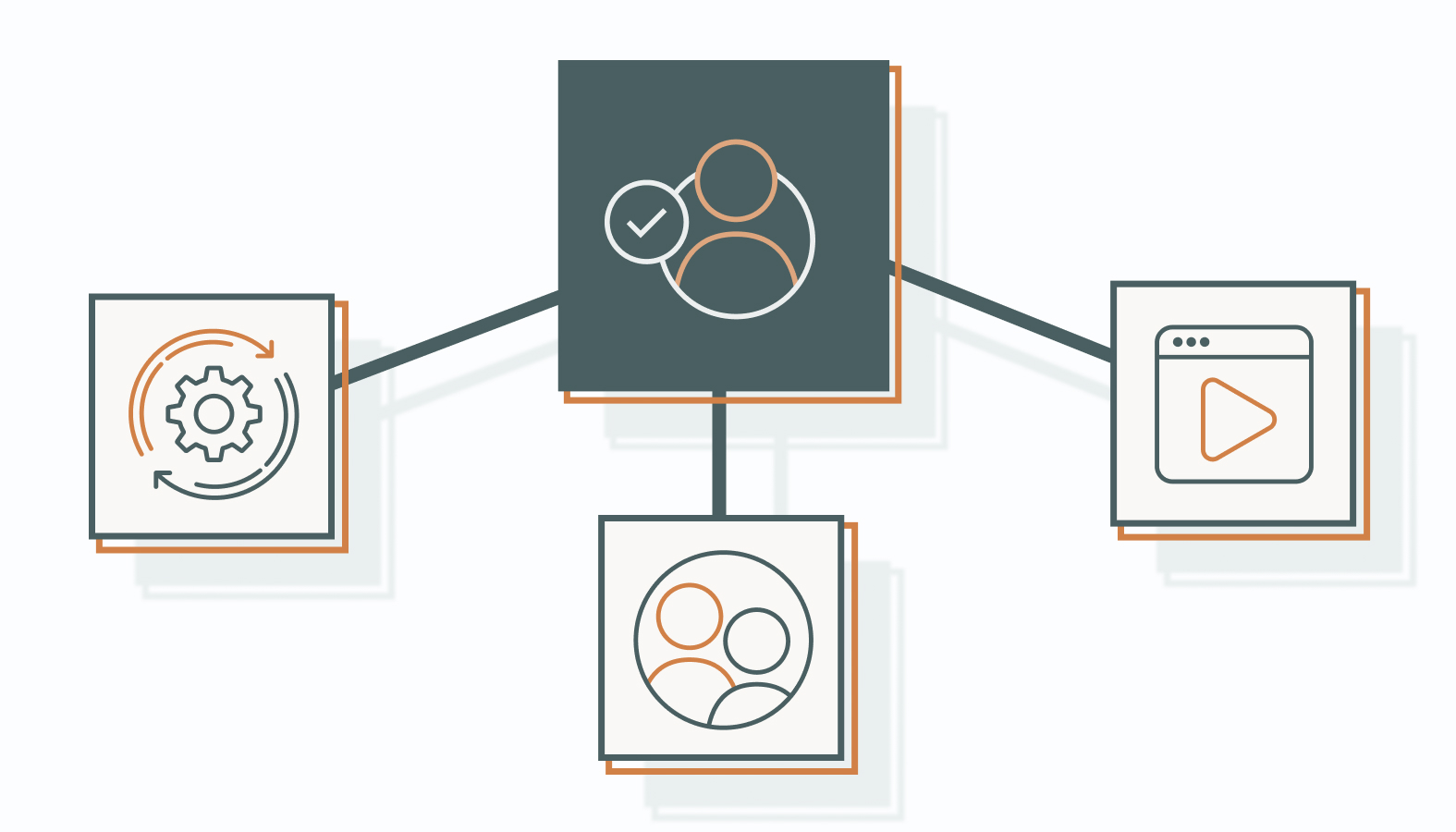
CLV Insights Across Industries
Every industry plays by different rules, but the mission is the same: create customers who stay, spend, and spread the word. Here’s how businesses are putting CLV to work in the real world:
Coffee Shops: Turning Habit into Loyalty
In the coffee world, routine is revenue. CLV helps cafés understand who their daily regulars are and how to keep them coming back before caffeine withdrawal even hits.
Smart CLV Moves:
- Launch data-driven loyalty programs that reward consistency, not just purchases.
- Personalize offers like favorite drinks, birthday perks, or local store exclusives.
- Create a sense of belonging with community-driven events and experiences.
The result? A tribe of loyal customers who treat your café less like a stop and more like a ritual; each visit adding to long-term value.
Car Dealerships: Engineering Repeat Relationships
In automotive, trust drives retention. CLV helps dealerships identify customers who will trade up, renew, and refer – turning one sale into a multi-year relationship.
High-Octane CLV Plays:
- Offer robust after-sales services that build long-term satisfaction.
- Use CLV insights to craft targeted upgrade campaigns and maintenance offers.
- Reward returning buyers with loyalty perks that feel premium, not perfunctory.
Dealerships that operationalize CLV don’t just close deals. They build lifetime relationships that fuel recurring revenue.
Streaming Services: Keeping the Binge Alive
In subscription-based models, CLV is everything. Streaming platforms use it to decode viewing habits, predict churn, and keep subscribers hooked without relying on gimmicks.
Winning CLV Strategies:
- Use algorithms to recommend content that feels tailor-made.
- Offer flexible plans and exclusive drops to maintain perceived value.
- Personalize engagement (utilize emails, playlists, and watchlists that feel human, not automated).
When data and experience align, retention skyrockets and every subscriber becomes part of an ecosystem that’s engineered for loyalty.
Across industries, CLV transforms intuition into intelligence. Whether you’re brewing coffee, selling cars, or streaming content, the real magic happens when you use customer insights to design growth that scales. That’s the power of knowing your numbers and owning your narrative.
From Data to Domination: Turning CLV into Your Growth Engine
Customer Lifetime Value can be your brand’s playbook for growth. When you harness CLV insights, every decision becomes sharper, every interaction more meaningful, and every strategy built to last.
- Know Your Worth: Understanding CLV lets you identify customers who truly move the needle and focus resources where they make the biggest impact.
- Play Smart: By applying the right models, interpreting the numbers, and tailoring strategies to your industry, you transform insights into measurable results.
- Act with Purpose: From loyalty programs to personalized engagement, CLV equips you to build long-term relationships that compound into lasting profitability.
The smartest businesses don’t guess; they engineer advantage. CLV is your roadmap to turning data into decisions and decisions into scalable growth.
Ready to Supercharge Your Customer Strategy?
It’s one thing to understand Customer Lifetime Value, and another to use it like a precision instrument. With the strategies in this guide, you’re equipped to elevate retention, boost engagement, and maximize long-term value.
Curious how CLV can specifically power your business? Our experts are standing by for a candid, no-pressure conversation.
Schedule your consultation today.» No sales pitch, just actionable guidance to help you unlock the full potential of your customer relationships.