You have a strategy. It was approved by leadership. It’s been six months. Status dashboards are green. Meetings are happening. Reports are filed. But the strategic outcome, the actual business result the plan was designed to produce, has not moved.
That is not necessarily an execution failure. That is strategy execution drift, and the difference matters because drift is not about effort. It’s about direction. Teams experiencing drift are not failing to work hard. They are working hard in a direction that has quietly departed from the one leadership approved. This article explains how to identify strategy execution drift and gives you a practical way to start correcting it within the next thirty days.
The Reality of Strategy Execution Drift in Marketing
Marketing strategy implementation is the process of turning a plan into actual business outcomes, not just activity. In B2B growth, there is a disconnect between creating results and activity. Many teams fall into this trap and don’t even realize it until it’s too late.
For example, imagine you’re a B2B software company looking to move upmarket. You want to start selling to larger companies and grow your pipeline with these prospects. You’ve created a strategy and begun executing it. Six months later, you’re creating content, paying for ads, and reaching out to your ICP. All of these efforts seem to be working, but your content is still written for SMB audiences. Why? Because content targeting smaller businesses generates higher reach and engagement on LinkedIn. Your targeting has widened to include prospects outside your original ICP, making your messaging less specific to the larger companies you intended to reach.
No one explicitly decided to change the strategy. No one told the team to stop targeting larger companies. But over time, as individual decisions accumulate, the team begins to veer off course. Perhaps the content team continues writing about certain topics because they perform better. The paid team widens its targeting. Your leader asks you to run a campaign targeting a particular niche in Week 9, and you do. Each decision may have made sense on its own, but together they moved you further from your original objective. That’s strategy execution drift.
Having a busy team doesn’t mean its work is moving you toward your objective. Once the team loses sight of the objective, continued activity becomes little more than busyness. Your metrics will reflect that you’re doing something, but not driving towards your goal.
3 Ways Strategy Execution Drift Takes Hold

Strategy execution drift doesn’t happen overnight. It develops through a series of decisions that gradually pull teams away from the original objective. Here are three common ways it happens:
1) The Translation Problem: Vision to Task
When leadership hands a team a marketing plan, it is not simply handing over a task list. It is communicating a set of goals and expecting the team to determine how to pursue them. That translation process, from strategic objective to daily work, is where interpretation drift begins.
Your marketing strategy may outline a goal of increasing pipeline, but your team doesn’t know how to achieve it. Your content team may understand that they need to address the problems your prospects face. However, they may not know which problems to prioritize or how to connect those topics to your ideal customer profile. Without that clarity, they may start creating content that doesn’t drive your strategy forward.
According to Harvard Business Review, only half of middle managers can name even one of their company’s top five priorities. This means the people responsible for translating leadership’s direction into daily work may not fully understand what that direction actually is.
2) The Reactive Pivot Trap
Leadership requests that fall outside the original strategy are a normal part of running a marketing team. A competitor makes a move. A new opportunity surfaces. A board member asks about a specific channel. These are real inputs. Ignoring them entirely isn’t realistic.
While it’s important to test new ideas and channels, you also need to understand whether those initiatives will pull your team away from the main goal. Your team may continue working toward the original objective, but at a slower pace. Over time, those competing priorities can cause you to fall behind on your goals.
Gartner surveyed 403 CMOs in October and November 2024 and found that 84% reported high levels of strategic dysfunction, defined as confusion and conflict resulting from unclear, excessive, or conflicting objectives. Organizations experiencing these issues were 36% less likely to report strong business and marketing performance.
3) The Vanity Metric Trap
Metrics do not just measure drift. They can also contribute to it. If you are using vanity metrics to track your team’s execution, you may find that team members are improving those numbers without driving your strategy forward.
A good example is social media engagement. Your team may be focused on gaining more followers on LinkedIn. While that can be a useful metric to track, it does not necessarily translate into more qualified leads.
As follower growth becomes the team’s primary measure of success, content decisions may start favoring broad engagement over the specific audience and buying intent the original strategy was designed to reach.
A Practical Framework for Recognizing and Correcting Drift
When a marketing strategy loses momentum during execution, creating a new plan won’t necessarily fix the problem. The issue may be that execution has become disconnected from the original direction. New requests have taken over your team’s attention, and decisions are increasingly being made around metrics that don’t reflect the original objective.
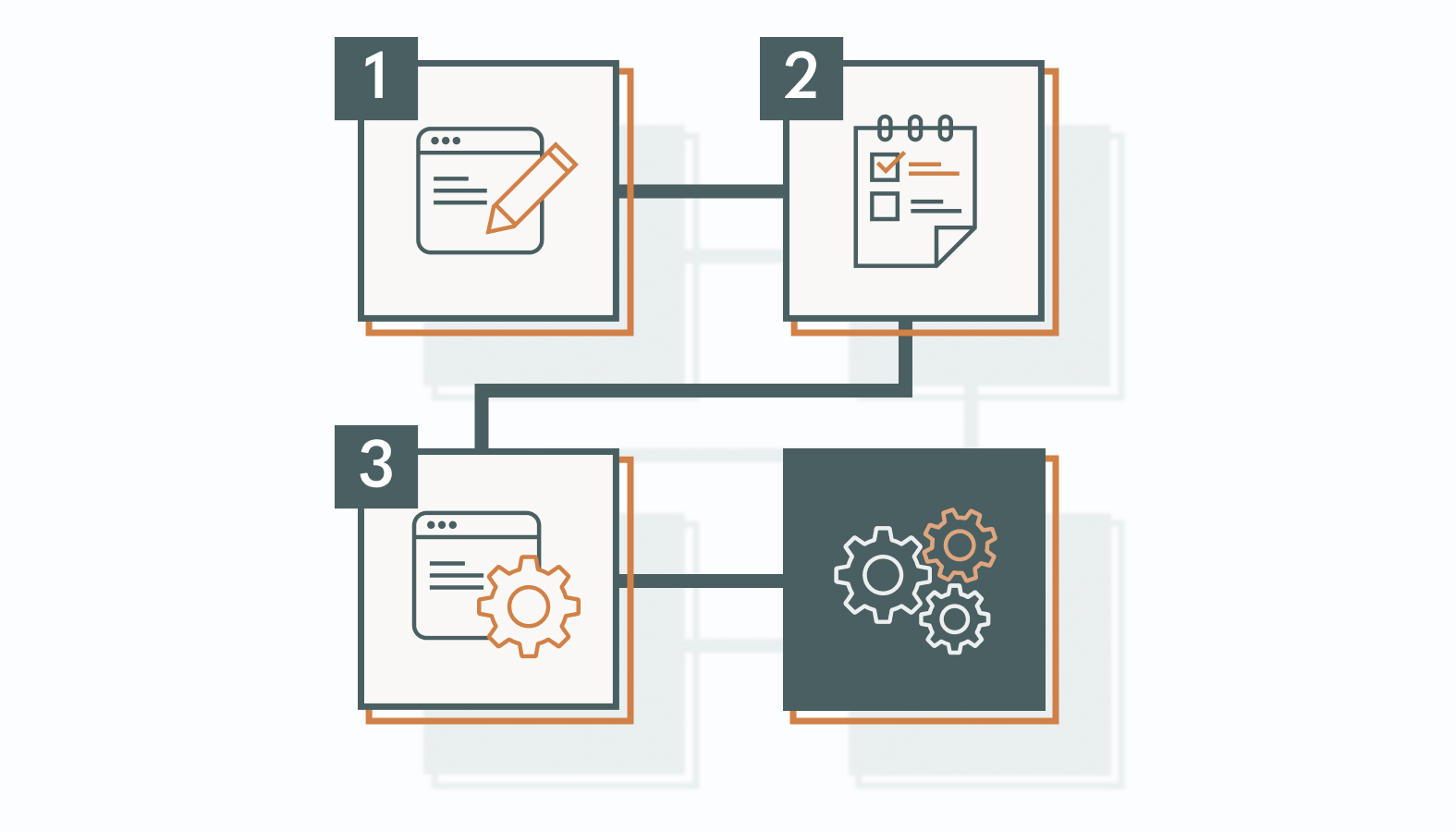
Here are some steps you can take to help your execution align with your strategy:
Step 1: Create a Written Record of What the Strategy Says
When you create your strategy, document exactly what it is. Having a document that your team can reference will help them understand what they are working toward. Your strategy shouldn’t just be a PowerPoint presentation sitting in a folder. Pull out the information that is central to the strategy and share it with your team. This way, when your team is deciding what to do next, they can look at this document and see if what they’re doing aligns with the strategy.
Make sure the document identifies the original business objective, intended audience, target market, and the outcomes the strategy is expected to produce.
If your strategy is vague or your team doesn’t have a document they can reference, they will begin to drift. By documenting it, you give your team a way to stay focused on the objective.
Step 2: Build a Decision Log for Changes to the Original Plan
The reactive pivot trap does not create drift because pivots happen. It creates drift because pivots happen without documentation. A leadership request changes the direction of a campaign, and your team simply moves forward without formally documenting the change or its implications. Whether it’s a new opportunity or your CEO wanting to focus on a different area, these decisions can affect your strategy. Without a record of what changed and why, you may not notice that your team is drifting.
Create a decision log that you can reference whenever changes are made to the strategy. It should document what changed, who requested it, why the change was made, and how it affects the original objective. This makes it easier to determine whether the strategy is still on track or whether the changes have become significant enough to warrant a formal review.
Step 3: Tie Accountability to the Original Objective, Not to Tasks
Most marketing teams have accountability structures built around task completion. Someone owns the content calendar. Someone owns paid media. Someone owns an email. That structure tells you whether work is getting done, but it does not tell you whether the work still supports the original strategy.
The shift should be from task accountability to objective accountability. This changes how teams respond when drift is identified. If a team member’s work has moved away from the strategic objective, the conversation should not automatically be about individual performance. It should focus on the gap between what the strategy requires and what the current work is producing, as well as what needs to change to close that gap. That is a different and more productive conversation than pointing out that execution missed a target.
Why Strategy Execution Needs Consistent Leadership

One reason strategy execution drift occurs in B2B marketing is that maintaining continuity between leadership’s strategic intent and day-to-day execution requires clear ownership. In some organizations, no one is explicitly responsible for monitoring whether everyday decisions continue to support the approved direction. The marketing manager may be focused on managing campaigns, while the CMO, when one exists, is focused on broader leadership priorities. Without clear ownership connecting these responsibilities, reinterpretation can happen between the two levels, allowing drift to take hold.
Hiring a full-time senior leader to fill that gap is one option. According to the U.S. Bureau of Labor Statistics, marketing managers earned a median annual wage of $166,790 in May 2025. This figure applies to marketing manager roles, not specifically to C-suite executives. However, salary is only one consideration. A full-time executive hire also comes with broader responsibilities that may extend beyond maintaining continuity between strategy and execution.
A fractional CMO can help address this gap. Rather than simply adding another layer of campaign management or developing another strategy, fractional leadership can help maintain the connection between the approved direction and the team’s day-to-day decisions. With Agency, the goal is to keep the strategy active beyond the initial planning process, maintaining continuity between the direction established with leadership and the decisions guiding day-to-day execution.
Frequently Asked Questions
1) What is the difference between strategy execution and strategic planning?
Strategic planning is the process of deciding what to pursue; setting the direction, defining the goals, and identifying the approach. Strategy execution is the process of actually producing those outcomes through structured, sustained action. Planning answers “what are we trying to accomplish and why?” Execution answers “what are we doing today, this week, and this quarter to make that happen, and is it working?”
The gap between the two is where most B2B marketing investment gets lost. The Project Management Institute’s 2024 Pulse of the Profession report found that the average project performance rate across respondents was 73.8%, based on the percentage of completed projects that met business goals. This highlights the challenges organizations face in translating plans into measurable outcomes. A company can have a well-reasoned, leadership-approved plan and still see little movement on its core objective if execution becomes disconnected from the original direction.
2) What metrics should be used to measure marketing strategy execution?
Skip the vanity metrics. The indicators that help you determine whether marketing strategy implementation is working include:
- Qualified pipeline created per quarter: Focus on opportunities that meet your ICP criteria and have been accepted or validated by sales, rather than relying on total lead volume alone.
- Cost per qualified lead by channel: Identify which channels generate qualified opportunities at a sustainable acquisition cost relative to their potential deal value.
- Sales cycle velocity: How long it takes a qualified opportunity to move from initial engagement to a closed deal, and whether that timeframe is improving.
- Strategic alignment rate: The percentage of active campaigns and content initiatives that can be connected to a specific objective in the approved strategy. Initiatives that cannot be clearly connected to an objective should be reviewed to determine whether they represent justified opportunities or signs of strategy drift.
3) Why do remote or distributed marketing teams struggle with execution drift?
Distributed teams can face additional communication challenges that make strategy execution drift harder to identify. When strategy conversations happen in one Slack channel, tactical decisions happen in another, and status updates live in a project management tool that not everyone checks consistently, the connection between the plan and daily work can quickly deteriorate.
The remedy is not more meetings. It is better documentation — specifically, a written record of strategic intent and a decision log that captures changes in real time.
Drift Compounds. So Does the Fix.
A well-built plan does not execute itself. Companies that consistently close the gap between strategy and results understand that strategy execution requires ongoing attention, not just an initial handoff from leadership to the marketing team. Drift doesn’t announce itself. It compounds quietly through reasonable-sounding decisions until the team is fully occupied but no longer moving toward the original objective. The framework in this article (a documented strategy, a decision log, and accountability tied to the original objective) is not complicated. But applying it consistently across quarters and competing priorities requires someone whose specific job is to hold the strategy together.
That is the kind of work Agency is built to support. If your team is busy but the pipeline is not moving, strategy execution drift may be part of the problem. The earlier you identify it, the easier it can be to correct. Every quarter you spend executing against a diluted strategy is a quarter that compounds in the wrong direction.
Schedule a candid conversation with one of our experts. Bring your current marketing plan, execution gaps, and biggest unanswered questions about why your strategy is not producing the results it was designed to deliver. We’ll help you assess where the drift may have started and identify what it will take to close the gap before the next planning cycle begins.