



Let’s be honest, modern marketing stacks can look more like Frankenstein than strategy. CRMs here, automation tools there, analytics dashboards everywhere. It’s a productivity killer disguised as progress.
That’s why unified marketing platforms have become the go-to solution for teams tired of the chaos. These systems connect your channels, data, and workflows into one cohesive environment, giving marketers what they actually need: visibility, control, and consistency. No more hopping between spreadsheets and disconnected apps. Just one clear view of performance and potential.
This guide breaks down what unified marketing platforms really are, why they matter, and how to choose the one that gives your team a lasting competitive edge.
Your Guide to Unified Marketing Platforms
Marketing teams are expected to move faster than today’s fast-moving digital landscape. But speed without alignment creates noise. Unified marketing platforms simplify complex ecosystems, so that brands can operate smarter and connect more effectively with their audiences.

A Smarter Way to Manage Marketing
Think of a unified marketing platform as the central command center for your marketing universe. It pulls together every key function (CRM, analytics, content management, automation) into one intelligent system.
Instead of bouncing between tools, marketers can manage campaigns, analyze performance, and refine strategy all from a single source of truth.
The payoff? More informed decisions, faster execution, and marketing that finally feels coordinated.
Evolution of Marketing Technology: From Disconnected Tools to Unified Systems
Marketing tech didn’t start unified, but it evolved out of necessity. Early tools focused on single tasks like email or social scheduling. Then came the realization that great marketing requires connection: data talking to automation, content talking to analytics.
Cloud technology opened the door for integration, and AI pushed it further, enabling real-time insights and personalization at scale. The result is today’s generation of unified platforms – sophisticated yet user-friendly systems designed to keep brands agile, consistent, and data-driven.
Unified marketing platforms aren’t just another tool in the stack. They are the stack – built to bring order, intelligence, and momentum to the modern marketer’s world.
Why Unified Marketing Platforms Matter
Marketing today isn’t short on data, tools, or tactics – it’s short on connection. Unified marketing platforms solve that by pulling every moving piece of your strategy into one ecosystem. They help businesses work faster, think smarter, and spend wiser.
Here’s why they’ve become essential for modern teams.
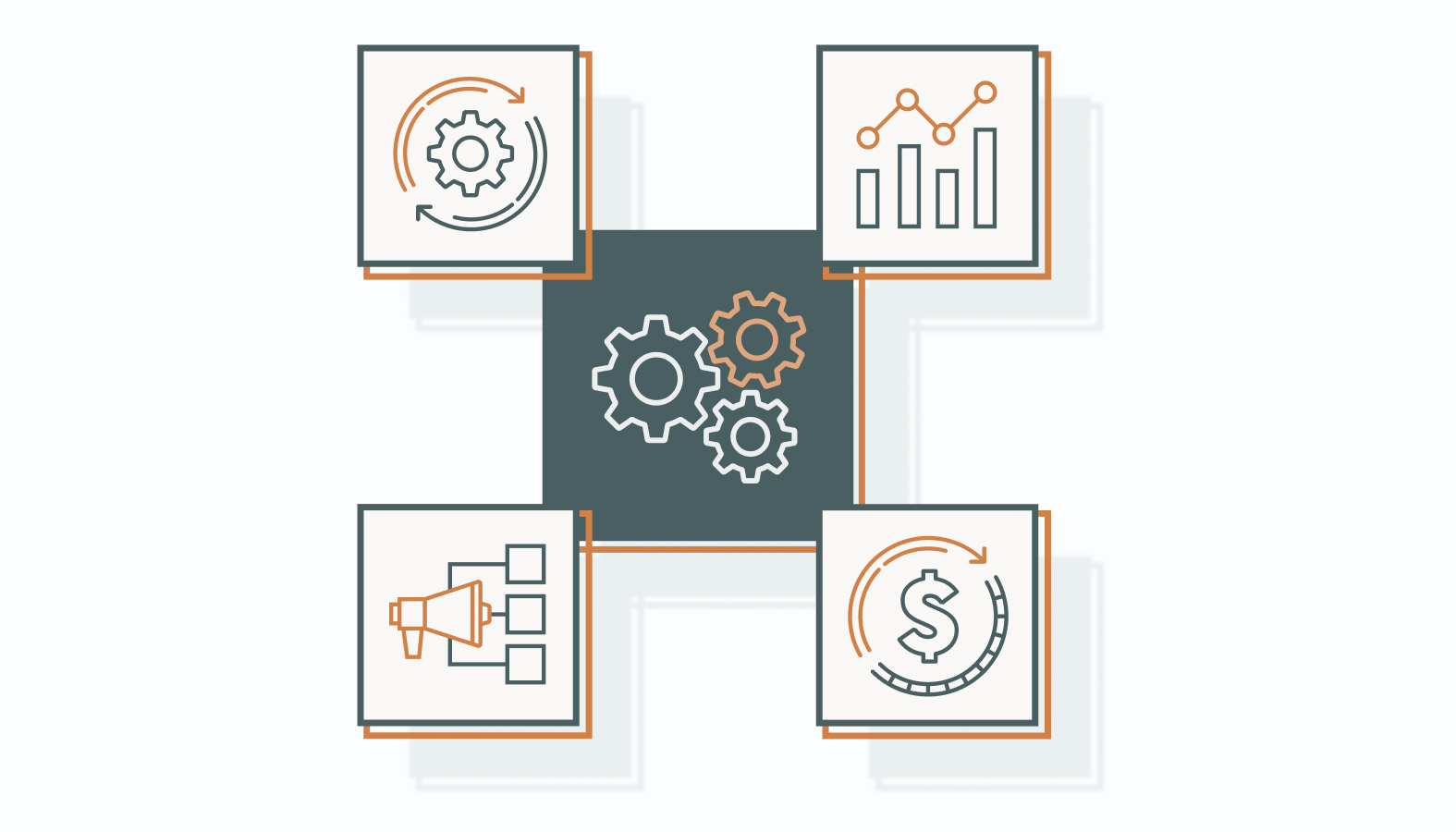
Streamlined Marketing Operations That Actually Flow
When your marketing tools operate in silos, you spend more time syncing systems than serving customers. Unified marketing platforms eliminate that friction by bringing your workflows under one roof. Teams can coordinate campaigns, share data instantly, and keep messaging aligned across departments.
Imagine launching a new campaign without chasing down reports or juggling five dashboards. With a unified system, campaign setup, lead tracking, and analytics are all connected. That means less time managing and more time optimizing. Efficiency stops being a goal; it becomes a given.
Clearer Customer Insights, Sharper Strategy
Unified platforms excel at turning raw data into meaningful insight. They collect and connect customer interactions from every channel, giving you a single, accurate view of your audience.
With that kind of visibility, marketers can see what truly drives engagement instead of guessing. It’s easier to adjust messaging, timing, and channels based on real behavior rather than assumptions. The result is communication that feels personal and performs better.
Consistent Cross-Channel Marketing
Customers don’t think in channels, but in experiences. Unified marketing platforms help brands deliver consistent interactions wherever people engage: social, email, mobile, or web. Instead of manually coordinating efforts, marketers can plan, publish, and measure everything from one hub.
That consistency builds trust. When every touchpoint feels aligned and intentional, customers perceive a stronger, more reliable brand – one that’s worth returning to.
Maximizing Cost Efficiency and Stronger ROI
Using a dozen disconnected tools doesn’t just create clutter; it eats your budget. Unified marketing platforms cut those costs by combining capabilities that once required multiple subscriptions and technical integrations.
Beyond the savings, there’s a compounding benefit: better use of your team’s time. Less manual upkeep means more focus on creative strategy and growth. The payoff is clearer performance tracking, smarter investments, and a marketing engine that runs lean but powerful.
In short, unified marketing platforms don’t just simplify operations. They elevate the entire marketing function, turn complexity into clarity, and make strategy feel seamless from the inside out.
Leading Unified Marketing Platforms in 2025 and Beyond
As marketing becomes more data-driven and connected, a few platforms have risen above the noise, offering the integration, intelligence, and usability today’s teams need to stay ahead.
The best unified marketing platforms don’t just manage campaigns; they merge analytics, automation, and customer data into a single, streamlined ecosystem designed for clarity and performance.
In-Depth Platform Comparisons
Below, we break down the leading contenders shaping the unified marketing landscape. Each of the following platforms was selected for its ability to turn complexity into coordination, helping teams move from scattered execution to synchronized growth.
Salesforce Marketing Cloud
Salesforce continues to dominate with its unmatched integration capabilities and enterprise-level scalability. Predictive analytics, customer journey mapping, and native CRM integration make it ideal for large organizations that rely heavily on data-driven personalization and automation at scale.
Pros
- Industry-leading analytics and automation features
- Deep CRM and data integration across the Salesforce ecosystem
- Excellent for large, data-intensive marketing teams
Cons
- Expensive and complex to implement
- Requires technical expertise to leverage fully
- May be excessive for smaller teams
For enterprises ready to connect marketing and sales under one intelligent system, Salesforce Marketing Cloud delivers the most comprehensive ecosystem on the market. It’s a powerhouse built for brands that want to master personalization at scale.
HubSpot Marketing Hub
Built with inbound marketers in mind, HubSpot combines usability with depth. Its intuitive interface, comprehensive reporting, and CRM connectivity make it a standout for small to mid-sized businesses that prioritize relationship building and lead nurturing.
Pros
- Easy to use and quick to deploy
- Strong inbound marketing and content management tools
- Seamless integration with HubSpot CRM
Cons
- Limited customization for enterprise-level needs
- Advanced automation is locked behind higher pricing tiers
- Can become costly as contact lists scale
HubSpot remains the best entry point for growing teams that want sophistication without complexity. It’s where accessibility meets capability, making it a smart choice for brands scaling their inbound marketing efforts.
Zoho Marketing Plus
Zoho brings affordability without compromise. Offering email, social, and analytics tools in one accessible suite, it’s a strong fit for growing teams looking to unify their marketing operations without overspending.
Pros
- Highly cost-effective with wide feature coverage
- Smooth integration across Zoho’s ecosystem (CRM, Analytics, etc.)
- Great option for startups and SMBs
Cons
- Interface can feel less polished compared to competitors
- Limited third-party app integrations
- Lacks advanced enterprise-grade automation
Zoho Marketing Plus proves that unification doesn’t have to come at the cost of enterprise pricing. It’s ideal for small teams seeking reliable functionality, solid integrations, and steady growth on a manageable budget.
Adobe Experience Cloud
Perfect for creative and enterprise teams alike, Adobe’s platform excels in advanced analytics and personalization. Deep integration with Adobe Creative Cloud tools allows for a seamless bridge between design and data, turning creativity into measurable impact.
Pros
- Exceptional personalization and data analytics
- Tight integration with Adobe Creative Suite
- Strong tools for cross-channel campaign orchestration
Cons
- High cost and steep learning curve
- Implementation can be time-intensive
- Best suited for enterprise-level teams with technical support
For brands where storytelling and data must move in sync, Adobe Experience Cloud delivers an unmatched fusion of creative power and marketing precision. It’s built for teams that live at the intersection of design and data.
Oracle Marketing Cloud
Oracle’s strength lies in scale and intelligence. Designed for data-heavy enterprises, it offers robust automation and AI-powered insights to drive precise targeting and high-efficiency campaign execution.
Pros
- Powerful data management and automation
- Excellent for complex, multi-channel enterprises
- Strong reporting and segmentation tools
Cons
- Expensive and resource-intensive
- Interface can be less intuitive
- Overkill for smaller or mid-sized teams
If your marketing hinges on data depth and enterprise-scale precision, Oracle Marketing Cloud delivers the muscle and intelligence to make it happen. It’s a top-tier choice for organizations where data drives every decision.
ActiveCampaign
For small businesses focused on email marketing and automation, ActiveCampaign delivers powerful personalization at a lower cost. Its automation workflows and segmentation tools make it easy to build stronger customer relationships through smart, timely messaging.
Pros
- Affordable and easy to implement
- Excellent email automation and segmentation features
- Great support and learning resources for small teams
Cons
- Limited functionality beyond email automation
- Not ideal for large-scale, multi-channel campaigns
- Lacks advanced analytics and reporting depth
ActiveCampaign is perfect for businesses that want simplicity and impact. It’s proof that automation doesn’t have to be expensive to be effective, especially when the focus is on a meaningful, personalized connection.
Marketo Engage
A go-to for B2B marketers, Marketo shines in lead management and account-based marketing. Its CRM integration and advanced analytics tools help teams track and nurture prospects through every stage of the buyer journey.
Pros
- Strong B2B and account-based marketing capabilities
- Deep analytics and lead scoring tools
- Integrates smoothly with major CRMs like Salesforce
Cons
- Complex setup and maintenance
- High cost relative to smaller competitors
- Requires training to maximize its potential
Marketo Engage remains the gold standard for B2B teams that prioritize long-term relationship building and precision targeting. It’s a high-performance choice for marketers ready to orchestrate complex, data-driven campaigns.
Each of these platforms leads in its own way, whether through power, accessibility, or creativity. The key is alignment: choosing the system that not only fits your current workflows but also scales with your growth and vision.
Phase I: Choosing the Right Unified Marketing Platform for You
With so many options on the table, choosing the right unified marketing platform can feel overwhelming. But it doesn’t have to be. The best choice isn’t the one with the most features, but the one that fits your strategy, your workflows, and your growth path.

Here’s how to narrow the field and find your ideal match.
1) Identify Your Business Needs
Before looking at demos or pricing pages, take a step back and audit where your marketing stands today.
Ask questions that cut to the core:
- What’s slowing you down? What’s working, and what isn’t?
- Where are we losing time or visibility in our current marketing setup?
- What outcomes do we want to achieve: better lead quality, improved engagement, or faster reporting?
- Which tools do we already rely on, and where are the gaps?
- How big is our team, and what level of complexity can we realistically manage?
This clarity becomes your filter, helping you see beyond shiny features. It keeps you focused on solutions that address real challenges.
2) Match Features to Strategy
Matching platform features with your business objectives is crucial. A platform with robust capabilities will support your strategic goals and facilitate growth.
Here are some tips to prioritize features:
- List out the must-have features based on your business needs and challenges identified earlier.
- Consider future needs: Which features will support your growth and scalability?
- Evaluate the user interface and ease of use. Complex platforms can hinder rather than help if they are not user-friendly.
- Look for platforms with strong customer support and robust training resources to ensure a smooth onboarding experience and ongoing use.
Prioritizing these aspects ensures that the platform you choose aligns with your strategic goals and effectively supports your team.
3) Check Integration and Growth Fit
Your platform doesn’t exist in isolation; it needs to play well with the rest of your tech stack. Seamless integration ensures your CRM, analytics, and automation tools all speak the same language.
Here’s what to look for:
- Flexibility: Platforms with open APIs or native integrations simplify data sharing and reduce friction.
- Scalability: Choose one that can evolve with your business, adding modules or capabilities as your marketing matures.
- Adaptability: The best systems expand, not replace. They should make it easier to grow, not force you to rebuild later.
Think of it as building the marketing foundation you’ll scale on, not one you’ll outgrow.
4) Balance Cost with Long-Term Value
Price matters, but context matters more. A lower upfront cost can be tempting, but if it limits functionality or scalability, you’ll pay more down the line.
To evaluate true value:
- Calculate total ownership cost, including setup, maintenance, and training.
- Estimate potential gains: time saved, improved conversion rates, and stronger retention.
- Don’t fixate on price alone; instead, measure cost against the value the platform unlocks.
A smart investment isn’t about spending less. Your goal should be to spend wisely. The right platform creates measurable momentum for your marketing, not just savings on your balance sheet.
Phase II: Implementing a Unified Marketing Platform Effectively
Selecting your platform is only half the game. The real advantage comes from how well you implement it. A unified marketing platform can only deliver clarity and performance if your team knows how to use it, your data flows cleanly, and your processes evolve with it.

Once you’ve chosen a platform, here’s how to turn setup into sustained success:
Train for Adoption, Not Just Access
Rolling out a new system without proper onboarding is like giving your team a jet and forgetting to teach them to fly. Training is the foundation for adoption, confidence, and long-term ROI.
Smart ways to make training stick:
- Customize by role: A strategist doesn’t need the same walkthrough as a designer or analyst. Tailor sessions to how each role uses the platform.
- Mix up the format: Blend workshops, video tutorials, and live demos so learning feels approachable rather than academic.
- Keep support ongoing: Launch-day training fades fast. Keep a channel open for real-time questions and refreshers.
- Define milestones: Map out adoption goals: first campaign, first automation, first report, and celebrate progress along the way.
Training done right turns curiosity into capability, and capability into consistency.
Continuously Monitor, Measure, and Fine-Tune
A unified platform is a living system that thrives on iteration. Once it’s live, your next move is measurement. Regular reviews and optimization keep the platform aligned with your goals and responsive to change.
Ways to keep performance sharp:
- Automate reporting: Use built-in dashboards to track key metrics and spot trends early.
- Schedule performance reviews: Revisit campaigns, workflows, and data flows regularly. What’s working should scale; what’s not should evolve.
- Run A/B experiments: Test subject lines, timing, or targeting to uncover incremental wins that add up over time.
- Invite feedback: Your team’s experience is data too. Encourage input on what’s clunky or unclear, then fix it fast.
Continuous tuning ensures your platform doesn’t just work. It works better with every campaign.
Stay Current and Keep Advancing
Marketing platforms evolve faster than most teams realize. New features, AI upgrades, and integrations roll out regularly and the teams that adapt first gain a real competitive edge.
Keep your setup future-ready:
- Subscribe to updates: Stay plugged into product releases and roadmap announcements so you can plan improvements, not react to them.
- Appoint a platform lead: Designate a “platform champion” who owns optimization, oversees updates, and keeps the team aligned on new capabilities.
- Refresh training regularly: When new tools or features launch, host short learning sessions to keep everyone sharp.
- Evaluate what’s relevant: Not every update is worth adopting. Choose enhancements that support your strategy (not distract from it).
Staying current turns your marketing platform from a static system into a strategic asset that grows with your business.
Implementation is about building momentum. When your team understands the platform, your data flows seamlessly, and your process evolves with each insight, that’s when a unified marketing platform stops being software and starts becoming your marketing command center.
Turning Unified Marketing Platforms into Competitive Advantage
Unified marketing platforms are about reclaiming clarity in a noisy, fragmented landscape. They connect your data, people, and processes so marketing stops reacting and starts leading.
Each platform we’ve explored has its own strengths, but the right one depends on your strategy and scale. Whether you value Salesforce’s enterprise power, HubSpot’s usability, or Adobe’s creative intelligence, the real advantage comes from alignment and choosing a system that supports how your team works, grows, and delivers impact.
Now is the moment to unify your efforts, strengthen your systems, and turn integration into your next competitive edge.
Ready to get more from unified marketing platforms?
Whether you’re exploring the best platform for your team or need expert support to implement it like a pro, we’re here to help.
Schedule a candid conversation with one of our experts to find the right fit for your goals and start building the marketing clarity that powers your next stage of growth.