Social proof marketing can fail not because it doesn’t work, but because what got built was decoration instead of a system. You added a review widget, star ratings sit on the pricing page, and a logo bar runs at the top of your homepage, yet conversion rate hasn’t moved.
This guide skips the “why social proof matters.” It covers which proof belongs at which funnel stage, what causes proof to decay, how to automate collection, and how to measure whether any of it is working. By the end, you’ll have a diagnostic checklist and a concrete set of actions you can assign this week.
What Is Social Proof in Marketing?
Social proof is the principle where people use others’ observed behavior and opinions to reduce decision uncertainty, especially when the outcome is unclear or the stakes are high. Nielsen Norman Group’s research on the principle confirms that social proof is one of six influencing principles Robert Cialdini detailed in his book Influence: The Psychology of Persuasion, and it maps directly onto how buyers behave.
Operationally, marketing social proof is any signal that people of similar profile made this decision and found it worthwhile. That signal can be quantitative (review counts, user numbers), qualitative (testimonials, case studies), or implicit (visible customer logos, media mentions).
The Main Types of Social Proof

If you want to know how to use social proof in marketing, start with knowing which type performs well at which funnel stage, since the six primary types aren’t interchangeable.
- Customer testimonials. Direct quotes from named, identified customers. This is best to put on evaluation pages and landing pages. A SaaS testimonial naming a metric (“reduced onboarding time by 40%”) outperforms a vague endorsement.
- Aggregate review scores and counts. Star ratings, G2 scores, Trustpilot averages. Best near pricing or purchase. Volume signals safety; specificity signals credibility.
- Case studies. Structured before-and-after narratives with quantified outcomes. Best at the awareness-to-consideration transition, especially in B2B where buying committees need documented evidence.
- Expert and authority endorsements. Mentions or recommendations from recognized figures in the buyer’s industry. Best at awareness and consideration, establishing category legitimacy.
- User-generated content. Customer photos, videos, and posts of the product in use. Best at consideration and in retargeting, especially effective for e-commerce where fit and aesthetics matter.
- Crowd signals. Customer counts, active user numbers, “X companies trust us.” Best at awareness, establishing scale. Loses credibility fast if the numbers aren’t kept current.
How to Use Social Proof in Marketing to Drive Conversions
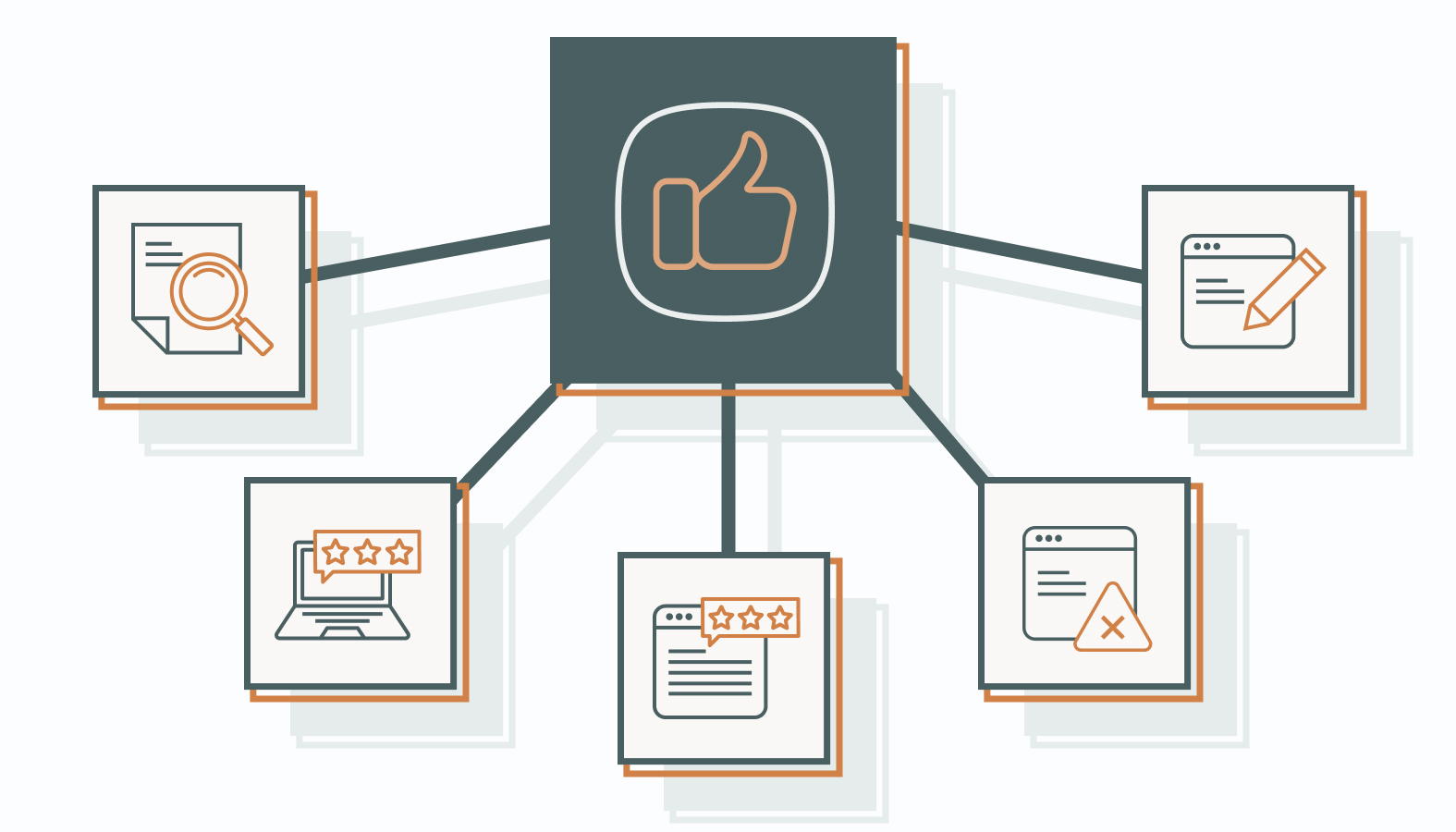
Using social proof in marketing to drive conversions requires execution, not theory. Each tactic here is something a CRO specialist can implement inside a single sprint.
- Audit placement before adding new proof. Pull heatmap and scroll data for pages where proof currently lives. If users aren’t reaching the testimonial block, placement is the problem, not the testimonial. Move proof above the fold or adjacent to the primary CTA before sourcing new content.
- Segment testimonials by buyer persona. A CFO evaluating a finance tool should see proof from other CFOs, not marketing managers. Tag your testimonial library by role, company size, and use case, then serve the matched variant dynamically or through separate landing pages.
- Quantify every testimonial you publish. Require a specific metric, timeframe, or before-and-after data point in every request. “Saved us time” is noise. “Reduced reporting time from 6 hours to 45 minutes a week” is evidence.
- Use negative social proof carefully. Framing like “Don’t be one of the 60% of companies that miss quota without a forecasting tool” activates loss aversion. EBSCO’s research summary on the concept confirms that advertisers regularly leverage this bias by emphasizing potential losses, since the pain of losing is typically felt more intensely than the pleasure of an equivalent gain. It still needs testing, not assumption.
- Test proof format, not just copy. A written testimonial and a 60-second video of the same customer can produce different lift depending on channel and device. Run format tests before scaling production.
Three placements carry the most leverage: adjacent to the primary CTA, below the pricing table, and on the checkout or sign-up confirmation. Each resolves a different objection.
Why Your Social Proof Stops Working (And How to Fix It)
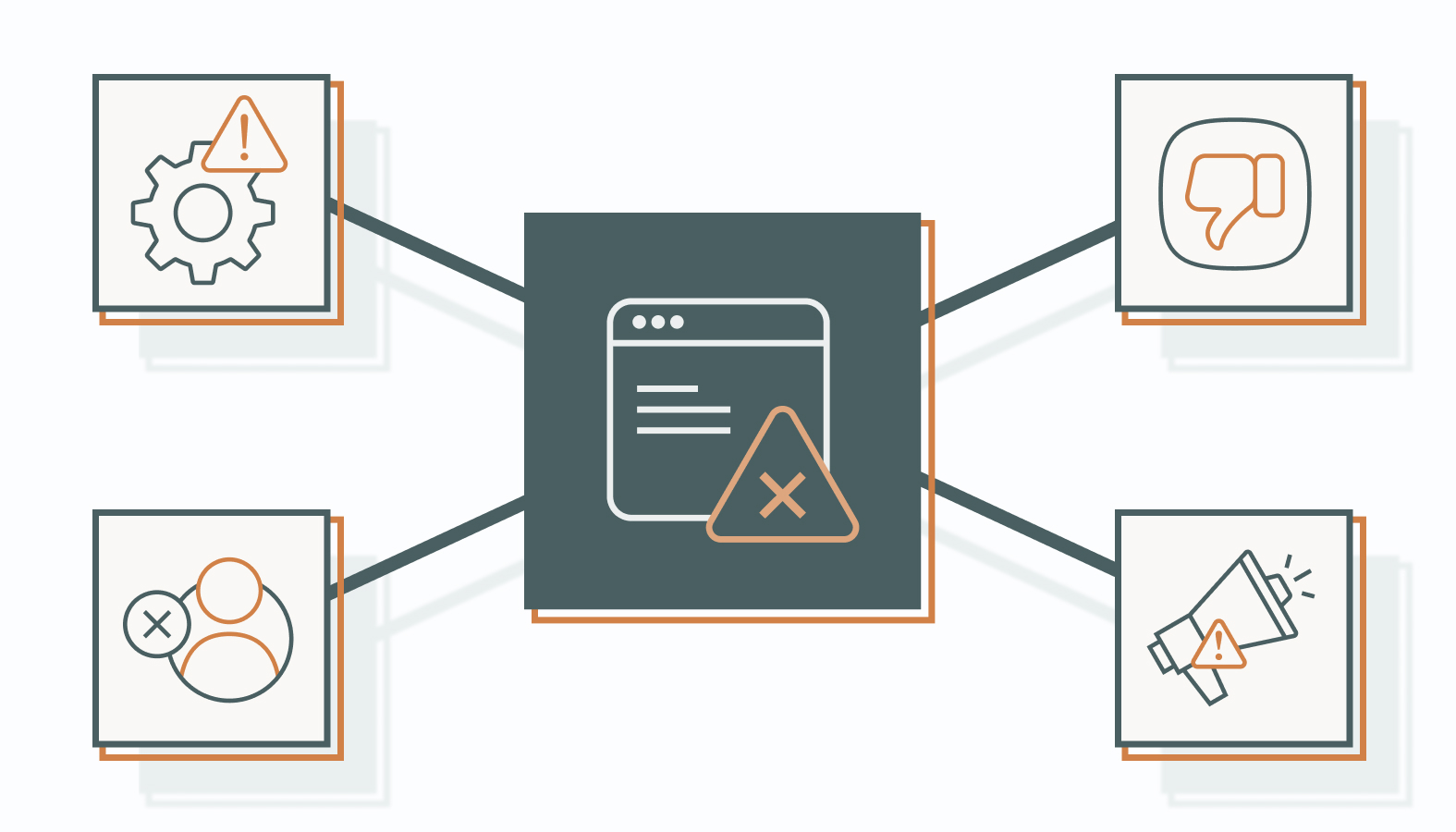
Social proof degrades in four specific, predictable ways, and most teams never audit for any of them.
- Decay. A 2021 case study or a review from a customer who churned last year tells buyers your current product may not match the evidence. Anything older than 18 months should get audited and refreshed.
- Persona mismatch. Showing enterprise logos to SMB buyers, or the reverse, creates distrust instead of aspiration. Irrelevant proof is worse than no proof at all.
- Fake or unverifiable proof. The FTC’s Endorsement Guides state that advertisers must possess adequate substantiation for claims made through endorsements, in the same way they’d be required to if making the claim directly. Unattributed testimonials, stock-photo headshots, and logo bars listing companies that stopped being customers are credibility liabilities, and increasingly a regulatory one too.
- Overexposure. The same testimonial on every page of a site becomes invisible. Rotate proof and match it to page-level intent instead of running one asset everywhere.
Running a real audit takes four steps: inventory every asset with its date, verify each customer referenced is still active, check persona tags, and flag anything older than 18 months for refresh.
Building the Infrastructure: Automated Collection and CRM Integration
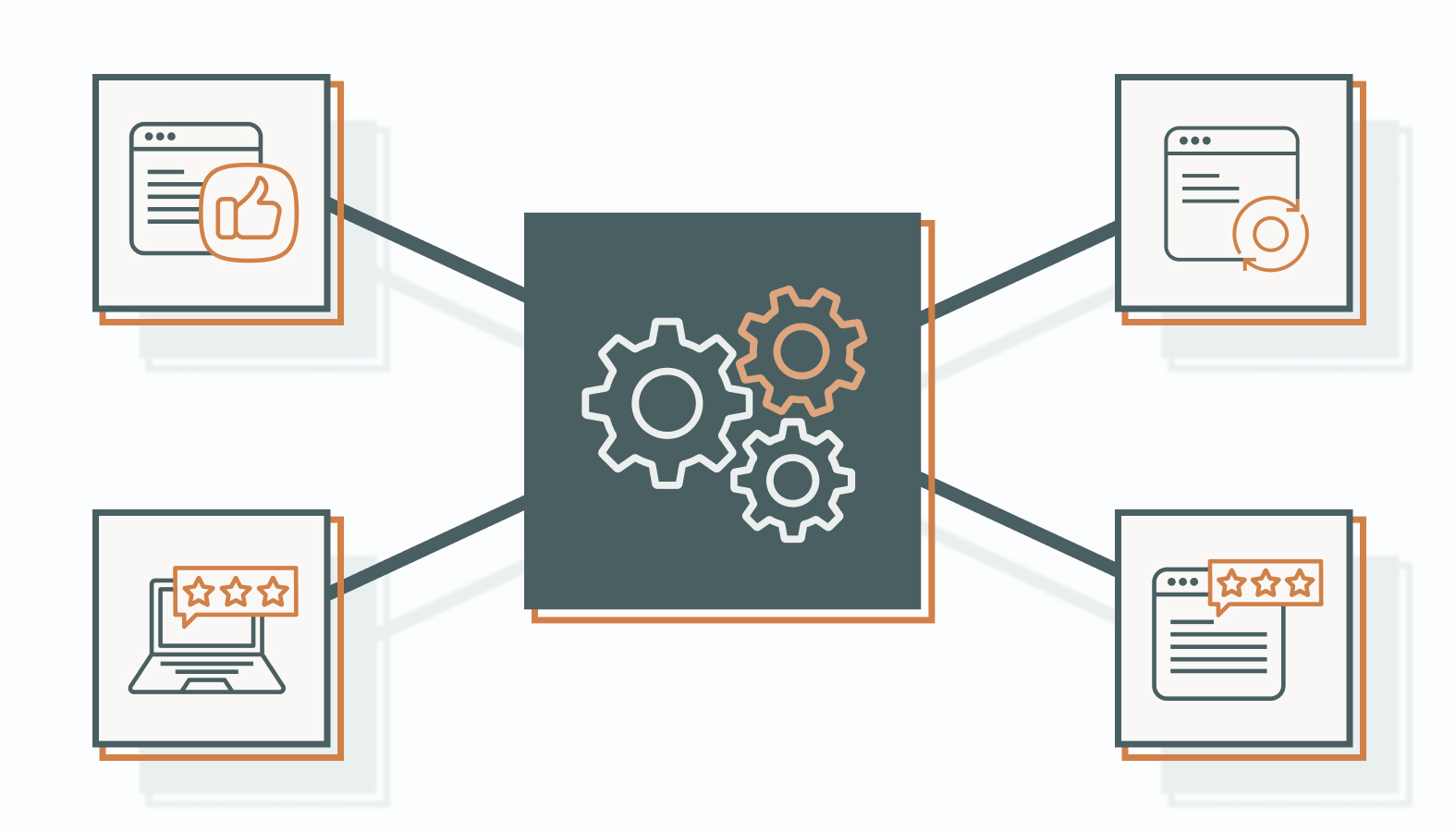
This is an infrastructure problem, not a content problem. The goal is a pipeline that produces usable proof without a CSM or founder manually chasing it down.
- Trigger review requests at peak satisfaction moments. Identify where satisfaction is highest in your customer journey, post-onboarding completion, first value milestone, renewal, and wire automated prompts to those exact triggers through your CRM.
- Build a structured testimonial intake form. A short form asking for the problem before, the outcome after, and a metric removes the blank-page friction that produces vague quotes.
- Create a monthly proof review cycle. Assign one owner. Each month: pull submissions, tag by persona and funnel stage, retire anything past 18 months, and push approved assets live.
- Integrate your review platform with your CMS. Connect G2, Trustpilot, or your review source to your site so aggregate scores update automatically, with no manual deployment required.
Loyalty, Referral, and Advocacy Programs as Proof Infrastructure
Loyalty, referral, and advocacy programs aren’t just retention tools. They’re proof-generation infrastructure, and each produces a different signal with distinct conversion value.
Tenure signals (“member since 2019”) tell prospective buyers that existing customers find enough value to stay and re-engage, which lowers perceived risk at pricing and checkout. Referrals carry among the highest-credibility signals available, since a customer is putting their own reputation behind a recommendation. Track referral volume as a proof asset, not only as an acquisition metric.
Structured advocate programs, reference calls, co-marketing, community recognition, and keeping case studies and testimonials long after the original interaction ends. A minimum viable version needs three things: one intake mechanism (a nomination form or NPS follow-up), one output format (a templated case study or video brief), and a quarterly review to activate new advocates and retire inactive ones.
Advocates and influencers need different handling. Advocates are real customers with no paid relationship, identified through NPS score or referral activity. In B2B, an “influencer” is usually a recognized practitioner, not a social media personality, and co-created content outperforms a sponsored mention. Any incentivized referral or perk needs clear disclosure to stay compliant.
Real-Time Activity Notifications as Social Proof
Real-time notifications aren’t a dark pattern when the data is accurate. Seeing another buyer just act reduces perceived risk and signals the decision is safe and timely.
Live activity widgets (“A company in Chicago signed up 4 minutes ago”) work best on pricing pages and checkout flows, where buyers are closest to converting but most likely to stall. Pair them with aggregate counts (“2,400 teams signed up this month”) for broader context, and cap frequency, since notifications firing constantly create anxiety instead of confidence. Always confirm the data is current and real before deploying. Fabricated activity is both a credibility failure and a compliance risk.
How to Measure the Impact of Social Proof on Your Campaigns
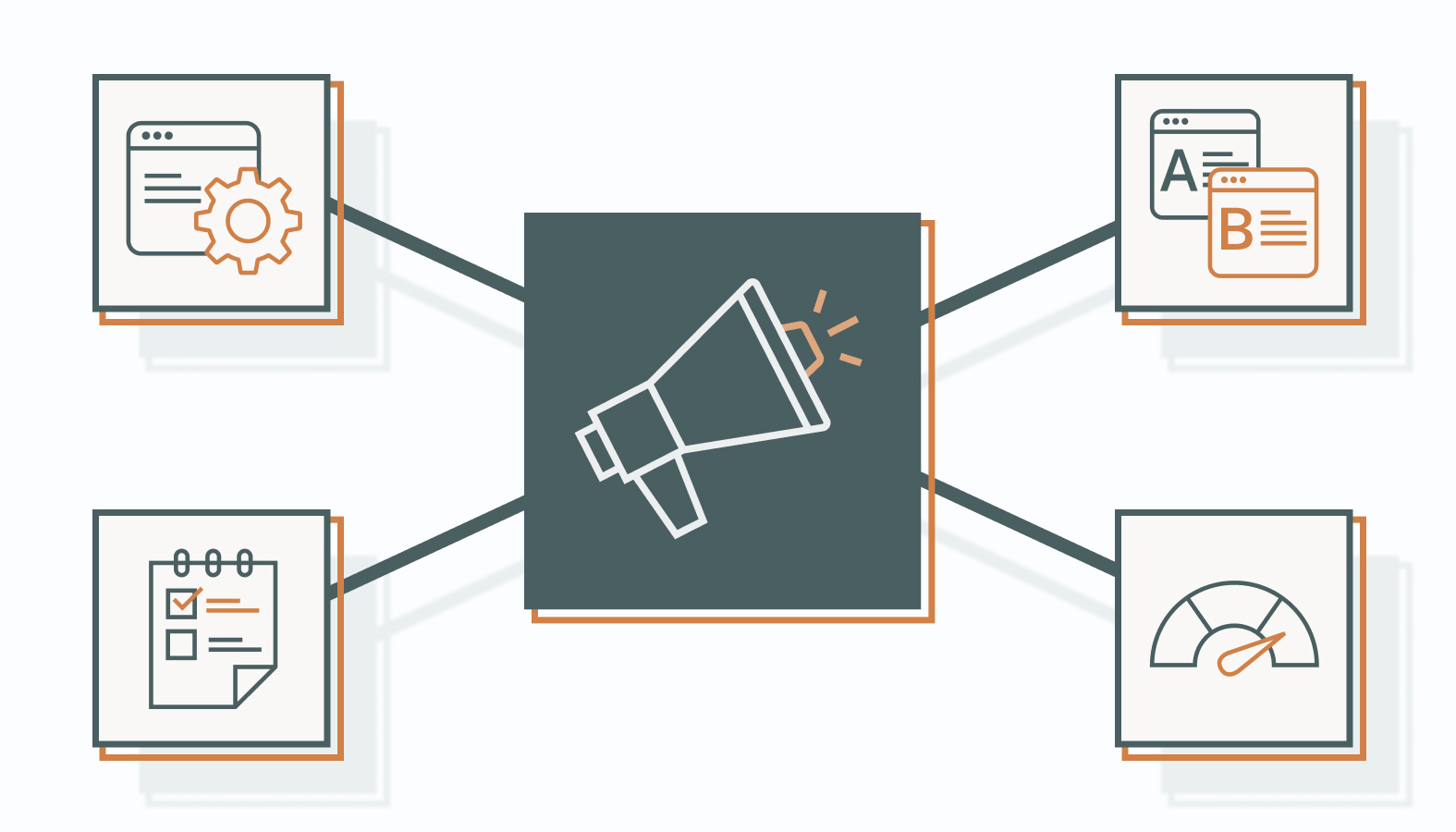
Most teams can’t attribute conversion lift to social proof, because they added it without a control condition and never isolated the variable.
- Run controlled A/B tests before drawing conclusions. Test one proof element against a control: testimonial present versus absent, video versus text, specific metric versus generic quote. Reach real statistical significance before calling a winner.
- Track engagement with proof elements directly. Use heatmaps to confirm users are seeing and interacting with the assets. A testimonial sitting below the scroll threshold has zero measured impact, regardless of quality.
- Segment conversion data by proof exposure. Compare sessions where a user engaged with a proof against sessions where they didn’t. This isn’t causal proof, but it’s worth testing further.
- Set a proof-specific KPI for each page before you launch it. A 5% lift in CTA clicks, a drop in form abandonment on sign-up. Without a defined target, measurement becomes rationalization.
When a test comes back inconclusive, it’s almost always either the traffic volume was too low to reach significance, or the proof wasn’t differentiated enough from the control. Calculate minimum sample size before launching, not after.
Frequently Asked Questions
1) Why is social proof important?
Buyers at every funnel stage use peer evidence to reduce risk, not to validate a purchase they’ve already decided on, but to make a decision they’re stuck on. The mechanism is uncertainty reduction and conformity bias, and the result is measurable conversion impact when deployed correctly.
2) What is the most effective type of social proof?
There isn’t one universal answer. It depends on the funnel stage and audience: case studies perform best in B2B consideration and decision stages, while review scores and UGC perform best in B2C at purchase. The most effective type matches the buyer’s current objection.
3) Can social proof marketing backfire or damage brand credibility if used incorrectly?
Yes, in three ways: fake testimonials create regulatory and trust risk, logos of churned customers get caught by informed buyers, and proof that mismatches the buyer’s persona creates distrust instead of aspiration.
4) How long does it take for social proof marketing efforts to start influencing conversions?
Placement changes are measurable within a standard A/B test cycle, typically two to four weeks. Building an actual collection system takes three to six months before you have a steady flow of fresh assets. The second won’t move as fast as the first.
5) Is social proof marketing effective for new businesses with no existing customers or reviews?
Yes, through legitimate alternatives: expert or advisor endorsements, pilot results presented as mini case studies, and media mentions or awards. Fabricated proof at this stage creates long-term credibility risk and isn’t worth the shortcut.
6) How does social proof marketing differ in effectiveness for B2B vs. B2C companies?
B2B buying involves multiple stakeholders and longer cycles, so case studies and reference calls outperform aggregate review counts. B2C buying is often individual and fast, so star ratings, review volume, and UGC carry more weight. Format and specificity requirements differ significantly between the two.
Start Building the System
Social proof isn’t a one-time implementation task. It’s a system with a collection pipeline, a decay schedule, a measurement loop, and a placement logic tied to the funnel stage. Most brands already have the assets. What they’re missing is the system.
Run the four-step audit from the “Why Your Social Proof Stops Working” section this week. Inventory what you have, verify it’s still accurate and current, and identify the one placement change most likely to move a conversion metric before your next sprint closes.
If you’d rather have that audit run by someone who’s built this infrastructure before, schedule a candid conversation with one of our experts » and we’ll walk you through where your current setup is decoration instead of a system.