


A marketing audit is a structured review of your marketing activities, assets, and strategies, designed to surface what’s working, what isn’t, and what’s quietly costing you. For marketing leaders, content managers, and business owners, it’s a practical tool to make informed decisions. Don’t think of marketing audits as something you only do after a campaign underperforms, a budget gets questioned, or growth stalls without a clear reason.
This article walks you through how to identify these issues early, before they begin affecting performance.
What is a Marketing Audit?
A marketing audit is a systematic evaluation of your marketing function, covering strategy, channels, content, data, and processes, to identify gaps, inefficiencies, and missed opportunities. It’s less of a formal review and more of a reality check, showing your team where things actually stand, not where you assumed they did.
There are three main types of marketing audit:
- Digital marketing audit: Looks at your online presence end to end: website, SEO, paid ads, email, social channels, and how they’re all holding up together
- Content audit: Reviews your existing content library by asking honest questions: Is this still accurate? Is it still performing? Does it still reflect who you are as a company?
- Strategy audit: Evaluates whether your overall marketing approach is aligned with your business objectives
Each type serves a different purpose, but all three contribute to the same outcome: a more focused, efficient, and scalable marketing operation. For teams that are growing fast, audits also act as a quality control mechanism to make sure the foundation stays solid even as the workload increases.
Why Conduct a Marketing Audit Now?
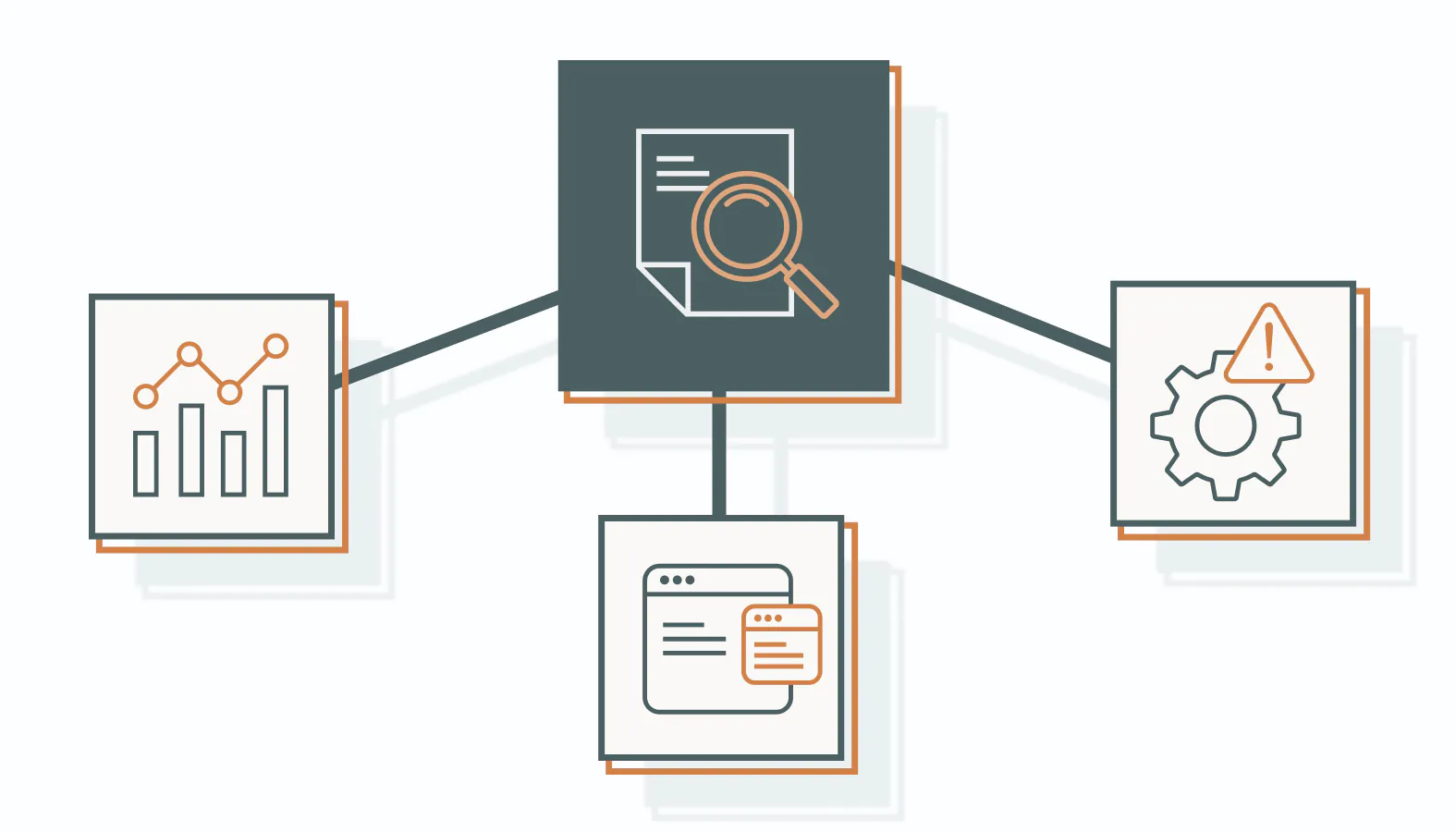
The longer a team goes without a marketing audit, the more likely it is that small, fixable problems quietly grow into larger ones.
Fast-scaling teams, especially in B2B and SaaS, tend to accumulate what you might call “marketing debt.” Channels get added without a clear strategy. Content piles up without a system for tracking what’s performing. Analytics setups get copied from one campaign to the next without anyone verifying they’re measuring the right things. None of these feels urgent at the time, but together they create a situation where your team is putting in real effort and not seeing the returns they should be.
Some of the most common pitfalls include:
- Disconnected data – when your CRM, analytics platform, and automation tools aren’t integrated, you end up making decisions based on incomplete information
- Outdated or duplicate content – assets that no longer reflect your current positioning still rank, get seen, and shape how people perceive your brand
- Compliance gaps – GDPR, CCPA, and accessibility standards change, and missing an update can expose your business to real legal and reputational risk
The business case for a marketing audit runs deeper than simply spotting problems. Teams that do this regularly spend their budget in smarter places, cut down on wasted effort, and move faster when something in the market shifts.
The Ultimate Marketing Audit Checklist
A thorough marketing audit covers six core areas. Each one surfaces a different category of risk or opportunity, and together, they give you a complete view of how your marketing operation is functioning.

1) Setting Audit Objectives
Before reviewing anything, define what you’re trying to learn. Without a clear objective, you’ll end up with a pile of notes and no real sense of what to do with them.
Connect your objectives to something specific, whether that’s pipeline quality, content production costs, or brand consistency, depending on what’s most pressing for the business right now. Then get the right people involved early. Marketing, sales, and leadership rarely agree on what “working well” looks like, and that tension is actually useful when you’re figuring out where to focus.
2) Reviewing Digital Assets
Begin with your website, blog, and landing pages. Review the basics: page speed, mobile experience, and whether your CTAs still make sense. You’ll often find they need refreshing. Offers go stale, links break, and messaging gets updated in one place but not another.
From there, do a content inventory. Catalog every asset (blog posts, guides, case studies, landing pages) and assess each one for quality, accuracy, and performance. Some content will need a total refresh, while other pieces will need to be tweaked or removed. Some gaps will become obvious once you see everything laid out.
3) Evaluating Content Strategy and Workflows
This part of the audit focuses on how content gets made. Review your editorial calendar to see whether topics are mapped to actual buyer journey stages or just produced on instinct. Look at the production process itself: Are briefs clear? Are reviews timely? Are responsibilities well-defined?
When nobody’s quite sure who owns what, things move slowly and quality gets affected. That’s usually less of a people problem and more of a process problem. Messy workflows and undefined roles are fixable, but only once the audit makes them visible and someone is accountable for addressing them.
4) Assessing Digital Marketing Channels
Review each channel individually:
- SEO – Are you ranking for the right keywords? Is your technical SEO current? Are you tracking organic performance consistently?
- Email marketing – Check deliverability, list hygiene, segmentation, and whether your automations are moving leads forward
- Paid advertising – Audit for wasted spend, targeting accuracy, and whether you’re measuring meaningful ROI or just surface-level metrics like impressions
- Social media – Is your presence consistent across platforms? Are you engaging the right audience, or just maintaining a schedule?
Each channel should be evaluated on its own merits and in the context of how it contributes to the overall funnel.
5) Analyzing Analytics and Measurement
Data is only useful if it’s accurate and actively used. Start by reviewing your KPIs: are they measuring what matters to the business, or what’s easy to pull from a dashboard?
Check your attribution models to make sure conversions are being credited to the right source, then look at how reporting actually works on your team. Are insights shared regularly and acted on? Or do reports get generated, reviewed once, and forgotten? The audit should make clear whether your measurement setup is informing decisions or just producing data for the sake of reporting.
6) Compliance and Brand Consistency
Compliance and brand consistency sometimes get treated as an afterthought, which is exactly why they tend to produce the most uncomfortable findings.
Go through your content and campaigns for GDPR and CCPA compliance, accessibility standards, and any regulatory requirements specific to your industry. Take a look at how your brand voice holds up across channels.
If your website reads differently from your emails, and your emails read differently from your social posts, customers will feel that disconnect even if they can’t explain why. Inconsistency erodes trust gradually, and by the time it shows up in your data, it’s been costing you a lot already.
Leveraging Digital Marketing Audit Services
Digital marketing audit services bring in outside expertise to evaluate your marketing operation from an objective perspective that internal teams often struggle to achieve on their own.

When to Outsource vs. Audit Internally
Internal audits can work — provided your team has the time, the right skill set, and enough distance from their own work to evaluate it fairly. That last part is harder than it sounds. In practice, that’s a difficult combination to maintain, especially in fast-growing organizations where the same people running campaigns are also being asked to evaluate them.
Outsourcing works well when you need an unbiased assessment, when your team lacks specific expertise in areas like technical SEO or compliance, or when the stakes are high, like a major pivot, an acquisition, or a significant budget reallocation.
What to Expect from Digital Marketing Audit Services
A good audit from an outside partner covers more ground. It should include structured analysis across your digital assets and channels, a clear read on where the risks and inefficiencies are, and recommendations that are ranked by what will move the needle, not just what’s easiest to fix. Good audit partners also provide benchmarks — so you know how your performance compares to industry standards, and not just your own historical data.
How to Choose the Right Partner
Find someone who has worked with businesses like yours — same industry, same model, similar scale. Ask them to walk you through how they run an audit, aside from what they deliver at the end. A proposal that leads with outputs but skips over the process is a red flag. The methodology is where the real value lives, and a good partner won’t have any trouble explaining it.
Digital Strategy Audit: Going Beyond the Basics
A digital strategy audit goes a level above a standard marketing audit. Where a marketing audit evaluates whether you’re executing well, a digital strategy audit evaluates whether you’re executing the right things.
It covers your full digital ecosystem (website, content, paid channels, automation, analytics, and tech stack) and assesses whether each piece is aligned with your actual business objectives.
Strategic gaps have a way of hiding in plain sight. The messaging that felt right two years ago might not be landing with the buyers you’re going after now. Your channels might not reflect how your audience discovers and evaluates solutions today, or your analytics might be tracking the wrong outcomes, which means your team optimizes metrics that don’t connect to revenue.
That’s the real value of a digital strategy audit — it doesn’t just tell you how well things are working. It tells you whether you’re pointed in the right direction. And if you’re not, it gives you something concrete to course-correct with, not just a report to file away.
Turning Audit Insights into Action
An audit produces findings — what you do with those findings determines whether the whole exercise was worthwhile.
Start by sorting what you’ve found by impact and effort. Some issues will be significant but straightforward to fix, while others will be bigger lifts with longer payoffs. Trying to tackle everything at once tends to result in nothing getting done properly, so pick your priorities wisely and build a logical sequence from there.
For each item, someone needs to own it; there needs to be a deadline attached; and you need a way to measure whether the fix worked. Then review progress consistently, weekly or monthly depending on the scope. The teams that get real results from a marketing audit keep the process going after the findings land — checking progress, measuring results, and feeding what they learn back into the next round. That’s the difference between a one-time cleanup and an actual improvement in how your marketing runs.
FAQs: Marketing Audits for Modern Teams

1) How often should you conduct a marketing audit?
At a minimum, once a year. Teams in fast-moving industries or going through significant growth should consider a lighter quarterly review to catch issues before they compound.
2) What tools are best for audits?
Common tools include:
- Google Analytics and Google Search Console for web and SEO performance.
- Screaming Frog or SEMrush for technical SEO.
- Hotjar for user behavior.
- HubSpot or your CRM for campaign and workflow review.
- Asana, Monday.com, or whatever project management tool your team actually uses for tracking what happens after the audit is done.
3) Can small teams benefit from audits?
Yes, small teams benefit from audits, sometimes even more than larger ones. Smaller teams feel the impact of inefficiency faster because there’s less slack to absorb it. A marketing audit brings clarity: here’s what’s working, here’s what’s not, and here’s where your time and budget should be going.
4) What’s the difference between a marketing audit and a strategy audit?
A marketing audit looks at execution: Are the campaigns, content, and channels performing the way they should? A digital strategy audit, on the other hand, takes the audit a step further and asks whether the overall direction works, given your business goals. Both are useful — they just answer different questions.
5) How do audits drive content quality and output?
They show you what content is resonating and what’s being ignored. They also surface the process problems (unclear briefs, undefined ownership, slow approvals) that quietly drag down both speed and quality. Fix those issues, and both quality and output improve.
Transform Your Marketing Liabilities into Growth Opportunities
Most marketing problems don’t become obvious right away. They build gradually — an outdated landing page here, a broken attribution setup, or a content library that no one has reviewed in two years. By the time the impact shows up in your pipeline or your budget conversations, the underlying issues have usually been present for a while, and a marketing audit is what makes them visible before they get expensive.
The teams that get the most out of audits don’t necessarily have the biggest resources, but they’ve made auditing a regular habit rather than an emergency response. Whether you handle it internally or bring in digital marketing audit services to support the work, what matters most is following through on what you find. Priorities need owners, and owners need deadlines. The whole thing needs to be revisited, not just shelved, so you can turn an audit from a document into a real improvement.
If your marketing operation is due for a closer look, the next step doesn’t have to be complicated. Schedule a candid conversation with one of our experts » and get a clear, honest assessment of where your marketing stands today. No long-term commitments — just the clarity your team needs to move forward with confidence.