


Marketing teams publish content, get a short spike in traffic, watch it fade within weeks, then start over. Each cycle consumes budget without creating lasting value. Evergreen content topics break that cycle by generating consistent organic traffic long after publication. Traffic compounds instead of resetting, and the content becomes a lasting asset, not a disposable one.
This guide shows you how to find those topics, check them with real data, and build a backlog that continues generating results long after you hit publish.
What Are Evergreen Content Topics?
Evergreen content topics are search-driven subjects that remain consistently relevant over time, generating ongoing organic traffic because people continue searching for them year after year.
A high-performing evergreen content topic typically shares three characteristics:
- It solves a recurring customer problem.
- Search demand remains consistent over multiple years.
- The information can be updated without changing the core topic.
The difference between evergreen content and trending content shows up clearly in how traffic behaves over time. Evergreen content grows gradually and continues to grow, since each new visitor adds to a growing base instead of replacing a fading one. Trending content spikes hard in the first few days, then drops almost as fast, leaving little behind once the moment passes.
The Traffic Decay Curve
The Traffic Decay Curve illustrates the difference between evergreen and trending content. While trending articles experience a sharp spike followed by rapid decline, evergreen pages continue accumulating traffic over time through sustained search demand.
Evergreen Content vs. Trending Content (The ROI Breakdown)
| Feature | Evergreen Content Topics | Trending Content |
| Shelf-Life | Years (often indefinite) | Days to weeks |
| Production Cost | Moderate to high (but amortized over time) | Low to moderate (often rushed) |
| Initial Traffic Volume | Moderate, steady growth | High spike, rapid drop-off |
| Lifetime Value (LTV) | Extremely high – traffic and leads accumulate | Low – value fades quickly |
| Lead Generation | Continuous | Short-lived |
Production cost row is where most teams get confused. Evergreen content usually costs more to make well upfront, since it needs more research and a stronger structure. But that cost spreads out across years of traffic. A trending post has to earn back its cost in days, before the topic goes cold.
Why Evergreen Content Drives Compounding ROI
Evergreen content pays off over time because each piece keeps earning search visibility, backlinks, and leads long after it’s published. This steadily lowers the cost of acquiring each new visitor.

SEO Benefits
On the SEO side, older evergreen pages build authority the longer they stay live and updated. Pages that consistently earn backlinks, remain accurate, and satisfy user intent often improve their visibility over time as search engines gather more engagement and authority signals.
A well-ranked evergreen page can get cited by industry blogs, mentioned in forum answers, and linked from resource pages for years, and each new link adds to its authority. Since traffic keeps coming without new spend, the cost of each new visitor drops over time. And this is something a trending post can’t match once its moment ends.
Business Benefits
On the business side, evergreen content shortens B2B sales cycles. It answers a buyer’s ongoing questions before they get on a call with sales. A prospect who’s already read a clear breakdown of their problem and seen how a company solves it starts that first call already informed. That saves time, since less of the call goes to basic explanation and more goes to that prospect’s specific situation.
Many B2B organizations find that prospects who consume educational content before speaking with sales require less introductory explanation, allowing conversations to focus on evaluating solutions.
How to Identify and Validate Evergreen Content Topics
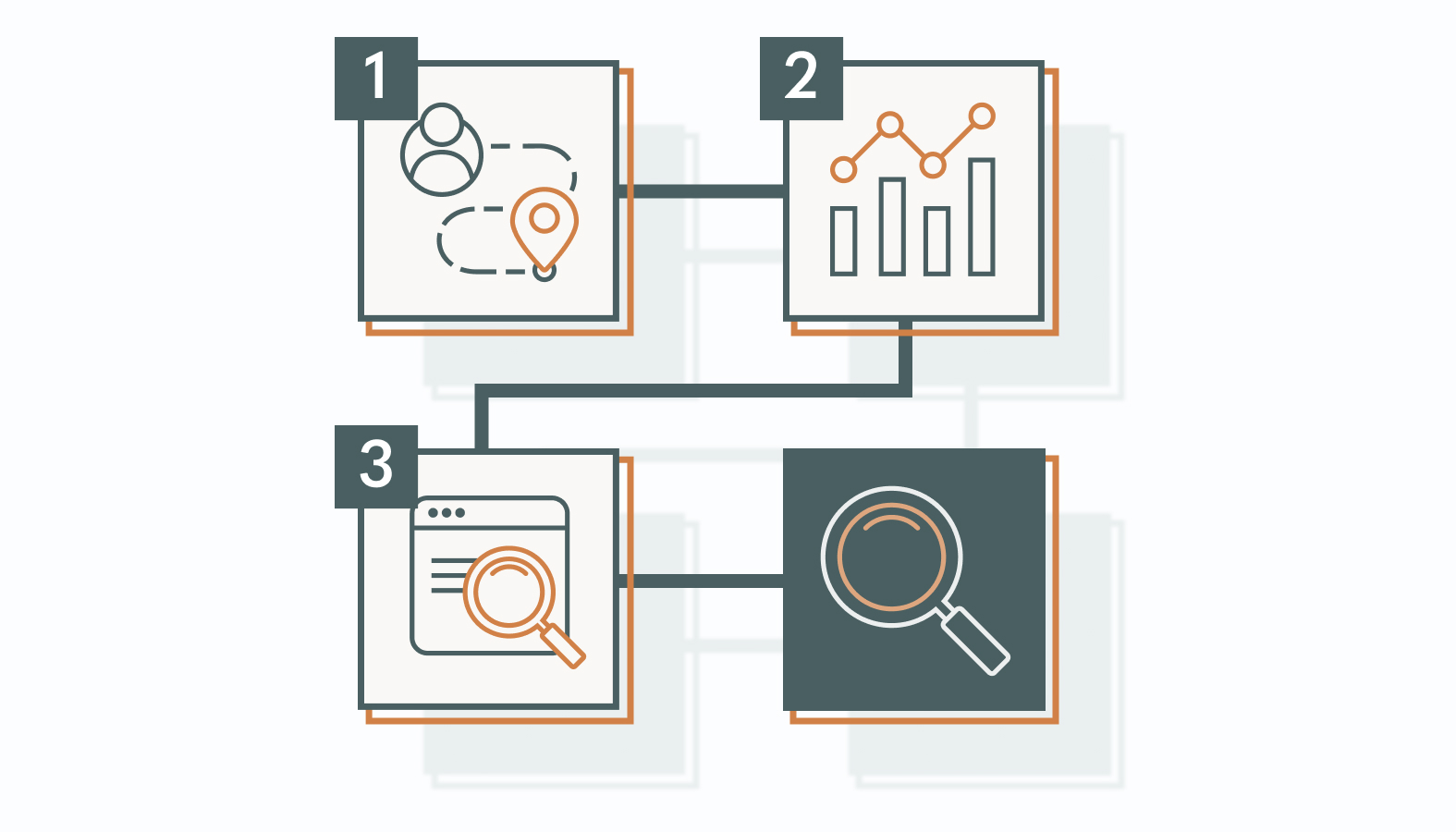
Identifying real evergreen topics requires combining internal knowledge of customer problems with external data to confirm those problems get searched consistently, not just occasionally.
Step 1: Mapping Persistent Customer Pain Points
Start internally. Customer discovery calls, support tickets, and CRM notes record the questions customers ask again and again. Look for patterns across many accounts over time, not just a few recent conversations. A question that has come up for three years is a strong evergreen candidate. A question that came up once during a product launch usually isn’t.
Step 2: Advanced Data & Keyword Research Techniques
Once a pattern surfaces internally, confirm it externally using keyword research tools like Ahrefs, SEMrush, or Google Trends. Review existing impressions and click-through rates in Google Search Console to identify evergreen opportunities your website already has momentum for. The goal is separating evergreen search intent from volume that only looks steady because it’s averaged across a seasonal spike and a seasonal lull.
Check a keyword’s search history going back several years, not just the last twelve months. A topic with a flat, consistent baseline across multiple years is evergreen. A topic with a sharp annual spike, even a predictable one, is seasonal. That needs a different content strategy than a true evergreen topic does. Evaluate related long-tail keywords alongside their search intent. Lower-volume searches often indicate buyers with more specific problems and stronger purchase intent. A broad keyword can look seasonal on the surface while a more specific version of the same topic stays steady all year.
Step 3: Filtering for Commercial Intent
The Agency approach adds one more filter most guides skip: traffic alone doesn’t pay bills. A topic can have real, consistent search volume and still generate readers who never convert. Before committing production resources, check whether the topic naturally intersects with a decision a buyer is making, not just a question they’re curious about.
Topics tied to a purchase decision, a vendor comparison, or a specific operational problem tend to convert readers into leads more reliably than informational topics with similar traffic volume. A simple test: ask what the reader does right after finishing the piece. If the answer is “closes the tab,” rank that topic lower, no matter how much traffic it could bring in.
High-Converting Evergreen Content Ideas & Frameworks
The strongest evergreen content ideas follow proven formats, each built to earn backlinks, convert readers, or both.

The Definitive Step-by-Step Playbook
A comprehensive, sequential guide covering an entire process from start to finish earns backlinks because other sites reference it instead of writing their own version. Structure it with chronological, sequential headings so a reader can bookmark it and treat it as a reference document they return to, not a one-time read.
ROI Calculators and Financial Frameworks
Interactive tools, spreadsheets, or downloadable budget calculators solve a prospect’s exact math problem instead of just describing it. These assets also generate qualified leads because visitors often exchange their email address for downloadable templates or calculators. That extended dwell time signals to search engines that the page is delivering real value, which supports long-term ranking stability.
Industry Checklists and Audit Templates
A single-page, downloadable checklist removes friction between reading and doing. Design it to prompt immediate action, whether that’s an internal audit or a first step toward a purchase decision. Keep checklist items concise and well-structured to improve usability while making the content easier for users to scan and potentially increasing its visibility in search features.
The “Alternative To” and Vetting Guide
Comparison content that objectively evaluates vendors, software, or approaches captures buyers who are already close to a decision, which makes it some of the highest-intent traffic available. The tone has to stay genuinely objective and data-driven rather than a disguised sales pitch, since buyers can tell the difference immediately. A pitch disguised as a comparison tends to lose trust fast.
Myth-Busting and “No-B.S.” Post-Mortems
Content that uses proprietary data or a real case study to dismantle an outdated industry assumption stands out because most competitors are repeating that same assumption. This format connects directly to a brand’s commitment to candor, since it requires being willing to say something other companies won’t.
Evergreen Content Examples Across High-Growth Industries
What counts as an evergreen topic shifts by industry, but the underlying pattern, a persistent buyer question with consistent search demand, stays the same across all of them.

A few evergreen content example topics by industry:
- B2B SaaS / Marketing: “How to Audit a Fractional CMO Firm”
- Finance & Fintech: “Understanding Debt-to-Equity Ratios for Scaleups”
- Healthcare / B2B MedTech: “Compliance Checklists for Remote Patient Monitoring”
Each of these addresses a question a buyer will keep asking regardless of what year it is, which is exactly the signal that separates a long-term topic from a temporary one.
The B2B SaaS example works because vetting a service provider is a recurring decision every growing company eventually faces, not a one-time news event. The finance example works because scaleups evaluate their own balance sheets on an ongoing basis, independent of any market cycle. The healthcare example works because compliance obligations don’t disappear once a regulation is old news. They stay relevant for as long as the underlying rule exists.
To test any topic, ask one question: does it recur naturally, or is it tied to a single moment? That question quickly separates real evergreen ideas from ones that only look evergreen.
How to Validate and Prioritize Your Content Backlog
Validating a content backlog means confirming real, sustained demand exists before committing production time, then ranking topics by how much revenue potential each one carries.

Assessing True Search Demand vs. Seasonal Spikes
Pull a three-to-five-year view of search interest using a tool like Google Trends or Ahrefs before committing to a topic. A viral trend or hype cycle decays almost as fast as it rises, and content built around it stops earning traffic the moment interest cools. A real evergreen topic holds a steady baseline across that entire window, which is the pattern worth building around.
Filtering Traffic for Revenue Potential
Cost-per-click, or CPC, is a useful proxy here. As Google’s own Ads documentation explains, CPC bidding is set through a live auction where advertisers name the maximum they’re willing to pay for a click. It means a keyword’s CPC directly reflects how much competitors believe that traffic is worth.
A generic, high-volume keyword like “marketing tips” might pull in a large audience with almost no commercial value attached. A lower-volume keyword like “fractional CMO pricing” pulls in far fewer visitors, but each one is closer to an actual buying decision, which usually makes it the more valuable topic to prioritize.
Scoring Impact, Confidence, and Ease of Execution
Popularized by growth marketer Sean Ellis, the ICE framework helps teams prioritize opportunities using Impact, Confidence, and Ease. Score each candidate topic from 1 to 10 across three pillars:
- Impact: how much this topic could move revenue or lead generation if it performs well
- Confidence: how certain the data supports this topic actually working, based on the research from earlier steps
- Ease: how much time and resources the piece will take to produce well
Add the three scores together and rank the backlog from highest to lowest. This keeps prioritization grounded in data instead of whichever topic feels most exciting in a planning meeting.
Optimizing and Refreshing Your Assets for Longevity

Evergreen content stays evergreen if it gets maintained, since even a genuinely timeless topic can lose rankings if the page goes stale.
Technical On-Page SEO Foundations
Every evergreen asset needs a clear title tag, a clean URL structure, semantic keyword variations throughout the body, and internal links connecting it to related content on the site. These fundamentals give search engines the clearest possible signal about what the page covers and why it should rank.
Refreshing internal links as new related content is published helps strengthen topical authority and improves content discoverability.
The Content Refurbishing Schedule
Build an internal tracking system that flags each evergreen asset for review every six to twelve months. Use that review to update statistics, fix outdated links, swap in current examples, and adjust anything that’s aged since the last update. In one historical optimization case study, HubSpot has publicly documented how systematically updating existing articles significantly increased monthly leads, demonstrating that historical optimization can outperform publishing new content alone.
Stop Chasing Trends: Invest in Content That Pays Off
Building a library of evergreen content topics requires more planning upfront, but the long-term payoff is predictable organic traffic, qualified leads, and compounding ROI. Once a solid base of evergreen content is live and kept updated, growth becomes less dependent on this month’s marketing budget, and the marketing team stops starting over every quarter.
A simple five-step checklist: map recurring customer questions, check each one against multi-year search data, filter for commercial intent, score the backlog with ICE, then set a refresh schedule before the first piece goes live. Teams that try to build this alongside their regular workload often lose momentum, since the results take months to show while the work has to start now.
If your team is ready to move past short-term traffic spikes and build content that keeps working long-term, schedule a candid conversation with one of our experts. Bring your current content backlog, and we’ll help you identify which evergreen content topics offer the greatest long-term return.