


The 3 pillars of marketing leadership define how modern marketers guide strategy, develop teams, and use data to achieve results.
In a world where channels, tools, and expectations shift constantly, traditional playbooks rarely cover every challenge. Leaders need clarity on setting direction, building capable teams, and connecting initiatives to measurable outcomes.
This framework helps marketing leaders focus on what matters most, align efforts with business goals, and make smarter decisions without losing momentum.
Now, let’s break down these three pillars and see how they shape stronger, more adaptable marketing organizations.
Why Today’s Marketing Leaders Need a New Approach
Marketing didn’t gradually change; it accelerated. And most teams are still trying to catch their breath.
The challenge isn’t lack of effort or talent, but the environment. Complexity stacks fast, and the margin for error keeps shrinking.
Here’s what that looks like:
- More channels, less control. Audiences are fragmented, and no single platform guarantees reach.
- Higher expectations, faster backlash. Relevance isn’t optional, and mistakes don’t go unnoticed.
- Endless data, limited clarity. Insights are everywhere, but confident decisions are rare.
- Shifting team dynamics. Hybrid setups and specialized roles make alignment harder than it should be.
And then there’s the pressure: marketing isn’t a support function anymore. It’s expected to drive revenue, retention, and growth.
The leaders who stand out aren’t chasing every new trend. They bring structure to the chaos, focus on what truly drives meaningful progress, and build teams that can adapt without losing direction. Because when this is done well, complexity no longer holds them back but becomes a powerful source of leverage.
Pillar 1: Setting Strategic Direction and Owning the Brand
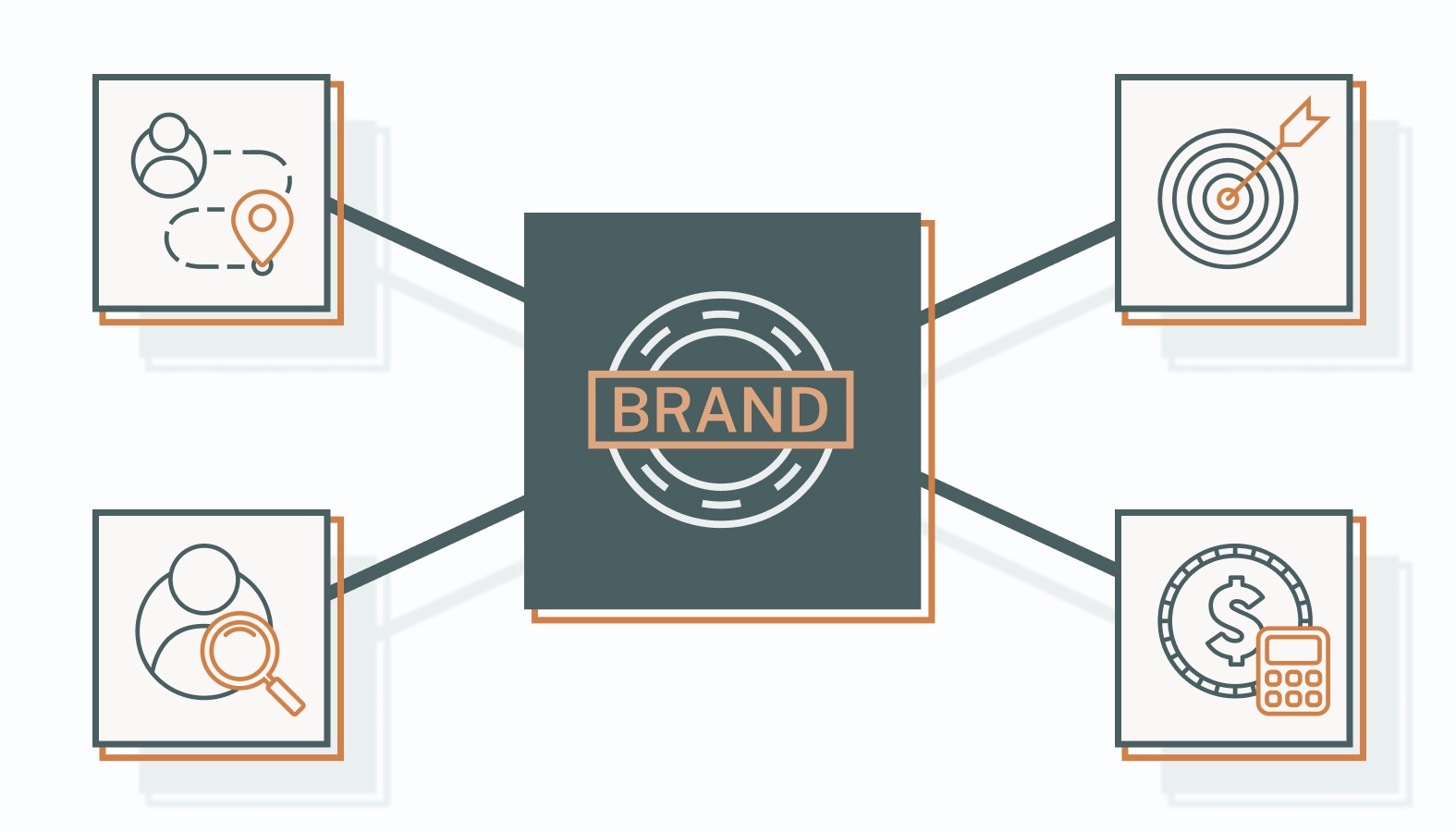
If there’s a defining trait that separates sharp marketing leaders from the rest, it’s this: they don’t drift. They make deliberate choices about where things are headed – and then follow through with a kind of stubborn clarity until the brand actually gets there.
Strategy, in this context, isn’t some forgotten slide deck gathering dust in a shared drive. It’s active, constantly shaping decisions, showing up in every campaign, every message, and especially in those uncomfortable moments when the data is incomplete and the stakes feel uncomfortably high.
The best leaders don’t wait around for the market to hand them answers; they read the signals, interpret what matters, and move first – with intent, not guesswork.
And the brand? It’s far more than visual polish or a clever tagline tossed into a pitch. It’s the long game – the slow, compounding force that either strengthens your position or quietly erodes it over time.
Owning the brand means:
- Building trust that compounds (instead of spikes)
- Making decisions that reinforce perception rather than chasing short-term performance
- Ensuring that every move reflects where the business is going, not where it’s been.
When strategy and brand are tightly aligned, something subtle but powerful starts to happen. You stop scrambling for wins and begin designing for them. Over time, what you build isn’t just a string of successful campaigns, but something far more durable: staying power.
Crafting a Clear, Actionable Marketing Vision
A marketing vision that sounds impressive but leads nowhere is little more than an expensive decoration.
A real vision earns its place. It provides direction, steadies decision-making when things get noisy, and helps teams focus when priorities start to blur.
The ones that actually stick tend to be:
- Clear and grounded. No jargon and easy to grasp without second-guessing.
- Outcome-driven. They’re anchored in real business outcomes rather than surface-level metrics.
- Operational. They’re practical enough to shape what teams do every day (not just what gets repeated in meetings).
Think of it this way: a strong vision doesn’t sit at the top of a document; it quietly influences everything beneath it.
For example:
“Becoming the go-to resource for sustainable business solutions in North America.” – That goes beyond positioning; it informs content strategy, partnerships, and even hiring decisions.
“Delivering customer experiences so remarkable, they create word-of-mouth at scale.” – Now marketing extends beyond campaigns into orchestrating the entire brand experience.
When the vision is this clear, teams don’t hesitate or wait around for approval; they move with confidence because they understand what “right” looks like.
Shaping, Growing, and Safeguarding Brand Reputation
Reputation rarely forms by accident; it’s built intentionally, reinforced consistently, and, at times, actively defended in real time.
Strong leaders treat it as a system rather than a side effect.
They:
- Stay close to meaningful signals. They track market shifts, customer sentiment, and competitor moves without losing sight of what matters.
- Invest in narratives that resonate, focusing on stories with substance instead of chasing noise or volume.
- Obsess over consistency with every touchpoint – from ads to support to product experience – reinforcing the same story.
- Prepare for impact. When something inevitably breaks, they’re ready to respond quickly and clearly, knowing that speed and clarity often outweigh perfection.
What often gets overlooked is that brand protection doesn’t just happen on the outside, but it really begins within the organization.
If teams don’t fully understand the brand, don’t believe in it, or end up interpreting it differently across functions, then it’s not really a branding issue at all. It’s a leadership one.
And the solution isn’t more guidelines; it’s alignment, built deliberately and reinforced every day.
Connecting Marketing Strategy to Business Objectives
A strategy that isn’t tied to business outcomes quickly turns into activity for its own sake – and activity alone doesn’t scale.
What matters is alignment that’s tight, deliberate, and continuously maintained.
In practice, that means:
- Marketing priorities directly support revenue, growth, or retention without loose ends.
- Marketing requires ongoing calibration with leadership because business priorities shift more often than plans account for.
- Marketing depends on clear structures that connect effort to impact, ensuring nothing drifts off course.
Frameworks, OKRs, scorecards, or anything that keeps performance measurable and transparent help, sure. But these tools aren’t the point – clarity is.
Cadence matters just as much. Regular check-ins shouldn’t exist for optics; they’re there to recalibrate, because even the strongest strategy weakens without consistent attention.
When this connection holds, marketing no longer has to justify its value. It demonstrates it, consistently.
Managing Change: Inside and Outside the Organization
Change is no longer an occasional disruption; it’s the baseline. The real difference lies in how it’s handled.
Effective leaders. They:
- Keep a close eye on what’s shifting, whether it’s technology, customer behavior, or competition, knowing these are always moving targets.
- Build teams for agility, encouraging testing, learning, and quick pivots without losing momentum.
- Lead with a human lens, recognizing that behind every shift is a team working through uncertainty in real time.
The reality is, predicting every change isn’t the goal. Building a system that can absorb and respond to change is.
That means creating an environment where adaptation is expected rather than forced, and where experimentation feels routine instead of risky.
Do that well, and change stops being something to manage; it becomes something you can use.
Making Smart Decisions on Budget and Resources
You’ll almost always have fewer resources than what’s being asked of you, and that gap is something you have to manage continuously.
Strong leaders don’t resolve it by simply increasing spend; they approach it with sharper thinking. They:
- Prioritize with discipline, recognizing that not everything deserves investment, even if it’s trending.
- Rely on data to guide decisions, not just to justify spending but to inform where it should go next.
- Balance short-term gains with long-term investments, keeping immediate performance steady while building for future growth.
And yes, execution still matters. Zero-based thinking forces intentional choices, regular performance reviews keep decisions grounded in reality, and transparent reporting builds trust across the organization.
When every dollar and every hour is clearly tied to growth, the conversation shifts. Scrutiny gives way to support.
And instead of asking for additional budget, you’re presenting a case that’s difficult to challenge.
Pillar 2: Leading and Elevating Top-Performing Teams

Here’s the uncomfortable truth: no strategy, no matter how brilliant, survives a mediocre team. You can have the sharpest positioning, the cleanest roadmap, the most “innovative” campaign ideas in the room, but none of it matters if the people executing can’t carry the weight. Teams don’t just support strategy; they are strategy in motion.
The best marketing leaders understand this instinctively. Tools evolve, channels shift, and playbooks expire faster than anyone wants to admit. But smart, driven, well-supported people adapt, figure things out, and most importantly, deliver.
Building a high-performing team isn’t about hiring a few stars and hoping for the best. It’s about creating an environment where performance compounds. That means:
- People know what great looks like and are equipped to reach it.
- Growth is built into the way the team operates.
- Talent doesn’t plateau or burn out; it sharpens over time.
When this works, you’re not just running campaigns; you’re building a machine that improves every quarter.
Prioritizing Talent Development Over Tool Adoption
Let’s be honest: a shiny new platform won’t fix a weak team. It only makes gaps more visible. Leaders who consistently outperform focus on people first, not tools. Coaching, development, and clear progression are what separate a team that executes from one that leads.
Leaders who consistently outperform don’t chase tools first. They invest in the people who use them. Coaching, development, clear progression, these aren’t “nice extras.” They’re the difference between a team that executes and one that leads.
The goal isn’t to chase the market; it’s to build a team that can handle whatever the market throws at them. In practice, that looks like:
- Structured learning rhythms that sharpen fundamentals and emerging skills.
- Real mentorship that accelerates judgment and confidence.
- Cross-functional exposure so people understand the business beyond their lane.
- Clear growth paths with defined milestones and regular feedback.
Technology matters, but only as leverage. Invest in people properly, and they’ll figure out any tool or platform. The reverse rarely works.
Fostering a Culture of Openness and Success
High-performing teams don’t run on pressure alone; they run on trust, clarity, and a shared standard for what “good” actually means. Without it, you get hesitation, silos, and safe ideas that go nowhere. With it, everything moves faster, sharper, cleaner.
Strong leaders create cultures where:
- Speaking up is expected,
- Ideas are challenged rather than protected, and
- Mistakes are surfaced early, fixed quickly, and learned from without drama.
Strong leaders keep communication tight and consistent, recognize wins in ways that reinforce what success looks like, treat missteps as data rather than failure, and set the bar clearly while giving people space to reach it in their own way.
This kind of environment creates momentum. People don’t just do their jobs; they push, contribute, and take ownership without being told. That’s when performance stops being managed and starts being driven from within the team itself.
Driving Impact Through Cross-Functional Partnerships
Marketing alone doesn’t win – it never has. Real impact comes when marketing is deeply connected to the rest of the business, not orbiting around it.
The strongest teams operate like a hub, plugged into sales, product, customer success, and anywhere else value is created or lost. Alignment compounds results.
When teams are connected this way, you get:
- Campaigns that actually convert because they reflect real customer conversations.
- Faster feedback loops that happen faster, so optimization happens in real time.
- A more consistent customer experience, from first touch to long-term retention.
Making this work takes intention: regular structured syncs for proactive alignment, shared definitions of success to prevent teams from pulling in different directions, cross-team exposure through rotations and joint projects to reduce friction, and collective ownership of wins because results are built across many, not just one.
When these partnerships click, marketing stops being seen as a service function. It becomes a core driver of business growth, integrated, informed, and impossible to ignore.
Pillar 3: Driving Results Through Data and Accountability

Let’s be honest: instincts are great for brainstorming, but they don’t scale. In modern marketing, opinions don’t win arguments – outcomes do. And outcomes are built on data, interpreted correctly, and acted on decisively. The shift isn’t just technical; it’s cultural. High-performing teams don’t just have data – they operate through it.
Being busy is easy. Being effective takes discipline, and it comes down to this:
- Every initiative has a clear purpose,
- Every effort ties back to a measurable outcome,
- Every result, good or bad, feeds the next decision.
That’s how you avoid the activity trap. Not by doing less, but by making everything count.
Making Data the Foundation of Every Decision
Data isn’t decoration. It’s infrastructure.
The best leaders don’t treat analytics as a reporting layer that shows up at the end. They embed it into how decisions are made from the start, quietly shaping direction and refining execution.
More importantly, they don’t centralize it; they democratize it. Because a data-driven culture only works when:
- People can access insights without jumping through hoops.
- Teams know how to interpret what they see.
- Decisions are expected to be backed by evidence, not hierarchy.
In practice, this means starting campaigns with clear performance markers, live dashboards that reflect reality in real time, relentless iteration (test, learn, adjust, repeat), and shared data fluency so teams aren’t intimidated by numbers but use them confidently. When this clicks, decisions speed up, waste drops, and optimization becomes second nature rather than a quarterly exercise.
Generating Real, Measurable Growth
Metrics that look impressive but don’t move the business are just noise. Real growth is tangible, appearing where it matters – in revenue, customer behavior, and long-term value creation.
In the real world, that might look like:
- Stronger pipelines that actually convert.
- Customers sticking around longer and spending more.
- Brand perception shifting in measurable ways.
- Smarter spend, where efficiency improves without sacrificing impact.
Tracking this kind of growth requires more than surface-level reporting; it demands depth.
Leaders focus on attribution clarity, understanding which efforts are driving results versus coasting along; behavioral insight, seeing how customer actions evolve over time; and contextual benchmarks, setting targets that are ambitious but grounded.
And when it’s done right, the results speak for themselves.
A SaaS team moving from broad, unfocused awareness to targeted, insight-driven execution doesn’t just “improve performance.” It sees real shifts: higher-quality pipelines, stronger conversion, lower churn. Numbers that hold up in any room.
Ensuring Every Initiative Delivers ROI
Accountability begins the moment an idea hits the table, not after a campaign launches. Strong leaders don’t ask, “Did it work?” at the end; they ask, “How will we prove it works?” before anything goes live. That mindset sharpens execution, clarifies priorities, and cuts waste before it even begins.
A disciplined approach includes:
- Defined success upfront with no vague goals.
- Establishing clear measurement paths to track performance.
- Structured frameworks to map initiatives to real customer movement.
- Ongoing recalibration, doubling down on what works, cutting what doesn’t without hesitation.
Tools like analytics platforms and dashboards help, but they’re just instruments. What matters is the standard: every initiative earns its place by contributing to growth, financially, strategically, or both. Do this consistently, and marketing stops being questioned; it becomes one of the most defensible investments in the business.
Keeping Everyone Informed and Aligned
This is where many teams quietly break down – not in strategy, not in execution, but in visibility. If people don’t understand what’s happening, why it’s happening, and what the results mean, alignment fades fast. Transparency solves this, not as a box to check, but as a consistent habit that keeps everyone on the same page.
Effective leaders make progress visible rather than buried in reports, highlight wins to reinforce what worked, unpack misses constructively so the team gets smarter, and clearly show how direction evolves so no one is guessing what changed or why.
This isn’t over-communication; it’s useful communication that answers:
- What did we learn?
- What are we doing next?
- And why does it matter?
When everyone has that clarity, trust builds, decisions speed up, execution tightens, and the entire organization moves like it’s operating off the same playbook, because it is.
Avoiding Common Leadership Missteps
Even strong marketing leaders slip, not because they lack knowledge, but because the pace, pressure, and constant noise make it easy to lean the wrong way.
The good news? Most mistakes aren’t fatal; they’re fixable if you catch them early and adjust quickly.

Here are three missteps that show up more often than they should, and how to stay ahead of them:
- Overvaluing Tools, Undervaluing People
It’s an easy trap. A new platform drops promising efficiency, cleaner data, smarter automation. Suddenly, budgets shift, and attention follows. But the reality is simple: tools don’t build momentum, people do.
To keep the balance:
- Invest in capability, not just capability tools.
- Pressure-test new tech with a small group before scaling.
- Make sure your team actually wants to use what you’re buying.
If the team isn’t sharp, no tool will save you. If the team is sharp, they’ll make almost anything work.
- Letting Teams Drift Apart
Misalignment rarely announces itself loudly. It creeps in. A campaign here, a message there, slightly off, and suddenly nothing connects. The cost? Confusion, missed opportunities, and a customer experience that feels disjointed.
To stay tight:
- Lock in shared goals early, and revisit them often.
- Keep communication simple, direct, and consistent.
- Design handoffs like they matter, because they do.
When teams move in sync, execution feels seamless. When they don’t, friction shows up everywhere.
- Failing to Make Impact Visible
Good work doesn’t always speak for itself, especially in marketing. If results aren’t clearly tied to business impact, perception drifts, and when perception drifts, support does too.
To stay credible:
- Focus on outcomes that matter to the business, not just internal metrics.
- Turn results into stories people can understand and remember.
- Share wins and lessons regularly, not just at the end of a quarter.
Visibility isn’t about showing off. It’s about making sure the value is obvious.
Avoid these missteps, and you remove unnecessary drag – not by working harder, but by staying sharp where it counts.
Leading Marketing Teams Into the Future
Leading marketing isn’t about hitting a finish line; it’s about building a system that thrives in motion. Channels shift, customer expectations rise, and tools evolve faster than anyone can keep up. The leaders who stand out aren’t just keeping pace – they’re setting it.
They do it by:
- Sharpening vision constantly, adapting strategy before chaos turns into crisis.
- Elevating teams relentlessly, giving people the clarity, skills, and autonomy to act like owners.
- Letting data guide, not dictate, turning insights into action, not just reports.
Master these three pillars – strategic direction and brand ownership, high-performing teams, and data-driven accountability – and you don’t just score short-term wins. You build a marketing engine that’s resilient under pressure, agile when disruption hits, and always primed for meaningful growth.
At the end of the day, it’s not the flashiest campaign or the latest tech stack that defines leadership. It’s the ability to align purpose, people, and performance, turning marketing into a powerhouse that consistently drives the business forward.
Take Action: Turn Insights Into Impact
Turn strategy, talent, and data into measurable growth. Schedule a candid conversation with one of our experts, and start engineering your marketing for high-impact results.