


AI adoption created momentum, but momentum is not transformation. Many organizations increased output with new tools while growth itself remained inconsistent. The real constraint was structure. Generative marketing reframes the issue by shifting attention from isolated capabilities to coordinated execution.
Instead of treating AI as a productivity layer, this model integrates intelligence directly into how marketing decisions, assets, and performance interact.
Execution becomes informed by live signals. Iteration becomes systematic. Performance becomes measurable beyond surface metrics.
This guide unpacks what generative marketing entails, how it differs from standalone generative AI, and what it requires at the operational level. Competitive advantage will favor companies that design for integration rather than experimentation.
Let’s begin with how the model works and how to build it without losing control.
Why AI Tools Are No Longer Enough in the New Era of Generative Marketing
AI tools alone can no longer suffice because they only support tasks, but they don’t change the system. Generative marketing addresses this by redesigning the operating model and turning AI into a fully integrated engine for growth.
In 2025, most organizations experimented with AI inside existing workflows. Teams added:
- Copy generators
- Image and design tools
- Predictive features within platforms
The results were useful, but limited because the surrounding systems didn’t change. Workflows, approvals, data flows, and measurement remained largely manual.
Generative marketing restructures that foundation. Instead of layering AI onto fragmented processes, it redefines how marketing operates end to end:
- Data pipelines continuously feed models
- Models generate and personalize assets dynamically
- Performance data cycles back into the system
- Optimization becomes continuous, not campaign-based
This part marks the operational phase of AI in marketing. The focus shifts from isolated productivity gains to system-level leverage.
Without connected data, structured workflows, and clear oversight and measurement, outputs remain disconnected from outcomes.
The companies pulling ahead in 2026 aren’t simply using AI more often. They’ve reengineered how decisions, content production, and optimization happen across the funnel. The result is not just faster campaigns, but a more adaptive growth engine built for scale.
Defining Generative Marketing vs. Generative AI
Generative AI is the technology that creates, optimizes, and scales content. It’s powerful, precise, and relentless. However, it doesn’t know your business goals, your funnel, or your audience’s quirks. In short, it’s the engine.
on the other hand,
Generative Marketing is the strategy that turns that engine into motion. It integrates AI into real processes, linking infrastructure, data, and governance so the technology actually drives growth more than just producing outputs. All in all, it’s the vehicle.
The Fundamental Shift
Generative Marketing doesn’t prompt tools and hope for results. It’s about systems that execute themselves, like:
- Data fuels models continuously, so outputs reflect reality instead of assumptions
- AI generates assets that adapt dynamically to audience behavior
- Feedback loops refine performance in real time
The result will be marketing that’s responsive, relevant, and scalable.
The Core Components of Generative Marketing
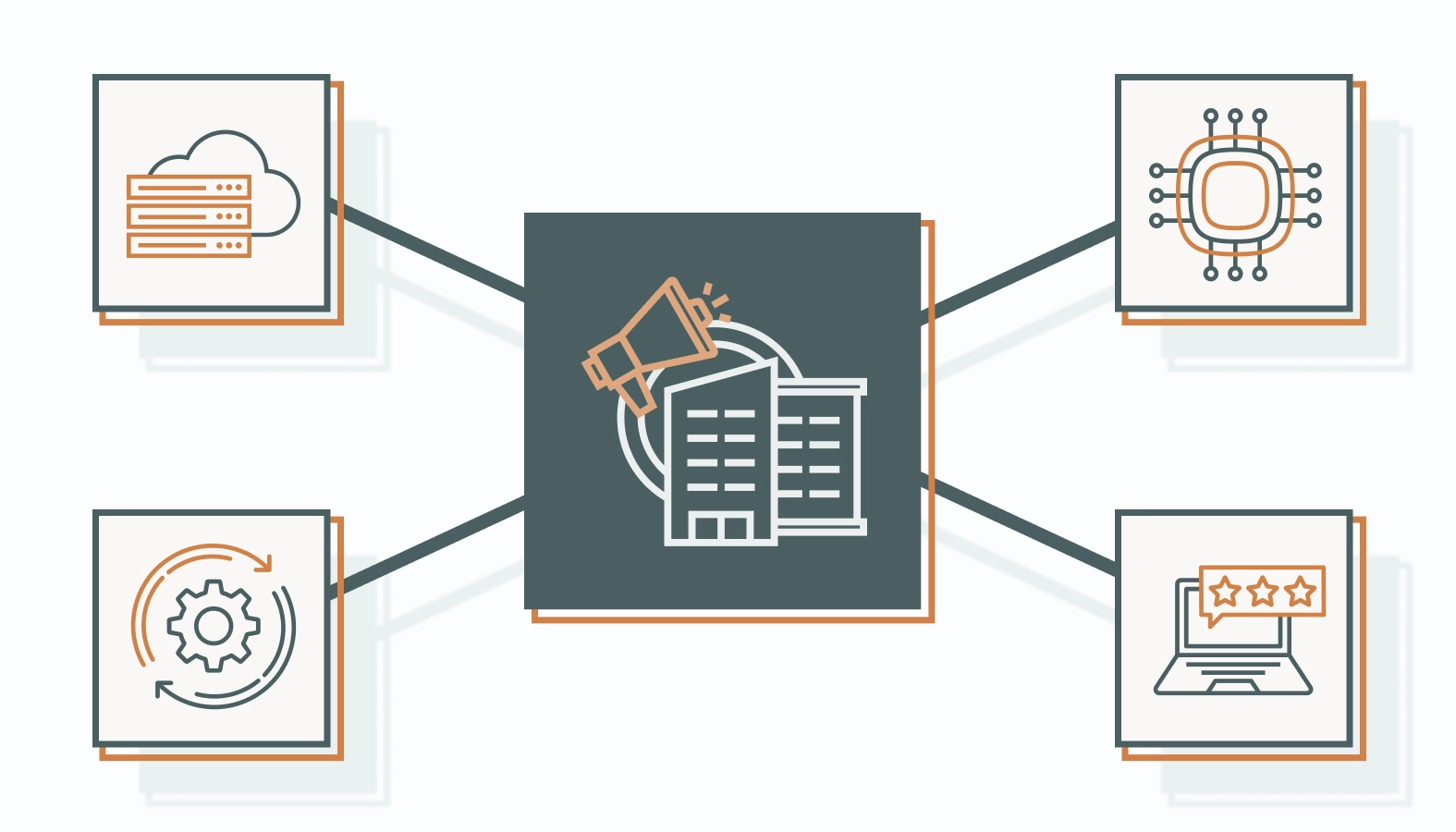
To fully harness the potential of Generative Marketing, a comprehensive strategy, often referred to as the “Generative Stack,” is essential.
This strategy transcends a simple subscription to a large language model (LLM) and involves several critical components:
Data Infrastructure
A strong data infrastructure acts as the foundational element of Generative Marketing.
A clear and unified Single Source of Truth, like a Customer Data Platform (CDP) or Customer Relationship Management (CRM) system, is essential.
These tools gather and organize accurate customer information and brand rules, giving the AI reliable, high-quality data to guide its decisions and outputs.
Generative Models
The quality of generative AI’s output depends directly on the quality of the data it receives.
Without detailed, rich internal data, its outputs can feel generic and lose their edge.
Using advanced generative models that can analyze and understand complex data sets produces unique and effective marketing content.
Orchestration Layer
Considered the middleware “brain” of the Generative Stack, the orchestration layer links data triggers to AI models.
It manages the execution of marketing tasks, making sure data analysis and content creation flow smoothly without needing human intervention.
Feedback & Optimization Loops
The final part of an effective Generative Marketing strategy is feedback and optimization loops.
These systems collect performance metrics, such as clicks, conversions, and engagement, and use this data to improve the AI’s output continuously.
This organization keeps the marketing strategy dynamic and effective, automatically adapting to new data and changing market conditions.
Generative Marketing Use Cases Across the Funnel

If Generative Marketing is the operating model, this is where it proves itself in the field. Across the entire funnel, it applies intelligence with precision strategically.
From first impression to long-term expansion, generative systems enable marketers to execute with speed while maintaining relevance at every stage of the customer journey.
Awareness Use Cases
At the top of the funnel, attention is currency. The objective is resonance at scale. Generative systems expand reach while maintaining alignment.
-
SEO Content Ideation and Outlines
AI analyzes SERP patterns, competitor coverage, and topic gaps to surface high-leverage opportunities. Teams get structured outlines built around intent clusters and authority positioning before a single draft is written.
-
Social Post and Campaign Concepts
Through intelligent “atomization,” a core insight or flagship asset can be transformed into channel-specific narratives. One strategic idea becomes a coordinated, multi-platform presence adapted to context, not copied and pasted.
-
Ad Creative Concepting (Angles, Hooks, Scripts)
AI explores multiple psychological angles, value propositions, and narrative hooks in parallel. Marketers shift from manually drafting variations to strategically selecting and refining the strongest concepts, accelerating creative decision-making without sacrificing quality.
At this stage, the advantage is strategic coverage, showing up in more relevant conversations, more often.
Consideration Use Cases
Once attention is captured, authority and trust take center stage. Generative systems help deepen engagement with precision-timed, context-aware, and educational assets.
-
Lead Magnets (Guides, Checklists, Templates)
Assets can be dynamically structured around specific entry points, keywords, or industry segments. Prospects receive resources aligned to their actual interest signals, increasing perceived value and qualification quality.
-
Nurture Email Sequences
Contextual nurturing uses behavioral data to shape follow-ups in sequence and tone. Messaging adapts based on interaction patterns, allowing each touchpoint to build logically on the previous one rather than repeating static messaging.
-
Webinar and Event Promotion Assets
Promotional ecosystems, such as landing copy, reminder sequences, teaser content, and speaker briefs, can be generated cohesively around a single positioning narrative. The result is tighter messaging continuity and stronger conversion momentum into the event itself.
The consideration phase becomes less about broadcasting information and more about engineering progressive conviction.
Conversion Use Cases
At the bottom of the funnel, friction is the enemy. Generative tools help align messaging tightly with intent and buyer context.
-
Landing Page Copy and Variant Generation
Dynamic landers align headlines, proof points, and value framing to the traffic source or search intent. Prospects encounter positioning that mirrors the exact promise that brought them there. This relevance can significantly boost conversion rates.
-
Sales Enablement
AI-assisted pitch materials and case narratives can reflect a prospect’s vertical, pain points, and priorities. Sales conversations become sharper, more relevant, and easier to advance because preparation is contextual, not templated.
-
Demand and Lead Generation Workflows
Conversational interfaces and automated qualification flows engage prospects in real time. They gather signal data, segment intelligently, and route opportunities efficiently to reduce delays between interest and action.
Conversion stops being a single moment and becomes a coordinated alignment of relevance, timing, and clarity.
Retention and Expansion Use Cases
Growth doesn’t end at the sale. In many cases, it starts there. Generative Marketing extends intelligence into the post-purchase experience to increase lifetime value and deepen relationships.
-
Lifecycle Email and In-app Personalization
Communication evolves based on product usage, milestones, and engagement patterns. Success summaries, onboarding reinforcement, and usage prompts are tailored to actual behavior, instead of generic timelines.
-
Customer Education Content
Documentation and training materials can be adapted to specific configurations, industries, or maturity levels. Customers receive guidance that matches how they actually use the product, improving adoption and reducing support friction.
-
Upsell/Cross-sell Messaging Variations
Behavioral signals trigger timely, relevant expansion offers framed as logical next steps. When recommendations reflect real usage patterns, they feel consultative rather than promotional, increasing acceptance and trust.
Retention becomes proactive rather than reactive, engineered around customer progression instead of periodic campaigns.
Content Creation and Creative Production (Core Use Cases)
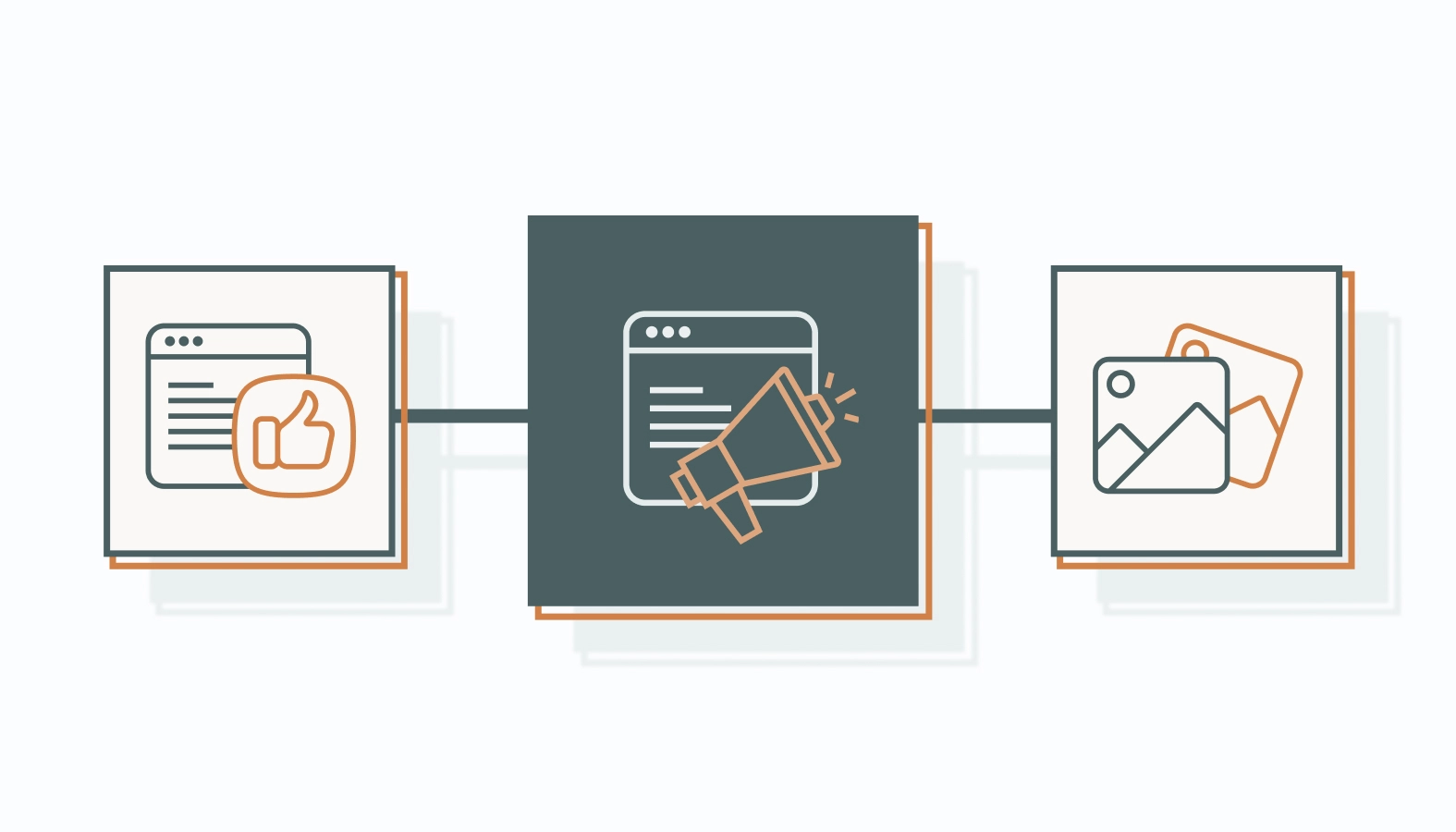
While Generative Marketing is the operating system, this is the application layer where strategy turns into tangible assets. The Creative Engine exists to maintain high brand standards while increasing output velocity by engineering the workflow.
Content Creation
At the center of this model is a deliberate division of labor. Humans operate as Strategic Editors, defining positioning, narrative direction, and brand standards. AI operates as the First-Draft Engine, translating that strategy into structured drafts across formats. The goal is not replacement, but leverage.
-
Blog Posts and SEO Pages
Generative systems can structure long-form content around topical authority and internal expertise. When grounded in proprietary insight, AI-assisted drafts become scalable without becoming generic. The advantage is consistency and depth across an expanding content library.
-
Email Copy (Subject Lines, Body, CTAs)
Email performance depends on nuance. AI allows teams to explore multiple angles before launch, varying tone, framing, and CTA structure while maintaining alignment with positioning and audience intent.
-
Ad Copy (Search and Social)
Different platforms demand different communication styles. AI can adapt a single positioning strategy across environments, preserving message integrity while adjusting format, cadence, and emphasis.
-
Scripts (Video, Podcasts, Webinars)
Script development becomes modular and adaptable. AI can draft structured outlines and segment-based talking points, reducing production lag while keeping messaging coherent, relatable, and effective across formats.
Creative Production
Production has historically been the constraint. Generative systems compress timelines without eroding brand control.
-
Image Generation and Iteration
With clear visual guidelines in place, AI can rapidly produce and refine concepts that align with brand identity. Creative direction remains human-led, while execution scales efficiently. This part ensures that all visual content remains true to the brand ethos, reinforcing brand recognition and trust.
-
Video Generation and Editing Support
AI can assist with script-to-visual translation, captioning, and formatting for distribution, enabling faster publishing cycles without expanding production resources. These capabilities allow for rapid content production and distribution, particularly on social media platforms where video content has a significant impact.
-
Creative Versioning at Scale
A single master creative can evolve into multiple context-specific executions by geography, language, or audience segment, preserving consistency while expanding reach.
Through these core use cases, Generative Marketing streamlines the creative process and enhances its effectiveness, allowing brands to deliver high-quality, personalized content.
Benefits of Generative Marketing
Generative Marketing doesn’t produce more content for the sake of volume. It upgrades marketing’s role inside the business.
When properly architected, it shifts marketing from a reactive execution unit into a strategic growth function, one that compounds intelligence, speed, and performance over time.
Here’s what that actually looks like in practice.
1) Saves Time and Resources to Improve ROI
Efficiency is the obvious win. Leverage is the real one.
Generative systems reduce manual production cycles, compress execution timelines, and remove repetitive coordination layers. But the bigger advantage is capital reallocation.
Instead of funding friction, companies can fund advantage.
- Reduce production drag across content and campaigns
- Shorten launch timelines from weeks to days, sometimes hours
- Reallocate budget toward experimentation, creative strategy, and new channel testing
- Increase output without linear headcount growth
The ROI impact compounds because:
- Faster iteration uncovers winners sooner
- Underperforming angles are eliminated earlier
- Budget flows toward validated performance
This edge produces stronger outcomes with smarter allocation.
2) Boosts Marketing Strategy and Outcomes
Most marketing strategies fail quietly, not because teams lack ideas, but because they lack feedback density.
By running structured testing at scale and analyzing performance patterns across variables, leadership gains clarity on what actually drives behavior.
- Identify message-market fit with greater precision
- Detect micro-patterns in engagement across segments
- Refine positioning based on real response data
- Shift strategy from quarterly recalibration to continuous refinement
Teams make decisions grounded in performance intelligence. Strategy stops being static documentation. It becomes adaptive infrastructure.
3) Fosters Customer Loyalty and Better Experiences
Personalization is not new. Contextual intelligence at scale is.
Generative systems allow brands to respond to customer behavior dynamically while adjusting messaging, timing, and framing based on actual interaction signals.
The impact shows up in experience quality:
- Messaging reflects real interests, not assumed personas
- Interactions feel timely rather than automated
- Communication evolves alongside the customer journey
When customers feel understood, engagement deepens. When engagement deepens, retention improves. When retention improves, growth stabilizes.
Loyalty is no longer driven by frequency alone. It’s driven by relevance, where generative systems outperform manual marketing models.
Through these benefits, Generative Marketing enhances the efficiency of marketing operations and contributes to broader business objectives, reinforcing marketing’s role as a critical driver of organizational success.
Best Practices for Implementing Generative Marketing

Power is impressive. Controlled power wins markets.
At the enterprise level, Generative Marketing is more than about capability. It’s about control, accountability, and durability. The goal is to move fast with structure.
The following best practices ensure generative systems operate safely, legally, and strategically without compromising brand integrity or long-term trust.
1) Risk Mitigation
AI scales output. Risk scales with it unless engineered properly.
Organizations must treat data protection and intellectual property as foundational constraints.
- Enforce strict data governance policies aligned with regulations such as GDPR and CCPA
- Limit model access to sensitive customer and proprietary data through role-based controls
- Maintain documented data lineage so inputs and outputs are traceable
- Deploy plagiarism and similarity detection systems to validate originality before publication
Beyond compliance, companies should implement internal audit mechanisms that:
- Regularly test model outputs for unintended data leakage
- Flag hallucinated claims or unsupported statements
- Monitor for edge-case behaviors under unusual prompts
Speed is an advantage. Legal exposure is not. Smart organizations build guardrails before scaling output.
2) Governance, Review, and Approval Workflows
Autonomy does not mean absence of oversight.
Generative systems require structured governance frameworks that clearly define who owns what, who reviews what, and when human intervention is required.
A strong Human-in-the-Loop structure should include:
- Tiered review levels based on content sensitivity and business impact
- Defined escalation protocols for ambiguous or high-risk outputs
- Clear accountability for final approvals across departments
Governance should be designed as an intelligent filter, lightweight where risk is low, rigorous where exposure is high.
The objective is alignment:
- Brand positioning remains consistent
- Messaging reflects strategic priorities
- Public-facing content meets regulatory and reputational standards
Discipline creates freedom. With the right structure in place, teams can scale confidently instead of cautiously.
3) Quality Control and Brand Quadrails
If AI is producing at scale, brand inconsistency can also scale. Quality control must move beyond manual proofreading into system-level safeguards.
Organizations should implement:
- Structured prompt libraries aligned with brand voice and positioning
- “Negative prompts” that explicitly restrict prohibited tones, claims, or topics
- Model grounding techniques that anchor outputs in verified internal knowledge bases
- Automated validation checks for factual accuracy and formatting consistency
Brand quadrails should define:
- Approved vocabulary and positioning language
- Non-negotiable claims and disclaimers
- Visual and tonal boundaries across channels
This assurance ensures outputs are strategically aligned. When properly engineered, the system doesn’t merely generate content. It generates on-brand assets by design.
4) Ethical Use and Transparency Guidelines
Trust compounds slowly and evaporates quickly.
Organizations deploying Generative Marketing must establish clear ethical standards that govern how AI is used, disclosed, and monitored.
- Clearly define where and how AI contributes to content creation
- Maintain transparency in customer-facing environments when AI plays a material role
- Conduct periodic bias and inclusivity audits on model outputs
- Establish internal review committees for high-impact or sensitive use cases
Ethical implementation also requires leadership alignment. Executives should articulate:
- What AI will be used for
- What it will not be used for
- How accountability is enforced across teams
Responsible deployment is not a PR exercise. It is an operational discipline.
Adopting these best practices allows organizations to scale Generative Marketing without sacrificing trust, compliance, or brand equity.
Why Generative Marketing Is Reshaping Modern Growth

Generative Marketing becomes a strategic revolution, more than just a new tool. Companies that harness their power reshape how growth happens, building a competitive moat powered by speed, scale, and precision.
In highly competitive markets, these capabilities are necessary to obtain.
Speed-to-Market as a Competitive Advantage
Campaign timelines can now be compressed like a turbocharged engine. What once took weeks to plan, create, and launch can happen in minutes, letting businesses respond instantly to market shifts, consumer behavior, and competitor moves.
Key advantages include:
- Rapid deployment of campaigns and content in near real-time
- Immediate adaptation to trends and audience feedback
- Maintaining a first-mover advantage in competitive landscapes
Hyper-Personalization at Scale
Generic messaging is dead. Generative Marketing moves from segmented targeting to true individualized marketing, where each customer experience is tailored dynamically:
- AI crafts unique narratives for every prospect, ensuring relevance and resonance
- Personalization happens automatically without inflating time or costs
- Higher engagement, satisfaction, and brand loyalty are achieved through contextually smart interactions
Cost Efficiency & Operational Leverage
Scaling marketing used to mean scaling headcount. Now, AI-powered generative systems let you increase output without adding extras, improving efficiency, and lowering costs:
- Exponentially increase content volume without increasing staff
- Reallocate human resources to strategy, creativity, and oversight
- Accelerate growth while minimizing cost constraints and resource limitations
Performance Marketing Acceleration
Generative Marketing optimizes content faster than any human team could. AI enables rapid testing and iteration, delivering high-performing campaigns at speed:
- Automated A/B and multivariate testing of creative variations
- Identification of top-performing messaging and creative almost instantly
- Reduced customer acquisition costs (CAC) and improved ROI
- Strategic allocation of resources to scale successful campaigns and explore new opportunities
The Future of Autonomous Growth
The organizations that succeed with generative marketing will not be the ones producing the most content. They will be the ones building the most coherent systems.
Throughout this shift, the differentiator is the operational design. Infrastructure, governance, measurement discipline, and strategic clarity determine whether AI amplifies noise or compounds performance.
Generative marketing is an architectural decision about how marketing functions inside the business. When properly structured, it aligns data, decision-making, execution, and oversight into a coordinated growth environment that improves with use.
You have to treat generative capability as enterprise infrastructure rather than experimentation. Build it with intent. Assign ownership clearly. Measure what matters. Design for durability.
Sustainable advantage comes not from early adoption but from disciplined construction.
Build the System, Not Just the Stack
Adopting generative marketing requires more than selecting tools. It requires aligning leadership, operations, data, and governance around a clear growth architecture.
If your organization is exploring how to move from isolated AI initiatives to a structured, scalable operating model, the next step is clarity. Schedule a candid conversation with one of our experts, » and design for scale, build with discipline, and lead with structure.