Agencies tend to reduce customer acquisition costs by throwing more money at the problem and building bloated budgets to outspend competitors 100 to 1. However, almost none of the spend is actually working efficiently or producing a measurable return. Leaders then assume the only alternative is hitting the brakes on growth entirely, since cutting spend feels like cutting results. That assumption keeps smart teams stuck choosing between two bad options.
Blindly slashing budgets fails just as often as blindly increasing them, since neither diagnoses where the money is actually going and why it isn’t working as hard as it should. Lowering CAC sustainably requires an integrity-driven, data-first customer acquisition strategy that eliminates operational waste instead of eliminating the channels that work.
The Truth About How to Reduce Customer Acquisition Cost
Most teams are optimizing against a number that was wrong from the start, and every decision built on top of it compounds that error further each passing quarter.
How to reduce customer acquisition cost accurately starts with actually calculating it correctly, which most teams don’t do. CAC isn’t just ad spend divided by new customers. Userpilot’s breakdown of common CAC mistakes confirms that a complete calculation has to include salaries, tools, agency fees, and advertising costs, and excluding any of them produces a significantly low and misleading number. A team that only counts media spend is working from a flattering but wrong number, and every strategic decision built on it inherits the same mistake.
A low CAC number is also meaningless. It has to be measured against customer lifetime value. A business that spends very little to acquire a customer who churns in two months hasn’t actually solved anything; it’s just moved the same problem further down the calendar where it’s harder to trace back to its original cause. The real number that matters is the ratio between the two, not either figure in isolation.
Three Pillars for Lean, High-Growth Acquisition
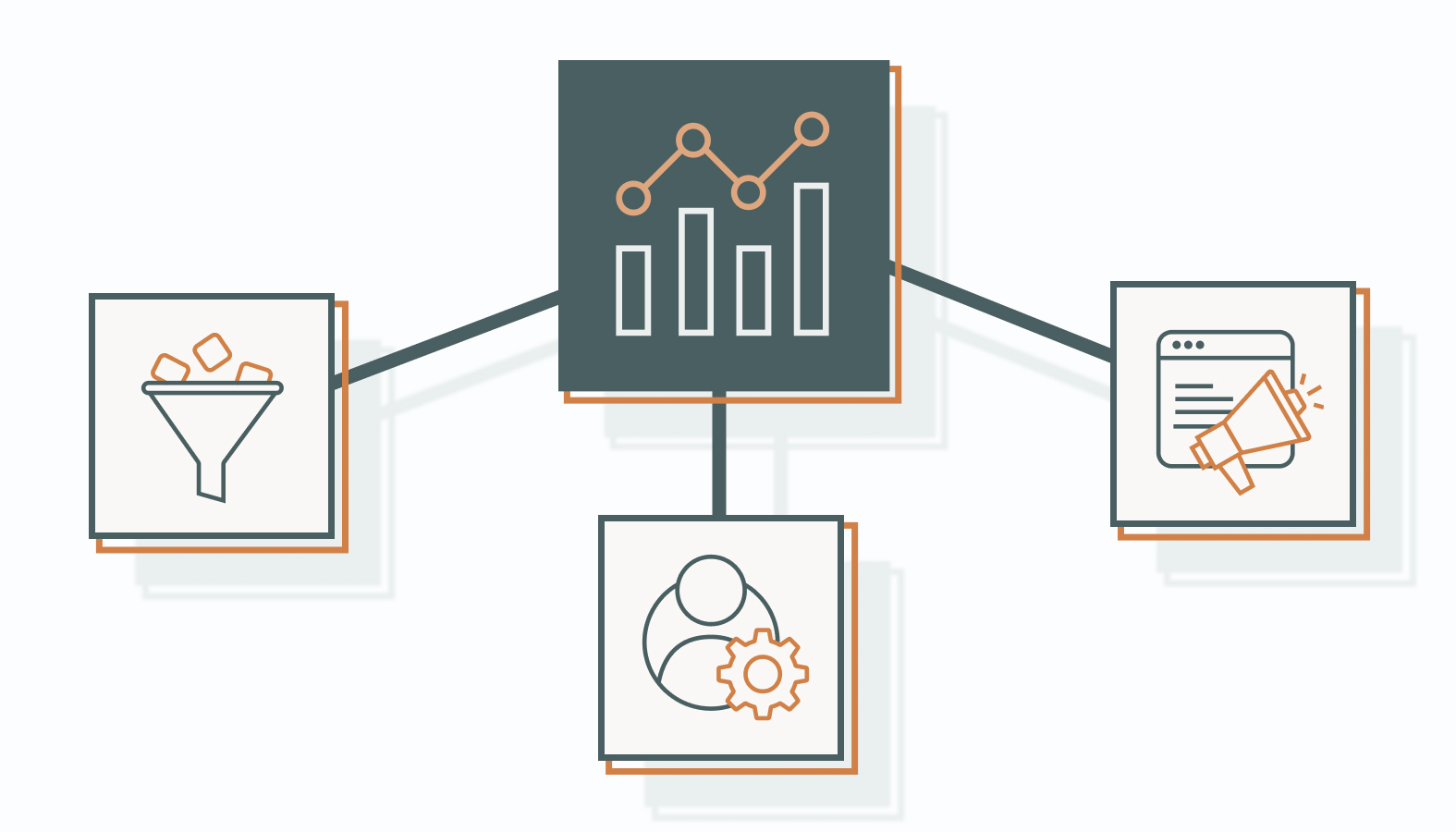
Real CAC reduction comes from fixing three specific areas, not an across-the-board budget cut that treats every channel and team the same, regardless of which ones are pulling their weight.
Pillar 1: Tighten Your Funnel via RevOps and Automation
Most CAC waste doesn’t come from a bad channel. It comes from a good channel feeding a broken internal process, invisible because the ad platform still reports a reasonable cost per click, until someone traces a lead through to a closed deal and finds the numbers don’t line up.
The gap between sales and marketing teams is where a lot of the acquisition budget quietly disappears. Mismatched data between the two means marketing generates a lead that sales can’t act on, or sales closes a deal that never gets attributed back to the campaign that generated it. Either way, that’s real spend with no clean record of its return, and no way to know which channel deserves more budget next quarter versus which one just looks busy on a dashboard.
Lifecycle marketing and email automation nurture leads you already have for a fraction of what it costs to buy new cold traffic. Research from DemandGen, cited by HubSpot’s blog, found that effective lead nurturing generates 50% more sales-ready leads at a 33% lower cost. In practice, that gap widens further against businesses that skip nurturing altogether.
Pillar 2: Build a Sustainable Customer Acquisition Strategy
A channel that requires constant new spending to maintain the same result isn’t a strategy. It’s a subscription, and most teams don’t realize they’re paying it until the budget gets tight and leadership starts asking hard questions about why growth stalls when spending pauses.
Paid ads stop producing the moment you stop paying for them. That’s the paid ad trap, and it’s why a strategy built entirely on paid media never gets cheaper over time. It just keeps costing the same amount indefinitely, with no equity building up underneath it.
Evergreen content marketing works differently. It keeps generating traffic long after the initial investment, provided it’s built around hyper-specific, high-intent long-tail keywords aligned with your actual ideal customer profile. A long-tail keyword with real buyer intent converts at a much higher rate than a broad, generic term, even at a fraction of the search volume, since the person searching it already knows roughly what they need.
Pillar 3: Ruthlessly Optimize Paid Media Using Pure Data
Every remaining dollar of paid spend has to earn its place, checked against actual performance, not assumptions based on last year’s results or a competitor’s public playbook.
Data has to be the deciding factor here, not instinct or a channel someone likes working with. If a network isn’t performing, cut it immediately rather than giving it another quarter to prove itself on hope alone, since that quarter is a real budget that could have gone somewhere already proven to work.
The shift from broad targeting to predictive segmentation matters just as much as which channels you keep. Instead of targeting a general audience, focus your ad spend on high-value lookalikes, segments that actually resemble your best existing customers, not just anyone who might click. A smaller, sharper audience converts at a rate a broad one never will, even at a fraction of the reach. That’s the tradeoff a data-first team should be making by default.
What NOT to Do When Lowering Acquisition Costs
Cutting the wrong thing costs more than not cutting anything at all. Both mistakes below feel like smart efficiency moves in the moment, which is why they’re so easy to fall into under pressure.
Two specific mistakes turn a CAC reduction effort into a bigger problem than the one it was supposed to solve:
- The customer experience trap. Cutting onboarding or retention tools to save a small amount today looks like progress on a spreadsheet, until churn spikes and wrecks your margins for the next several quarters. A dollar saved on onboarding often costs several dollars in lost lifetime value later, and by the time that shows up, the team that made the cut has usually moved on, leaving someone else to explain the retention drop.
- The brand devaluation trap. Slashing creative and brand-building budgets to hit a short-term efficiency number destroys the top of your funnel next quarter and beyond, since fewer people ever hear of you at all. You can’t optimize your way out of a funnel with nothing coming into it, no matter how efficient the bottom becomes. Rebuilding brand awareness later almost always costs more than maintaining it would have.
Frequently Asked Questions
1) What is a good LTV-to-CAC ratio for a growing business?
According to Shopify, SaaS businesses should aim for an LTV:CAC ratio of at least 3:1, while a ratio of 2:1 or lower signals a business is close to break-even. A “good” ratio is an illusion if churn is high or real overhead, agency retainers, internal tools, isn’t included in the CAC calculation, since that hidden cost inflates the ratio until growth stalls for reasons nobody can immediately explain.
2) Can you reduce CAC without cutting your marketing budget?
Yes. Efficient growth means trimming the fat, not the muscle underneath it. Divert capital away from underperforming paid channels and reinvest those exact dollars into high-equity assets like funnel automation and high-intent SEO, so the same budget works twice as hard instead of shrinking or disappearing into a channel that was never converting well to begin with.
3) How long does it take to see a reduction in CAC?
Expect two distinct timelines, so leadership doesn’t lose patience before the slower gains materialize. Immediate wins, 30 to 60 days, come from auditing paid ad spend, fixing leaky funnel automation, and aligning sales and marketing data. Long-term, compounding returns, 4 to 6 months, come from SEO infrastructure, content marketing, and real brand equity that keeps paying off well after the initial work is done.
Scale Smart, Not Loud
Efficient growth was never about spending less. It’s about forcing every dollar you already spend to work hard enough to bring back two, instead of one dollar barely breaking even while another gets wasted on the wrong channel. The teams that get this right are the ones who actually know where every dollar of the budget they already have is going, and who make decisions based on that knowledge instead of habit.
Tired of marketing promises that write checks your data can’t cash? Schedule a candid conversation with one of our experts to audit your current marketing efficiency, no pressure, just a clear, honest read on where your budget is going and what it’s actually returning.