


Modern growth requires more than just traffic spikes or isolated ad wins. A successful full-funnel marketing strategy demands a complete view of every interaction, ensuring no prospect disappears between the initial click and the final handshake.
When messaging remains disconnected, companies risk losing high-value leads to competitors who offer a more cohesive experience.
This guide explores the mechanics of a unified customer path. It examines the shift from isolated tactics to a synchronized system that captures attention, builds trust, and drives long-term advocacy. Along the way, you’ll see how experienced teams audit their current framework and identify exactly where their revenue engine needs an upgrade.
Connecting the Dots in Your Funnel
Full-funnel marketing looks at the entire customer journey, showing how each stage connects.
Today’s buyers research, pause, compare, and revisit decisions, so single-stage strategies often miss opportunities. Mapping every step from first awareness to post-purchase engagement reveals gaps and helps marketing and sales work together.
This bigger-picture approach makes every campaign and message more effective, capturing value that might otherwise slip away.
Master the Full-Funnel Approach
Chasing short-term wins is a strategic error. A full-funnel marketing strategy reflects the reality of modern buying: a non-linear process of research and comparison that occurs long before the first sales interaction.
Traditional marketing bets on isolated stages, but a coordinated approach ensures no opportunities get lost in the gaps.
Direct engagement across the entire path is required because buyers need middle-funnel context to justify a bottom-funnel “yes.” When your messaging remains consistent across the journey, you aren’t just selling a product. You’re providing the only logical solution to a documented problem.
The Evolution: Pipes vs. Flywheels
The traditional leaky pipe model, where marketing stops once the check clears, is inefficient.
The flywheel model treats customers as fuel rather than an output, turning satisfaction into a growth driver.
- Efficiency: Delighted customers lower acquisition costs by handling the heavy lifting via referrals.
- Compounding Momentum: Every retained client feeds the next round of awareness, keeping the growth engine spinning without restarting from zero.
Bridging the Gap: The Revenue Team
When marketing qualifies leads that sales considers low-value, you have a hardware conflict.
Silos kill momentum and create a disjointed customer experience.
Successful alignment requires a “Revenue Team” mindset where both departments operate from a single source of truth.
- Unified Data: Integrated systems eliminate finger-pointing by providing a shared history of every customer interaction.
- Shared KPIs: Alignment occurs when teams are measured by revenue outcomes rather than vanity metrics like “likes” or “lead volume.”
- Precision Handoffs: Removing friction during the transition from “prospect” to “buyer” prevents lead abandonment.
When data flows freely between teams, the funnel stops being a series of guesses and starts functioning as a precision-engineered machine.
Unlock the Value of a Full-Funnel Strategy
Adopting a full-funnel strategy increases the success of your results.
Single-stage tactics are isolated gambles. A coordinated funnel ties every digital touchpoint back to business growth, paying dividends from the first impression to long-term advocacy.
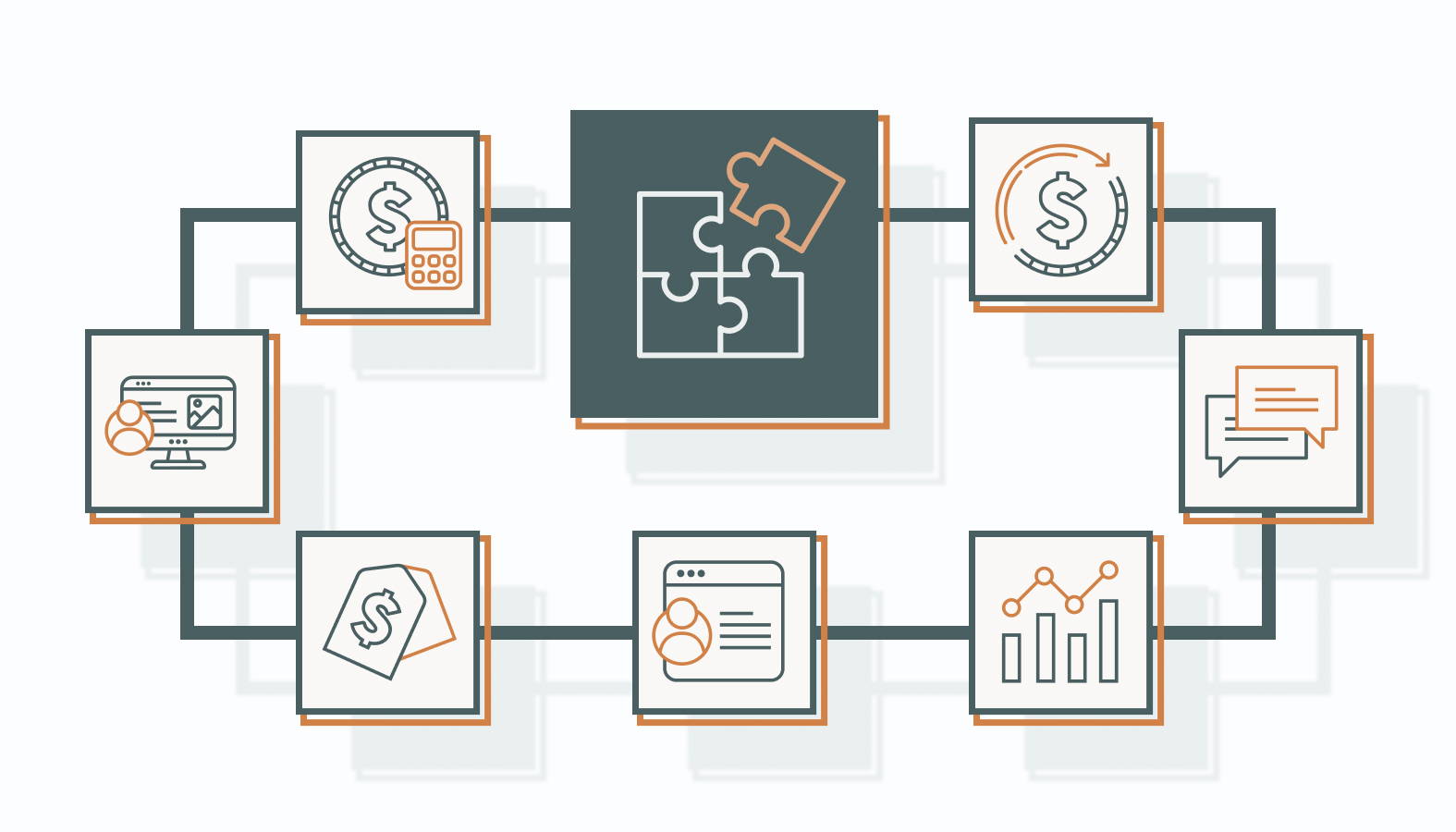
Attract High-Intent Prospects
Top-of-funnel (TOFU) success requires a synchronized effort across bold content, targeted ads, and aggressive SEO.
- The Drift Blueprint: Their “No Forms” campaign bypassed industry friction by using provocative thought leadership.
- The Result: Drift reported a ~150% increase in conversions from site visitors to booked meetings after implementing this conversational approach.
Deepen Consideration and Nurturing
Middle-funnel (MOFU) prospects are actively poking holes in your offer.
Nurturing is the only way to maintain momentum while they evaluate competitors.
- Segmented Messaging: Tailor content to specific user interests rather than sending generic blasts.
- Smart Automation: Deploy email drip campaigns and retargeting ads that trigger based on user behavior.
- Low-Barrier Entry: Use live demos or free trials to provide a test drive of your solution.
Drive High-Velocity Conversions
Bottom-of-funnel (BOFU) tactics focus on closing the gap between interest and action. Friction is the enemy here.
- Strategic Social Proof: Deploy case studies and testimonials at the exact moment of decision.
- Conversion Optimization: Streamline the checkout process and use personalized, time-sensitive incentives.
- Efficiency Gains: According to Salesforce, strong nurturing produces 50% more sales-ready leads at a 33% lower cost.
Build Customer Loyalty and Advocacy
The sale is the beginning instead of being the finish line. Post-purchase engagement turns customers into a self-sustaining referral engine.
- The Dropbox Method: Their double-sided referral program fueled a viral loop by rewarding both the user and their friend with free storage. This strategy triggered a permanent 60% increase in sign-ups and grew their user base from 100,000 to 4,000,000 in just 15 months, all with zero ad spend.
- Retention Tactics: Implement proactive onboarding and exclusive community events to increase lifetime value (LTV). These efforts don’t just keep customers around longer; they strengthen customer loyalty and advocacy, turning satisfied users into active promoters of your brand.
Optimize Spend and Performance
A full-funnel view allows you to audit which channels work effectively and which are just noise.
- Closed-Loop Reporting: Connect marketing spend directly to revenue outcomes to identify your highest ROI channels.
- Problem Identification: Regularly audit the funnel to find where leads are dropping off, and shift budget accordingly.
Enhance Insights Through Personalization
Personalization is a performance driver. Leverage behavioral data to make every interaction feel resonant.
- Advanced Tech Stacks: Use CRM and AI-driven platforms to build rich profiles and recommend content based on past actions.
- Iterative Feedback: Run surveys to refine your approach based on actual customer sentiment.
Achieve Total Revenue Alignment
When sales and marketing operate as a unified front, growth is predictable. HubSpot data shows that aligned teams see 36% higher customer retention and 38% higher sales win rates.
- Joint Strategy: Hold regular planning sessions and establish shared KPIs focused on lead quality over volume.
- Collaborative Tools: Use integrated platforms and shared dashboards to ensure no lead falls through a data silo.
A full-funnel approach is more comprehensive, effective, efficient, and more profitable. Given today’s hyper-competitive landscape, it’s the kind of edge every brand needs.
The Three Pillars: TOFU, MOFU, and BOFU
Mastering the funnel requires precision at every stage. We categorize these into TOFU (Top of Funnel), MOFU (Middle of Funnel), and BOFU (Bottom of Funnel).
Each pillar serves a distinct mechanical purpose in moving a prospect from just browsing to a high-value brand advocate.
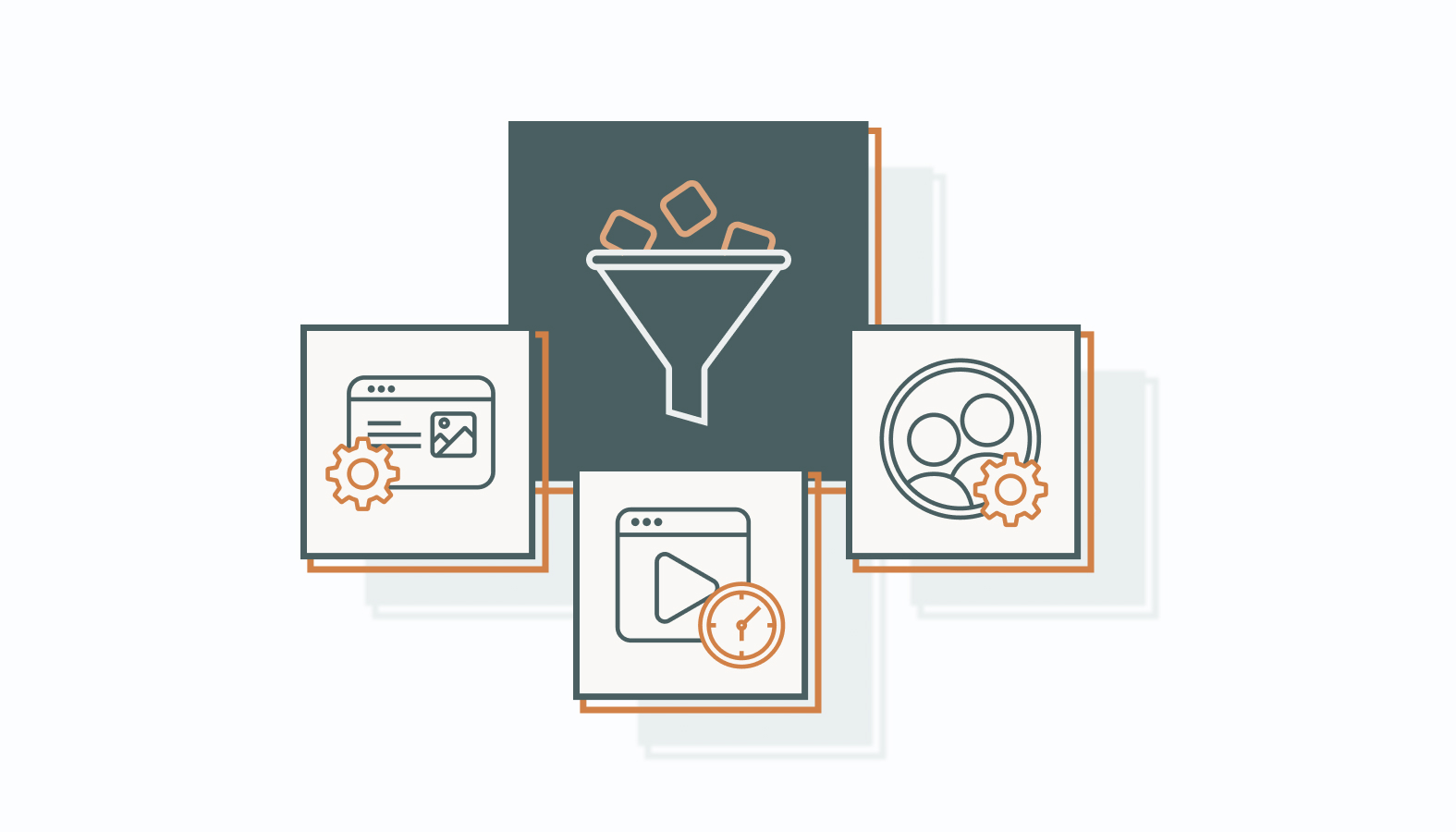
1) Capture Attention at the Awareness Stage (TOFU)
At the top, your goal is pure visibility. You aren’t making a hard sell, but instead, introducing your brand as the solution to a specific problem.
- Content Marketing: Deploy blog posts, guides, and videos that address pain points.
- Social Media: Use LinkedIn or Instagram to spark conversations and establish thought leadership.
- SEO & Paid Ads: Optimize for high-intent search terms to ensure you’re found the moment a prospect starts looking for answers.
Direct Messaging Tip: Focus on education and inspiration. You want the prospect to ask for more information, not feel pressured to buy immediately.
2) Guide Leads Through Consideration (MOFU)
The middle is where you build trust. Prospects are now evaluating their options, and your job is to demonstrate undeniable value.
- Proof of Concept: Use case studies and testimonials to show real-world results.
- Interactive Engagement: Offer webinars, live demos, and ROI calculators to help leads self-assess their needs.
- Targeted Nurturing: Deploy segmented email sequences that keep your brand top-of-mind by answering specific technical or business doubts.
Effective Content: Comparison guides, product explainer videos, and industry whitepapers are the high-performers here.
3) Convert Prospects into Loyal Customers (BOFU)
The bottom is the moment of truth. Focus on facilitating the purchase by removing every ounce of friction.
- Frictionless Conversion: Streamline landing pages and offer clear, direct CTAs.
- Incentivize Action: Use personalized offers, free trials, or consultations to lower the barrier to entry.
- Real-Time Support: Deploy live chat to resolve last-minute objections instantly.
Post-Purchase Momentum: The transition doesn’t stop at the sale. Immediate follow-up via onboarding series or personal check-ins ensures the relationship is built on satisfaction from day one. It’s how you transform a single transaction into a long-term partnership.
How to Build a Winning Full-Funnel Marketing Plan
Success in full-funnel marketing needs strategic planning. A high-performance plan leverages deep audience insights, precise content, and automation to scale engagement without losing the human touch.
Establish the Foundation: Audience Intelligence
Before launching a single campaign, identify exactly who you are talking to and what triggers their buying intent.
Research is the non-negotiable first step to ensure your messaging hits the mark.
Define Your Ideal Customer Profile (ICP)
Your ICP is the foundation of the entire operation. Analyze your highest-value customers, those with the highest LTV and referral rates, to identify patterns.
- Data Mining: Scour CRM and support data for common pain points.
- Direct Feedback: Interview top clients to uncover the specific motivations that led them to choose you.
- Market Validation: Use third-party reports and similar audience testing to verify your messaging resonates before scaling spend.
Map the Buyer’s Journey
Visualize the path from first contact to post-purchase advocacy. Pinpoint the specific questions and emotional friction points at every stage to identify exactly where prospects drop off.
- Top-Tier Touchpoints: Track initial brand interactions across ads, search, and referrals.
- Conversion Triggers: Monitor website behavior, whitepaper downloads, and demo requests.
- Post-Sale Path: Document the onboarding and support experience to ensure long-term retention.
Together, these insights help you build a clearer view of the buyer’s journey and identify where to improve engagement and conversion.
Construct the Content Structure
Content drives the progression through your funnel. To be effective, every asset must be made to meet a specific buyer need, instead of just filling a publishing calendar.
Deploy High-Utility Lead Magnets
A successful lead magnet provides immediate, tangible value that your ICP cannot ignore.
- Actionable Assets: Focus on checklists, ROI calculators, and exclusive industry research.
- Low Friction: Use simple, optimized forms to ensure the exchange of contact info is smooth.
Optimize Landing Pages for Maximum Impact
Your landing pages must be focused on a single objective. It is to eliminate distractions and prioritize trust-building elements.
- Core Tactics: Use benefit-driven copy, compelling headlines, and prominent social proof.
- Continuous Refinement: A/B test layouts and CTAs to iterate based on hard conversion data.
Scale with Intelligent Automation
Manual follow-up creates a delay that limits your growth. Marketing automation ensures the right message reaches the right lead at the moment of impact.
Execute Smart Workflows
Design email sequences triggered by specific user actions like attending a webinar or downloading a guide to maintain momentum.
- Engagement Drivers: Personalize subject lines and leverage behavioral triggers for higher open rates.
- Balanced Mix: Interleave educational value with direct offers to avoid “inbox fatigue.”
Re-Engage Stalled Prospects with Targeted Campaigns
A lead that doesn’t buy immediately isn’t a lost cause. Some just require a different frequency.
- Strategic Retargeting: Serve tailored ads to past visitors to remind them of the value you provide.
- Reactivation Sequences: Use exclusive incentives or “we miss you” offers to pull dormant leads back into the active funnel.
Following this guide means you’re filling a pipeline and building a sustainable growth engine.
Optimize for Peak Performance
Once the foundation is set, the focus shifts to optimization. Not moving is the fastest way to fall behind.
Advanced strategies transform a standard setup into a high-performance engine, increasing conversion rates, extending lifetime value, and scaling growth beyond competitor reach.
AI and Automation
Artificial intelligence enables lean teams to deliver personalized, high-velocity experiences at a scale that manual processes cannot match.
- Instant Engagement: Use chatbots to qualify leads and book meetings 24/7.
- Predictive Insights: Identify high-intent leads to prioritize outreach and resource allocation.
- Dynamic Personalization: Automatically adjust website content and email offers based on individual visitor behavior.
- Autonomous Workflows: Trigger lead scoring and nurturing sequences in real-time without manual intervention.
Omnichannel and Cross-Device Integration
Buyers expect a smooth transition between mobile browsing, social interaction, and desktop research. An omnichannel approach captures conversions that fragmented strategies lose.
- Unified Messaging: Maintain a consistent brand voice and offer across every platform and interaction.
- Cross-Device Tracking: Follow the customer journey from smartphone to desktop to prevent data gaps.
- Integrated Platforms: Connect your CRM and analytics into one central place for all customer data.
The Post-Purchase “Hidden” Funnel
The sale is not yet the finish line. Professional marketing focuses on post-purchase stages to maximize customer lifetime value and turn buyers into active advocates.
- Precision Onboarding: Use targeted sequences to ensure new customers realize value immediately.
- Expansion Revenue: Deploy upselling and cross-selling campaigns based on purchase history.
- Retention Logic: Use exclusive offers and proactive support to eliminate churn.
- Advocacy Loops: Incentivize satisfied customers to drive growth through referrals.
Optimizing every stage, including the post-purchase experience, ensures you extract maximum value from every acquisition. The brands that lead are those that continuously test, refine, and upgrade their technology.
Things to Do to Avoid Common Mistakes
Even the best strategies fail due to poor execution. In the rush to cover the entire journey, it is easy to overcomplicate the process or leave teams working in isolation.
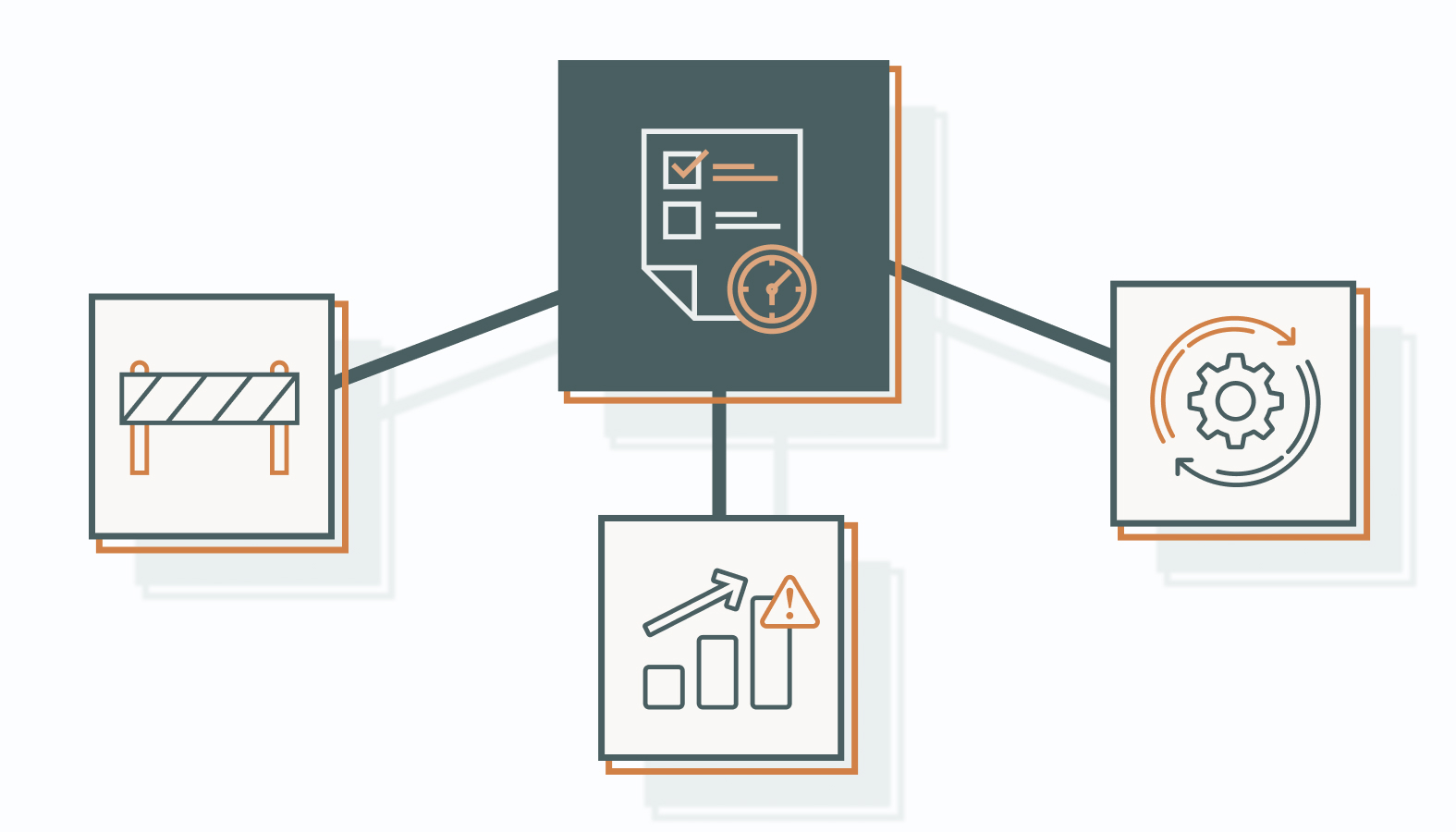
Do these things to keep your revenue engine running at peak efficiency:
1) Eliminate Unnecessary Complexity
Complexity hinders real execution. Adding too many stages, channels, or manual handoffs confuses your team and creates friction for your prospects.
- Audit Every Step: Identify if a stage is necessary for moving leads forward. If it doesn’t add value, remove it.
- Focus on High-Impact Channels: Ditch the noise. Double down on the platforms that deliver documented results.
- Streamline Workflows: Use automation to handle repetitive tasks while keeping the core buyer journey easy to navigate.
2) Capitalize on Post-Purchase Opportunities
Stopping at the sale is a high-cost mistake. Neglecting customers after they buy results in missed upsells, high churn, and wasted referral potential.
- Immediate Value: Deploy automated thank-you notes and onboarding sequences to ensure the customer sees results instantly.
- Proactive Engagement: Use satisfaction surveys and loyalty programs to keep the brand relevant.
- Advocacy Triggers: Ask for reviews and referrals at peak satisfaction moments to turn buyers into brand champions.
3) Unify Your Data and Departments
A full-funnel strategy fails when marketing and sales operate in silos. Disconnected systems lead to mixed messaging and lost opportunities.
- Centralized Data: Use integrated CRM and automation platforms so every team member sees the same customer history.
- Strategic Alignment: Hold regular cross-functional meetings to review performance and coordinate the next move.
- Unified KPIs: Measure success by revenue and lead quality rather than vanity metrics like “likes” or “clicks.”
Efficiency comes from simplicity, constant engagement, and total team alignment. Keep the system lean, never stop at the sale, and ensure your data flows freely.
Command the Complete Journey
The shift from isolated tactics to a precision-engineered funnel is what separates market leaders from everyone else.
Synchronizing audience insights, content structure, and automated workflows reduces the friction that causes revenue to stall. Fix the data silos, automate the repetitive follow-ups, and never treat the initial sale as the finish line.
Optimization never stops. A high-performance funnel is a system you refine with every new insight and technological edge.
Audiences evolve, and your strategies must do the same. If you maintain this level of strategic rigor across every interaction, you aren’t just reacting to the market. You’re commanding it.
Ready to Upgrade Your Growth Engine?
You have the framework to transform your marketing into a high-velocity revenue machine. Whether you need to audit your current system for hidden leaks or you’re ready to deploy a full-scale AI-driven structure, the next move is yours.
We skip the high-pressure pitches to focus on what actually works for your specific business goals.
Schedule a candid conversation with one of our experts, and let’s turn your marketing funnel into a dominant competitive advantage.