



Marketers used to get by with surface-level data, but that era is long gone. With rising customer expectations and tighter budgets, teams need advanced analytics in marketing to understand patterns, predict behavior, and guide decisions that actually make sense.
The challenge? Many brands still rely on incomplete data or outdated methods, which leads to guesses dressed up as strategy.
This article will help you bridge that gap by showing you how modern analytics works, which skills matter most, and how to apply proven techniques without getting overwhelmed.
Level Up Your Marketing Analytics Skills
Today’s marketers don’t just look at dashboards; they decode them. The brands pulling ahead turn data into momentum, spot opportunities before the competition, and fire off campaigns with precision instead of hope.
Advanced analytics is your engine room for that kind of performance. It cuts through clutter, sharpens your targeting, and gives you a clearer view of what actually moves the needle.
Why Advanced Analytics Matters in Modern Marketing
The real advantage of advanced analytics isn’t bigger datasets; it’s clarity.
With the right techniques, marketers can uncover hidden patterns, anticipate customer moves, and fine-tune campaigns long before results start rolling in.
The payoff? Smarter investments, better-timed messaging, and customer experiences that feel intentionally crafted rather than mass-produced.
Essential Skills Every Data-Driven Marketer Needs
To operate at this level, today’s marketers need curiosity and a strong analytical skillset that keeps up with fast-moving data environments.
Here’s what separates the pros from the pack:
- Data Interpretation: Turning complex datasets into insights that influence real decisions and knowing which signals matter most.
- Technical Proficiency: Getting comfortable with tools and platforms that dissect data, automate analysis, and surface insights faster than manual methods ever could.
- Critical Thinking: Challenging assumptions, pressure-testing ideas, and connecting insights to strategy with the precision of someone who sees the full board.
- Communication: Delivering insights in a way that leaders understand instantly because perfect analysis means nothing if no one knows how to use it.
Strengthening these skills equips marketers to operate with more precision, more confidence, and a competitive edge that doesn’t fade.
Proven Strategies in Advanced Marketing Analytics
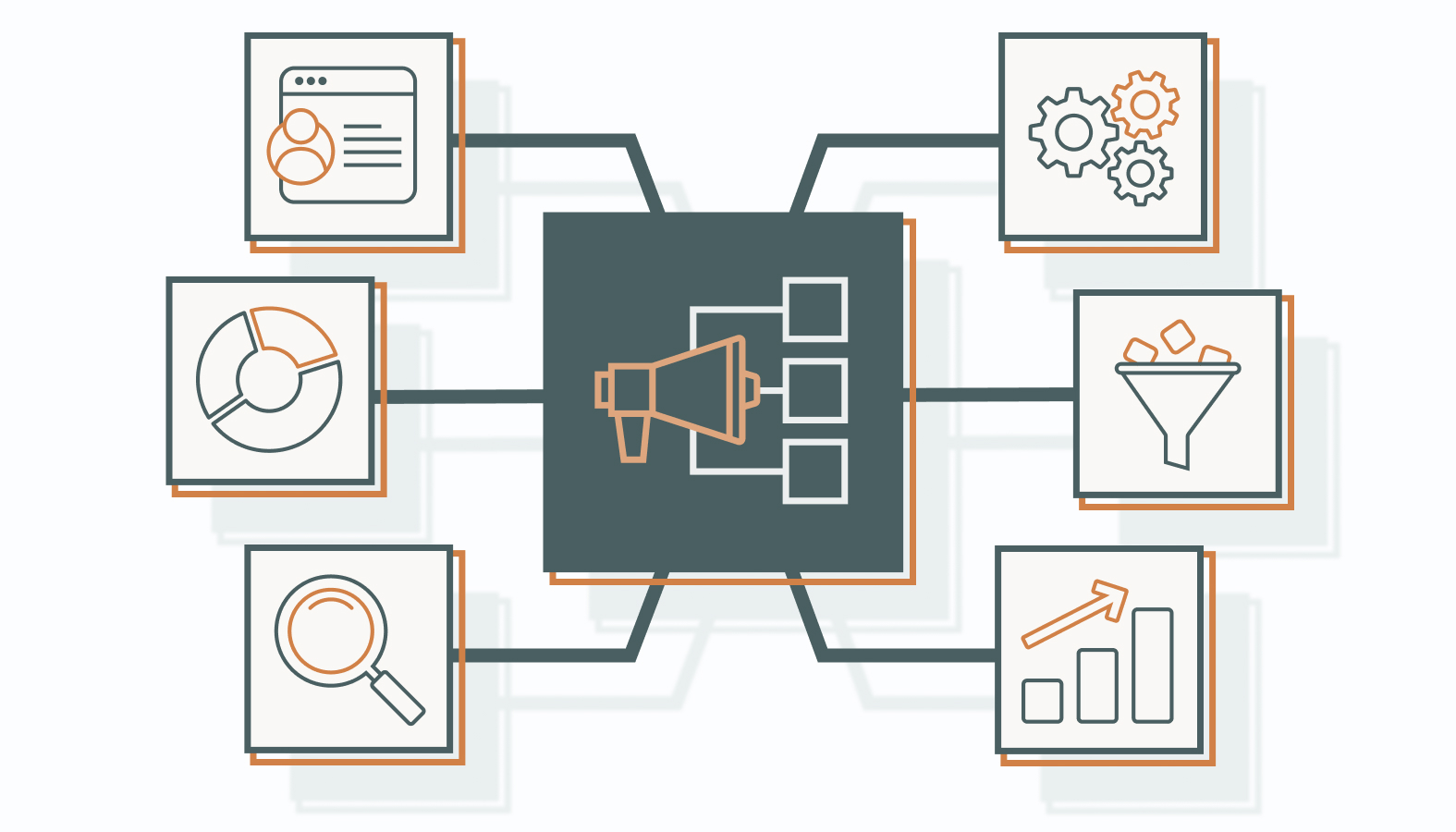
Once your analytical foundation is in place, it’s time to let it work for you. This is where advanced strategies begin to deliver real value. They sharpen your understanding of customer behavior, strengthen your decisions, and create a competitive edge that grows stronger the longer you use it.
Boosting Customer Lifetime Value with Advanced Analytics
Customer Lifetime Value (CLV) gives you a clearer view of which relationships deserve the most attention. And when you apply modern analytics to it, CLV stops being a simple metric and becomes a strategic compass.
How teams calculate and strengthen CLV:
- Historical Analysis: Review past buying patterns to estimate long-term value.
- Predictive Models: Use machine learning to forecast future behavior more accurately.
- CLV Growth Levers: Improve experience, personalize outreach, and build loyalty paths that keep customers engaged longer.
Choosing the Right Marketing Attribution Models
Attribution plays referee across the customer journey, showing you which touchpoints genuinely influence conversions. Pick the right model and your budget suddenly starts working harder for you.
Popular attribution options:
- Single-Touch Models: Give full credit to one interaction (first-touch or last-touch).
- Multi-Touch Models: Spread credit across the journey – linear, position-based, or time-decay.
Here’s how to choose: Match the model to your buying cycle, the complexity of your customer journey, and the depth of data you actually have.
Smarter Customer Segmentation with Strategic Clustering
Clustering helps you move beyond broad demographics and pinpoint groups that behave in similar ways. That precision opens the door to sharper messaging and higher-performing campaigns.
Clustering approaches worth using:
- Demographic Clustering: Age, region, income – simple, but still useful.
- Behavioral Clustering: Purchase frequency, engagement levels, and browsing habits.
- Real-World Win: A retailer restructured promotions based on clusters and lifted sales by 20%.
Improving Accuracy in Marketing Conversion Predictions
Predictive models can give you a strong read on which leads are likely to convert—and which channels deserve more investment.
Techniques that boost prediction accuracy:
- Machine Learning Algorithms: Logistic regression, random forests, and other proven models.
- A/B Testing: Validate and refine assumptions with controlled tests.
- Data Enrichment: Add external or behavioral data to sharpen predictions.
Strengthening Data Integrity with Proactive Anomaly Detection
Anomaly detection protects your analytics from hidden errors, suspicious activity, or data inconsistencies that could warp your insights.
Reliable detection strategies:
- Statistical Checks: Z-scores, moving averages, and distribution analysis.
- Machine Learning: Unsupervised models that flag unusual patterns.
- Always-On Monitoring: Real-time alerts help teams respond quickly.
Advanced Forecasting Methods
Forecasting lets you plan with far more confidence, allocating resources, predicting demand, and preparing for market shifts before they arrive.
High-performing forecasting methods:
- Time Series Models: ARIMA, exponential smoothing, and other classic power tools.
- Machine Learning Forecasts: Neural networks and deep learning methods for complex scenarios.
- Scenario Planning: Build multiple futures, so your strategy stays flexible.
By applying these advanced analytics strategies, marketers can operate with sharper insight, move faster with confidence, and build a level of performance that competitors struggle to keep up with.
Step-by-Step Guide to Successfully Implementing Analytics Techniques
Rolling out advanced analytics isn’t a plug-and-play moment – it’s a coordinated upgrade to how your marketing engine thinks, reacts, and scales.
Done right, it becomes the backbone of faster decisions, smarter targeting, and a team that operates with the precision of a well-tuned arc reactor.
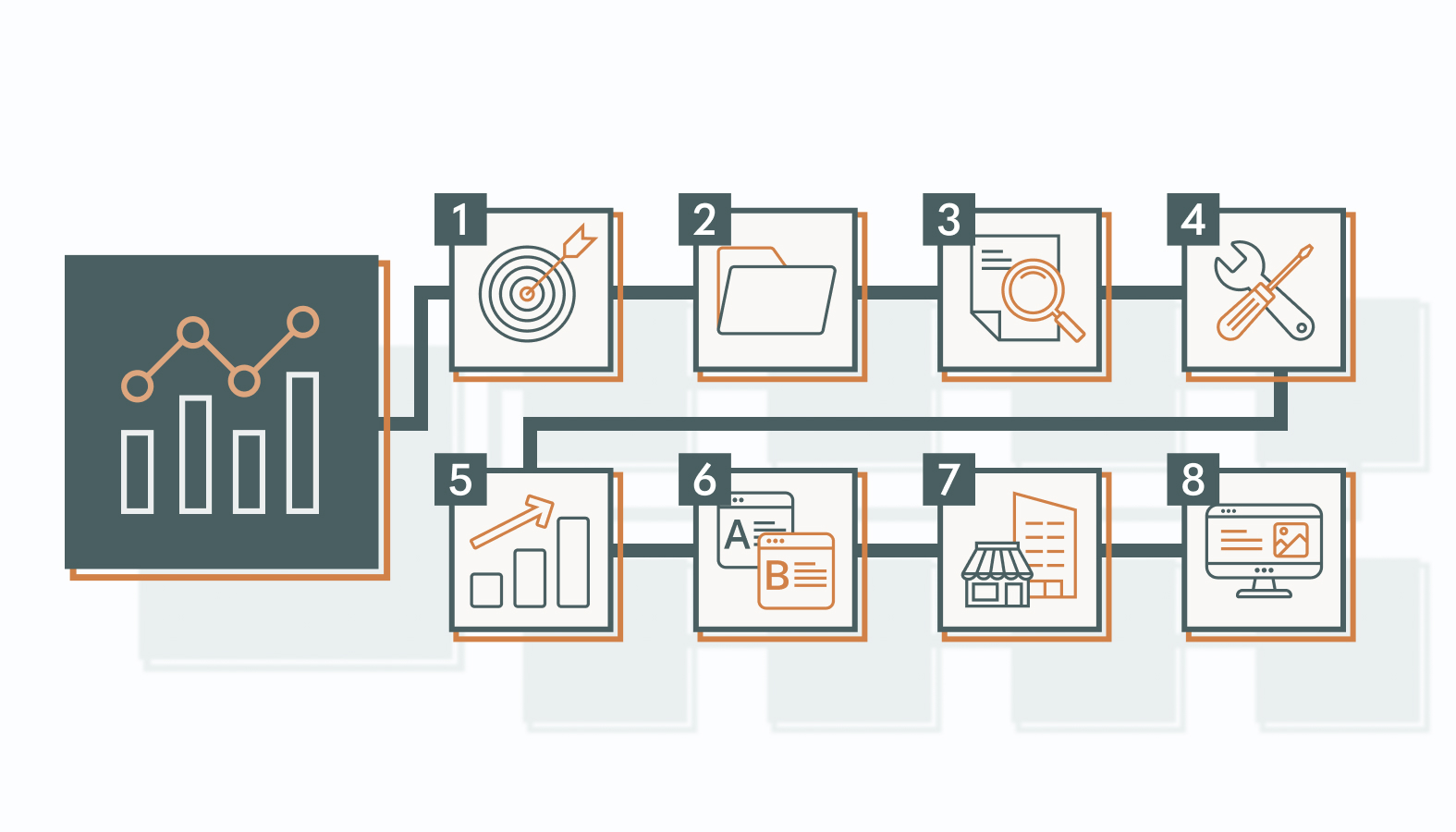
Here’s how to bring it to life with intention and momentum:
- Define Objectives: Start by locking in the outcomes you want to achieve. Clear goals keep your analytics from turning into a science experiment with no finish line.
- Data Collection: Pull in the information that actually fuels insight. Multiple sources, unified direction.
- Data Preparation: Clean, refine, and structure your data so your models have something trustworthy to work with. Think of it as tuning the signal before amplifying it.
- Tool Selection: Choose platforms built to handle the scale, speed, and complexity of your vision – not just the shiny tools with the best hype.
- Skill Development: Equip your team to handle these systems with confidence. The tech is only half the advantage; your people unlock the rest.
- Pilot Testing: Run controlled tests to validate your approach and iron out friction before you hit full throttle.
- Full Deployment: Roll out your analytics framework across the organization once the process is stable, predictable, and delivering consistent value.
- Continuous Monitoring: Keep an eye on performance and adjust as needed. Analytics is not a “set it and forget it” discipline; it’s a system that thrives on refinement.
With your analytics engine up and running, it’s important to understand what can disrupt progress and how to stay ahead of it.
Overcoming Common Challenges in Analytics Adoption
Even the most forward-thinking teams run into resistance on the road to full analytics maturity. The good news is that every obstacle is manageable when you know where the pressure points are.
- Data Quality Issues: Invest in processes that continuously clean, validate, and standardize your data. Strong inputs lead to trustworthy outcomes.
- Resistance to Change: Create an environment where curiosity wins, and learning is celebrated. When people see analytics helping them (not replacing them), buy-in accelerates.
- Technical Barriers: Support your teams with hands-on training, documentation, and ongoing enablement so no one feels outmatched by the tools.
When these challenges surface, what matters most is having a clear path forward: one that turns confusion into clarity and keeps your analytics engine moving with purpose.
Analytics in Action: Data Management, System Integration, and Team Alignment

Once your analytics engine is humming, the next move is making sure every part of your operation can keep up. This is where precision matters – cleaner data, tighter integrations, and a team that knows exactly how to turn insights into impact.
Think of it as giving your marketing ecosystem the calibration it needs to perform at full power.
Why Streamlined Data Normalization Matters
If analytics is your power source, normalization is the circuitry that keeps everything running smoothly. It brings order to the chaos, making sure your data plays by the same rules so insights land faster and cleaner.
Why it matters:
- Eliminates unnecessary noise and strengthens data integrity.
- Simplifies comparison across sources, making analysis sharper and more reliable.
How to do it well:
- Standardization: Align different formats so everything speaks the same language.
- Deduplication: Remove copycat entries that drag accuracy down.
- Validation Rules: Put guardrails in place to keep data consistent from the moment it enters your system.
How to Integrate Analytics Into Existing Systems Smoothly
Your analytics tools shouldn’t float like satellites. They should sync seamlessly with the systems your team touches every day. The challenge is navigating older tech, isolated data pockets, and workflows that weren’t built with modern analytics in mind.
Common friction points:
- Rigid legacy software that wasn’t built for real-time insights.
- Data is stuck in silos, slowing down decision-making.
Smart solutions:
- APIs & Middleware: Create connective tissue between tools, even the stubborn ones.
- Data Lakes: Bring everything under one roof so insights travel freely.
- Incremental Integration: Roll out changes in phases to keep operations steady.
Building and Sustaining a Data-Driven Marketing Culture
The best analytics systems won’t move the needle if your team doesn’t know how to use them, or worse, doesn’t trust them. A strong culture makes insights part of daily decision-making, not an afterthought.
Why culture matters:
- Keeps teams aligned around evidence, not assumptions.
- Makes your organization more responsive when the market shifts.
How to shape that mindset:
- Leadership Buy-In: When executives model data-driven thinking, the rest of the team follows.
- Education Programs: Give people the confidence to explore, interpret, and question data.
- Recognition Systems: Celebrate wins powered by insight to reinforce the behavior you want.
Navigating Tools and Platforms for Analytics Success
With your analytics engine calibrated and your team aligned, the next step is choosing the right technology to keep everything running at peak efficiency.
Tools don’t create strategy, but the right ones give you the speed, clarity, and firepower to execute it with precision. Think of this as upgrading your suit with the systems that make every move smarter.
A Snapshot of Today’s Leading Analytics Platforms
Modern analytics platforms come with different strengths – some focus on visualization, others on deep behavioral insights, and others on seamless reporting.
Here’s a quick read on the tools most teams rely on:
- Google Analytics: A go-to for tracking web behavior and campaign performance.
- Tableau: Built for high-impact data visualization and exploratory analysis.
- Adobe Analytics: Ideal for mapping and understanding complex customer journeys.
- Power BI: A natural fit for Microsoft ecosystems, offering accessible, end-to-end reporting.
How to Choose the Right Analytics Platform
Selecting a platform shouldn’t feel like reviewing a catalog of shiny objects. The goal is alignment—finding tools that match the way your business operates and where you want it to go.
Key things to evaluate:
- Business Objectives: Pick platforms that support the specific outcomes you’re aiming for.
- Ease of Use: Tools should empower your team, not intimidate them.
- Scalability: Choose systems that can support the size of your data and where your brand is heading.
- Integration: Ensure the tool plays well with your current tech environment and data sources.
A Quick Comparison of Top Analytics Tools
Understanding how tools differ helps you make decisions that aren’t just practical—they’re strategic.
Google Analytics vs. Adobe Analytics:
- Google Analytics: Accessible, intuitive, and perfect for small to mid-sized teams.
- Adobe Analytics: Designed for enterprises that need sophisticated cross-channel insight.
Tableau vs. Power BI
- Tableau: Exceptional for complex visual exploration.
- Power BI: Cost-effective, fast to deploy, and exceptionally strong when paired with Microsoft’s ecosystem.
Customizing Analytics Tools to Fit Your Business Needs
The true power of any analytics tool comes from how well it adapts to your workflows, goals, and team habits. Customization turns generic dashboards into decision engines.
How to maximize value:
- Set Clear KPIs: Define the metrics that actually influence your strategy.
- Create Custom Dashboards: Give each team views that highlight what matters most to them.
- Refine Over Time: Update dashboards, rules, and workflows as your business evolves.
When your tools are chosen intentionally and tailored with purpose, analytics stops being a background function. Instead, it becomes a strategic advantage that fuels sharper decisions and more competitive marketing performance.
Insights from Case Studies and Success Stories
Strategy without proof is just bravado. The smartest teams don’t just talk analytics—they study the playbooks of companies that have actually moved the needle.
By dissecting real-world wins (and missteps), you can extract strategies that are battle-tested and adaptable to your own marketing arena.
What the Wins Teach Us
Data is only as powerful as the way you act on it. Across industries, several patterns emerge from companies that consistently outperform:
- Decisions Anchored in Evidence: Organizations that weave data into every move see better outcomes and fewer surprises.
- Customer-Centric Tactics: Analytics that track behavior, preferences, and engagement let brands anticipate needs and build loyalty.
- Agility and Iteration: Companies that evolve their analytics strategies in real time are quicker to pivot, innovate, and capitalize on trends.
Businesses can use these insights as playbooks for driving measurable growth.
Companies Leading the Pack with Advanced Analytics
Some brands have mastered analytics with remarkable results:
- Amazon:
- Strategy: Predictive Modeling
- Results: Their recommendation engine doesn’t just suggest—it drives conversions, increases retention, and keeps customers coming back for more.
- Netflix:
- Strategy: Personalization
- Results: Tailored content keeps viewers engaged, boosting satisfaction and subscription longevity. Analytics here fuels entertainment at scale.
- Coca-Cola
- Strategy: Operational Efficiency
- Results: Advanced supply chain analytics reduce costs and optimize distribution, turning logistics into a competitive edge.
Lessons Learned from Analytics Wins and Failures
Even the best campaigns teach lessons in humility. Here’s what emerges when you analyze the hits and the misses:
- Flexibility Matters: Update models and assumptions as the market shifts. Yesterday’s insight isn’t always today’s advantage.
- Cross-Functional Collaboration: Insights are only as good as their adoption. Align data teams with business units for maximum impact.
- Fail Fast, Learn Faster: Post-mortems are launchpads for stronger strategies and smarter decisions next time.
When applied strategically, analytics transform from a backend function into a force multiplier. It begins to power smarter decisions, reduce risk, and give teams the edge to outmaneuver competition.
Commanding the Analytics Edge
Advanced analytics in marketing is the turbo boost your strategy didn’t know it needed. It turns raw data into foresight, transforming everyday decisions into calculated moves that drive growth and deepen customer connections. With insights in action, your team doesn’t just follow the market; it shapes it.
You don’t need a complete overhaul to harness this power. Clear objectives, the right tools, and a culture that values data turn reactive strategies into predictive advantage, making every insight count.
Ready to supercharge your marketing strategy?
Schedule a candid conversation with one of our experts and see how data-driven decisions can fuel growth, innovation, and lasting impact.