



Marketing data rarely fails all at once. Small tracking errors, hidden biases, or mismatched systems can quietly skew your reports, making the numbers seem fine while hiding the real challenges. If you don’t fix attribution errors early, they can influence decisions, distort budgets, and make performance feel unpredictable.
Attribution issues affect more than analytics teams. They shape how leaders judge campaigns, approve budgets, and define success. In B2B, where sales take time and involve many steps, even small misattributions can grow into big gaps in strategy.
This guide will hand you the signals, patterns, and checks that high-performing teams use to spot attribution problems early and keep decisions aligned accordingly. From identifying hidden errors to understanding their impact, the steps outlined here will help you regain control over your marketing data and the growth it drives.
The True Cost of Faulty Data: How Attribution Errors Impact Growth
Attribution errors don’t always make themselves obvious. They creep in subtly, influencing decisions before anyone notices. Marketing teams might adjust budgets or optimize channels based on numbers that seem stable, while the underlying signals are quietly off. Over time, this misalignment nudges spending away from the tactics that actually generate demand, creating a gap between what the data says and what the business experiences.
The real cost isn’t messy dashboards but the decisions shaped by them. Channels that truly drive the pipeline may be undervalued, while easily measurable touchpoints get undue credit. When strategies are guided by credit rather than influence, confidence in performance can become misplaced. The result is stagnating growth, with teams left searching for answers in reports that no one can pinpoint.
Financial Implications: When Spend Follows Credit, Not Impact
Once distorted signals guide decisions, budget allocation is the first place the damage shows up. Retargeting, branded search, and last-touch channels look efficient on paper because they capture conversions that are already happening. They continue to win budget even when the incremental impact is low.
On the other hand, channels that drive early consideration lose funding because their contribution is harder to prove in standard models. Eventually, this skews spending toward short-term efficiency and away from sustainable growth. The numbers look controlled while pipeline quality weakens.
Misguided Strategies: How Bad Data Trains the Wrong Behavior
Attribution errors misallocate budget and quietly retrain teams on what “good” performance seems like. Marketers optimize for what gets credit fast, making the speed of attribution matter more than the actual influence on the buying journey.
This shift creates a cycle that feeds itself. Demand-harvesting tactics get amplified because they’re easy to defend, while demand-building efforts get less prioritized for being slower to surface in standard models. Strategy doesn’t fail all at once, but slowly shrinks, one “data-backed” decision at a time, until real growth options quietly disappear.
Why This Becomes a Growth Ceiling
Flawed attribution shifts focus from understanding buyer behavior to polishing reports. Teams optimize what’s visible, not what drives results, and leaders struggle to defend budgets or explain plateauing growth. What feels like a sudden slowdown is often just the natural outcome of compounding misalignment.
Correcting attribution reconnects decisions with reality. When teams see the true path that buyers take, every choice, from channel investment to campaign strategy, aligns with actual impact, breaking the barrier to growth.
How Attribution Errors Distort Budget Decisions Over Time
Attribution errors slowly creep in, nudging budgets off course month by month. The pattern is subtle, but the impact is serious:
- Easy-credit channels dominate: Retargeting, branded search, and last-touch tactics appear efficient and keep winning budget.
- Upstream channels get starved: Awareness and mid-funnel campaigns lose funding because their influence is harder to measure.
- A feedback loop forms: Credit drives spend, while spend reinforces credit, and long-term growth stalls.
Fixing attribution isn’t about prettier dashboards. Align spend with how buyers actually move, protect pipeline quality, and stop training teams from chasing short-term credit instead of real influence. The payoff should be predictable growth, smarter budgets, and a marketing engine firing on all cylinders.
Introduce Attribution Guardrails Before Budget Changes
Attribution errors hit the hardest during budget shifts. The fix is guardrails. Before moving spend based solely on attribution, check confirmation signals:
- Pipeline movement
- Sales feedback
- Lagged revenue trends
- Incrementality tests
Guardrails don’t slow your team but protect decisions from short-term noise, let data stabilize before guiding budgets, and ensure spend aligns with how buyers act.
If attribution is your only signal, pause. Using these guardrails keeps budget decisions grounded and reduces the risk of compounding errors.
Recognizing the Issues: 5 Indicators of Attribution Problems

Attribution problems are sneaky. They quietly sabotage your marketing efforts while everything “looks fine” on the dashboard. Spotting them early keeps your data reliable and your strategy sharp. Here are five warning signs, plus how they show up in real-world campaigns:
1) The Double Counting Dilemma in Platform Reporting
When a single conversion gets credited to multiple channels, performance metrics inflate, suddenly making your campaigns appear stronger than they actually are.
How to fix it:
- Cross-check reports across platforms to spot inconsistencies.
- Use deduplication rules in your analytics tools so each conversion is counted only once.
2) The Surge in Direct Traffic
A sudden spike in “direct” visits often indicates that attribution is missing the real sources. Channels that deserve credit get ignored, and reports start to get misled.
Tracking tactics:
- Apply UTMs consistently across campaigns.
- Audit analytics setups to confirm every channel is correctly tagged and tracked.
3) Short-Cycle Bias in Long-Lead Industries
Attribution models that favor quick wins can undervalue campaigns nurturing long-term buyers. In B2B or high-consideration purchases, early-funnel investments may appear “inefficient” even when they drive real demand.
Adjustments to consider:
- Adopt multi-touch attribution to capture the full customer journey.
- Extend attribution windows to match your actual sales cycle.
4) Discrepancies Between Ad Manager and CRM
Different platforms have different rules. When your CRM and ad platforms report conflicting results, misalignment creeps in, while decisions get defensive and budgets get misallocated.
Reconciliation strategies:
- Align data collection methods across platforms.
- Regularly sync CRM and ad platforms to maintain consistency.
5) High ROAS with No Revenue Growth
A high Return on Ad Spend (ROAS) might mask underlying revenue issues if it’s not translating into actual business growth.
Insights and Analysis:
- Evaluate ROAS alongside metrics like customer lifetime value and overall revenue.
- Check whether campaigns are attracting high-quality leads that convert into long-term customers.
By understanding these indicators, you can better diagnose and address attribution errors to ensure your marketing data remains a reliable foundation for strategic decision-making.
Attribution Errors vs. Data Disagreement: Knowing the Difference
Some differences between platforms are expected and normal, like ad platforms track engagement, analytics tools track on-site behavior, and CRMs track revenue and lifecycle movement. Treating every discrepancy as a broken attribution system can lead to overcorrection and poor decisions.
Attribution errors occur when differences can’t be explained by methodology. To name a few: Sudden swings without campaign changes, channels taking credit without influencing results, or metrics diverging across systems. The solution starts with setting clear expectations, such as focusing on directional consistency, and documenting how each platform attributes value, where overlaps occur, and where gaps are expected. This baseline helps teams distinguish normal variance from real attribution errors before they affect budgets or strategy.
Reframe Attribution as a Decision Tool, Not a Scorecard
Once attribution errors are addressed, the next challenge is using attribution reports correctly. They are not performance scorecards meant to crown winners. They exist to guide better decisions.
Seeing attribution as a scorecard pushes teams to optimize for credit instead of real impact. Channels that influence early consideration or long buying cycles often get missed. Consider reviewing performance alongside scenario analysis. Look at assisted conversions, lagged impact, and pipeline velocity. When attribution guides clearer and better decisions, not just showing rankings, it becomes a real tool for strategy.
Understanding the Root Causes of Attribution Errors

Attribution errors undermine decisions, distort budgets, and limit growth. Understanding why they happen is the first step to taking control. Most errors fall into three main categories:
1) Technical Failures and Implementation Gaps
Technical issues in tracking systems can result in missed or misattributed data. Common problems include broken tags, incorrect tracking URLs, or misconfigured analytics tools.
Solutions:
- Regularly audit and test tracking setups
- Ensure all tags are correctly implemented and working
- Use a tag management system to streamline and monitor deployment
2) The Privacy and Tracking Challenges
Regulations like GDPR and CCPA affect data collection, often restricting the ability to track user behavior comprehensively.
Compliance and Accuracy:
- Use consent management platforms to stay compliant while collecting data.
- Prioritize first-party data to maintain accuracy without violating privacy laws.
3) Structural and Model Bias
Structural biases happen when attribution models systematically favor certain channels, often due to outdated or overly simplistic approaches.
Mitigation strategies:
- Shift to data-driven attribution (DDA) models that reflect actual user behavior
- Regularly review and recalibrate models to match evolving strategies
- Combine attribution insights with scenario analysis, and don’t just chase credit
By addressing these root causes, marketers can improve data accuracy and make more informed decisions, ensuring the effectiveness of their marketing strategies.
How to Fix Attribution Errors: A Step-by-Step Technical Roadmap
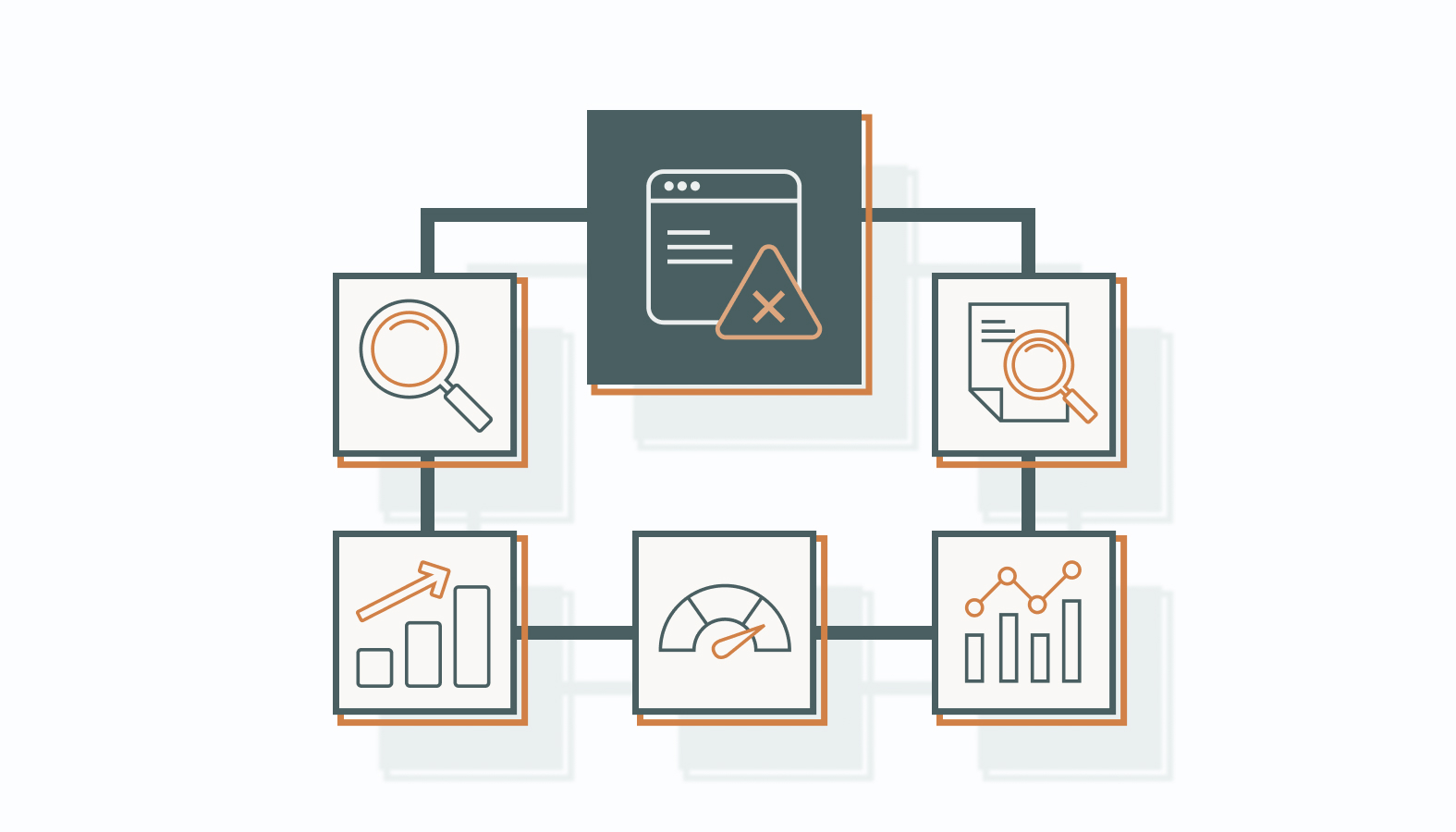
Fixing attribution errors requires a structured, methodical approach. Audit your setup, fix broken tags and UTMs, respect privacy limits, and align models with how buyers move. Do it right, and every channel fires in sync, powering real, predictable growth.
1) Perform Attribution Hygiene: What to Review Before Making Model Changes
When attribution feels off, resist the urge to tweak the model. Most issues are setup gaps quietly skewing reporting. Clean the foundation first:
- Check conversion definitions across every platform for consistency
- Audit UTMs and campaign URLs for accuracy
- Spot duplicates or missing parameters that inflate or hide conversions
- Validate offline and CRM data to ensure proper reporting integration
There are times when fixing just one or two of these issues resolves most confusion. Models only refine what’s already solid, so having clean data is power.
2) Adopt Multi-Touch Attribution Models
Multi-touch models provide a complete view of the customer journey, unlike single-touch models. Key steps to implement them effectively:
- Audit path-to-purchase length: Map customer touchpoints to understand the average time from first interaction to conversion, and adjust your attribution model to reflect the actual purchase cycle.
- Implement a Position-Based (U-Shaped) model: Identify key touchpoints and assign more credit to the first and last interactions. Configure and monitor using analytics tools.
- Transition to Data-Driven Attribution (DDA): Collect comprehensive channel data and gradually shift from traditional models to DDA, monitoring performance along the way.
- Compare models regularly: Use model comparison tools to evaluate strategies, optimize attribution, and identify the most effective approach.
3) Separate Optimization Metrics from Investment Metrics
One of the smartest ways to stop attribution noise is simple: Don’t confuse execution metrics with investment metrics. They serve very different purposes. Mixing them is where most confusion starts.
Reducing attribution distortion begins with using the right metrics for the right decisions:
- Optimization metrics improve execution within a channel (e.g., ROAS for paid search campaigns).
- Investment metrics guide budget allocation across channels and the full funnel (e.g., pipeline contribution, cost per qualified opportunity, incremental lift).
Separate the two types of metrics to avoid overreacting to noisy attribution data, so you can make steadier and more strategic budget decisions.
4) Enhance Data Collection and Integration
Accurate attribution depends on reliable data collection and integration. Focus on these key areas:
- Enforce global UTM governance: Establish clear rules and ensure consistent tagging across all campaigns.
- Sync CRM with ad platforms: Use APIs to connect systems and regularly update data for accuracy.
- Deduplicate conversion events: Prevent inflated metrics by setting rules to avoid double-counting. Tools like Google Tag Manager can help.
- Integrate siloed social and search data: Use data management platforms to unify interactions and get a full insight into consumer behavior.
5) Utilize Advanced Tracking Techniques
Advanced tracking methods improve attribution accuracy and measurement confidence as they:
- Deploy server-side GTM: Set up a server environment, move key tags from client-side, and test to ensure functionality.
- Implement Conversions API (CAPI) for Meta and Google: Connect your server directly to ad platforms and continuously monitor for data integrity.
- Leverage first-party data capture: Collect data from direct interactions like forms and surveys to enhance personalization and targeting.
- Incorporate incrementality and lift studies: Use control groups to measure baseline performance, analyze incremental effects, and refine strategies for more accurate attribution.
Solving Specific Attribution Biases
Attribution biases don’t break your data. They bend it, giving credit to what’s easiest to measure rather than what optimizes results. Left unchecked, these biases distort performance evaluation, budget allocation, and strategy reinforcement.
Solving them identifies where credit misaligns with actual buyer behavior and correcting it before flawed signals compound. When attribution reflects influence rather than convenience, it becomes a reliable foundation for a smarter, more confident growth.
1) Fixing Time-Decay Misalignment
Time-decay attribution models give more credit to touchpoints that occur closer to conversion. While it highlights the final interactions that lead to a sale, it can misrepresent the true influence of earlier touchpoints that nurture leads and build long-term engagement. When the model overemphasizes last-touch interactions, marketing teams risk undervaluing awareness and mid-funnel campaigns, leading to misaligned budget allocation and strategic blind spots.
Effects:
- Early-stage touchpoints that spark interest or educate prospects may be undervalued, making campaigns that drive awareness appear less effective than they are.
- Marketing teams may overinvest in channels that show immediate conversions while underfunding initiatives critical for long-term growth and pipeline health.
- Reports can create misleading narratives about which channels are truly driving revenue, potentially influencing leadership decisions and performance evaluations.
Solutions:
- Adjust the decay curve to reflect your actual sales cycle better, giving proportionate credit to early, mid, and late interactions.
- Use historical data to recalibrate the model, analyzing how different touchpoints contribute to conversions over time.
- Continuously monitor performance to ensure that no channel is systematically undervalued, and update the decay settings as sales cycles or buyer behaviors change.
2) Eliminating Duplicate Conversion Counting
Duplicate conversion counting occurs when the same conversion is recorded multiple times, inflating reported results and creating a misinterpretation of campaign effectiveness. This action can lead teams to overestimate channel performance, misallocate budgets, and make decisions based on inaccurate data.
Problems:
- Metrics become distorted, making it challenging to evaluate the performance of campaigns and channels. Overstated conversion numbers can falsely suggest that certain campaigns are effective even though they’re not.
- Decision-making is compromised because teams may prioritize channels or tactics that drive results but are actually being credited multiple times for the same conversions.
- Misleading data can erode trust in reporting, causing stakeholders to question the reliability of dashboards and analytics outputs.
Methods:
- Implement deduplication rules using tools like Google Tag Manager or your analytics platform. This awareness ensures that each conversion is counted only once, even if multiple tracking triggers occur.
- Regularly audit conversion tracking setups to identify redundancies or misconfigured events. Periodic reviews help catch errors before they distort reporting and allow teams to maintain confidence in their data.
- Document your conversion tracking logic and share it across marketing, analytics, and CRM teams to ensure a consistent understanding of how conversions are measured and attributed.
3) Correcting Cross-Device Blind Spots
Tracking users across devices is complex but crucial for accurate attribution. Without visibility into how a single user interacts across desktop, mobile, and tablet, conversion credit can be misassigned, leading to flawed performance insights and suboptimal budget decisions.
Challenges:
- Users frequently switch devices, creating gaps in data that make it difficult to understand the full customer path.
- Without cross-device tracking, early interactions on one device may be undervalued while conversions on another device appear overrepresented, skewing attribution and reporting.
- Inconsistent tracking can mislead teams about which channels or touchpoints are driving results, causing misallocated spend.
Strategies:
- Use cross-device tracking tools that unify user interactions across several platforms.
- Leverage first-party data, such as login or account information, to reliably connect activities across devices and maintain accurate conversion attribution.
- Regularly monitor and validate cross-device tracking to ensure it captures the right direction, adjusting for new devices or touchpoints as user behavior evolves.
By addressing these specific biases, you can enhance the precision of your attribution models, leading to more effective marketing strategies and better resource allocation.
Tools for Maintaining Data Integrity
Maintaining data integrity keeps attribution both reliable and accurate. As tracking environments evolve, tools catch inconsistencies early, validating assumptions and ensuring data remains decision-ready.
Below are essential tools that help preserve accuracy and surface insights teams can trust:
1) Google Analytics 4 (GA4)
GA4 offers advanced features for precise attribution, helping marketers track user interactions across platforms.
Key Features:
- Event-based tracking provides a more detailed view of user interactions.
- Enhanced cross-device measurement to help unify interactions into a single journey, reducing fragmentation in reporting.
Utilization Tips:
- Set up custom events to capture specific actions relevant to your business.
- Leverage GA4’s integration with Google Ads for a comprehensive view of campaign performance.
2) Specialized Multi-Touch Attribution (MTA) Tools
MTA tools are purpose-built to map the full customer journey, attributing credit across multiple touchpoints.
Benefits:
- Provide a holistic view of marketing effectiveness by considering all customer interactions.
- Offer insights that help optimize marketing spend and strategy.
Examples:
- Tools like Adobe Attribution and Visual IQ offer advanced MTA capabilities.
3) Data Warehouse Solutions
Data warehouses centralize marketing, product, and revenue data, making it easier to analyze attribution without relying on fragmented platform reports.
Role in Attribution:
- Aggregate data across sources to create a consistent, reliable foundation for analysis.
- Enable complex queries and modeling that surface deeper attribution insights beyond standard dashboards.
Suggested Solutions:
- Consider platforms like Snowflake, Amazon Redshift, or Google BigQuery for scalable and efficient data warehousing.
By leveraging these tools, marketers can maintain the effectiveness of their attribution strategies.
How to Ensure Accuracy in Changing Campaigns
In the dynamic world of marketing, campaigns continually evolve. Securing ongoing accuracy in your data provides informed decisions and maintains effective procedures.

1) Conduct Regular Audits and Quality Checks
Regular audits maintain accuracy and uncover potential issues before they grow bigger.
Audit Marketing Data
A comprehensive audit evaluates the integrity and reliability of your marketing data.
How to Conduct an Audit:
- Review data collection methods and tracking implementations.
- Cross-verify data across different platforms to spot discrepancies.
- Use tools like Google Analytics and Data Studio for in-depth analysis.
Ensure Quality Assurance
Quality assurance protects data integrity to ensure insights drawn are accurate and actionable.
Steps for Quality Assurance:
- Establish clear data governance policies.
- Implement automated quality checks to detect anomalies.
- Train your team to monitor and validate data entries regularly.
2) Assign Clear Ownership for Attribution Integrity
Attribution systems fail easily when responsibilities are unclear. Teams may be siloed. Without a dedicated owner, issues are noticed but rarely fixed promptly.
Designate a Single Owner
A central owner should oversee attribution, coordinating audits, enforcing governance, and flagging risks early. This role doesn’t need to build everything, but ensures accountability and alignment across teams.
Benefits of Clear Ownership
- Prevents recurring issues: With someone responsible, attribution errors are caught and addressed before they compound.
- Shifts from reactive to proactive management: Ownership transforms attribution from a cleanup task into a maintained system.
- Improves cross-team coordination: Ensures analytics, marketing, and sales work together to preserve data and measurement reliability.
3) Use Attribution Reviews as Strategic Checkpoints
Many teams only check attribution when results appear off. High-performing teams make reviews a regular practice, using them as strategic checkpoints rather than reactive troubleshooting.
Schedule Regular Reviews
Conduct quarterly attribution reviews that focus on patterns aside from numbers. Evaluate which channels are consistently over-credited, which drop out of reports, and where confidence in attribution is weakest.
Benefits of Routine Reviews
- Identify strategic blind spots early: Detect issues before they distort decisions or misallocate budgets.
- Maintain consistent data quality: Regular review keeps attribution reliable over time.
- Enhance decision-making: Teams gain confidence in using attribution to guide strategy rather than reacting to anomalies.
When attribution reviews are routine, errors can’t ruin strategies.
Embracing Imperfect Accuracy: The Future of Marketing Measurement
Fixing attribution errors provides a strategic lever. When your data reflects how buyers move through the funnel, every decision becomes smarter. They make budgets aligned with impact, campaigns optimized for real influence, and teams gaining confidence in their strategy.
While perfect accuracy may be unattainable, striving for continuous improvement in data integrity ensures that your marketing decisions are correctly guided. Leveraging the right tools, frameworks, and measurement practices can reduce noise, surface meaningful insights, and unlock predictable growth even in complex, multi-touch B2B environments.
Finally, the future of marketing measurement uses reliable signals to make confident, actionable decisions that drive both short-term performance and long-term success.
Taking the Next Step in Your Marketing Journey
Navigating marketing attribution can be challenging, but understanding and addressing these errors unlocks your brand’s full potential. With the insights shared in this guide, you’re well-equipped to enhance your strategies and drive meaningful growth.
If you’re ready to move from theory to practice, we’re here to help. Our team of experts is excited to answer your questions and share insights that align with your business needs.
Schedule a candid conversation with one of our experts ». Let’s discuss how we can support your marketing goals with honesty and expertise. No pressure, just a friendly chat to explore possibilities.